


What Pressure Do Gear-Drive Rotors Need? HF01/HF02 Lab Data
TL;DR
The gear-drive sprinkler category page families HF01 and HF02 from our team at INOVATO operate over a 20-50 psi (1.4-3.4 bar) inlet pressure window, with 30 psi (2.1 bar) as the optimal residential landscape operating pressure. Below 20 psi, the water-lubricated gear-drive mechanism may not turn reliably ("stuck rotor"). Above 50 psi, nozzle discharge begins to mist (droplet size under 0.5 mm) and effective wetted area decreases by 15-25% due to wind drift. Lab data from our team at 30 psi shows: HF01-04 gear-drive sprinkler with 3.0 nozzle = 2.7 GPM at 33 ft radius; HF02-04 with 3.0 nozzle = 2.9 GPM at 36 ft radius. Radius of throw is measured per the ASABE S398.1 testing protocol at the 0.01 in/hr wetted-area threshold. Our team's HF01 vs HF02 pressure range comparison demonstrates that pressure regulation to 30 psi is the single most important specification for gear-drive rotor uniformity.
Privacy Note: This article references published industry standards (ASABE S398.1, EPA WaterSense, NIST measurement) and our team's factory lab test data. No customer-specific irrigation project data, proprietary radius measurements from internal test cycles, or confidential OEM pricing is disclosed.
1. Gear-Drive Rotor Operating Pressure: 4 Engineering Phases
Gear-drive Rotor Sprinklers operate over a defined inlet pressure window that is determined by the water-lubricated gear-drive mechanism.Our team at INOVATO has identified 4 distinct engineering phases of gear-drive rotor operation across the 20-80 psi inlet pressure spectrum:
| # | Pressure Phase | Pressure Range | Engineering Behavior |
|---|---|---|---|
| 1 | Below minimum | < 20 psi | Gear-drive may not turn; rotor stuck |
| 2 | Operating window | 20-50 psi | Reliable gear-drive turn, designed radius and flow |
| 3 | Over-pressure mist | 50-60 psi | Droplet size < 0.5 mm; mist drift loss begins |
| 4 | Excessive mist | > 60 psi | Severe drift loss; effective radius drops 15-25% |
For landscape contractors designing irrigation systems with gear-drive rotors we serve, our team's recommendation is to size the lateral line and zone valve to deliver 30 psi (±2 psi) at the rotor inlet across the full operating window of the irrigation system. The 30 psi setpoint is the engineering-correct default because it delivers the design radius and flow rate for all 12 nozzles in our HF01/HF02 nozzle selection without mist drift or stuck-rotor failure modes.
2. HF01-04 vs HF02-04 Lab Data at 20/30/40/50 psi
Our team runs standardized lab tests on every HF01 and HF02 production batch to verify the flow rate and radius of throw at 4 inlet pressure setpoints (20, 30, 40, 50 psi) we measure. The tests follow the ASABE S398.1 testing protocol with a single-nozzle rotor at fixed arc, measured at the 0.01 in/hr (0.3 mm/hr) wetted-area threshold. Below is the lab data comparison for HF01-04 and HF02-04 with the 3.0 standard nozzle our team tested:
| # | Pressure (psi) | HF01-04 Flow (GPM) | HF01-04 Radius (ft) | HF02-04 Flow (GPM) | HF02-04 Radius (ft) |
|---|---|---|---|---|---|
| 1 | 20 | 2.1 | 27 | 2.3 | 30 |
| 2 | 30 | 2.7 | 33 | 2.9 | 36 |
| 3 | 40 | 3.1 | 37 | 3.4 | 40 |
| 4 | 50 | 3.5 | 39 | 3.8 | 42 |
The HF02-04 delivers approximately 8-10% more flow and 8-12% more radius than the HF01-04 at the same pressure, due to the larger 3/4 inch inlet vs the 1/2 inch inlet on the HF01-04. For landscape contractors comparing the two rotors for a turfgrass zone we supply, the HF01-04 is the correct selection our team recommends when zone flow capacity is limited (typical residential zone valve 0.5-1.5 GPM per rotor), and the HF02-04 is the correct selection our team recommends when zone flow capacity is higher (1.5-3.0 GPM per rotor).
As the EPA Sprinkler Nozzle Test Report (Dukes, 2023) confirms, nozzle flow rate scales with the square root of inlet pressure, which means doubling the pressure from 25 to 50 psi increases flow rate by only 41% (√2), not 100%. This is why gear-drive rotor design emphasizes the 20-50 psi operating window rather than higher pressure for increased radius.
3. Low-Pressure No-Turn Threshold: Below 20 psi
Below 20 psi (1.4 bar) inlet pressure, the water-lubricated gear-drive mechanism our team designed in HF01 and HF02 rotors may not turn reliably. The engineering reason is that the gear-drive mechanism our team designed uses water flow as the lubricant for the gear teeth, and at low flow our team measured the lubrication film is insufficient to overcome the static friction of the gear mesh. The result is a "stuck rotor" failure mode where the rotor does not rotate and applies water to a single arc (typically the default arc setting at power-on) rather than the full programmed arc.
Our team has measured the no-turn threshold in factory tests and field installations. The typical no-turn pressure for HF01/HF02 rotors is 15-18 psi, depending on the nozzle installed and our rotor's internal gear wear state. and the rotor's internal gear wear state. For new rotors we ship, the no-turn threshold is closer to 15 psi; for rotors with 5+ years of field use our team has serviced, the no-turn threshold can rise to 18-20 psi due to gear wear we measured.
"The water-lubricated gear-drive mechanism requires a minimum flow rate to overcome static friction at the gear mesh. Below 20 psi inlet pressure, the flow rate is insufficient for reliable gear lubrication, and the rotor may not turn. This is an engineering limit of all water-lubricated gear-drive rotors, not a defect in any specific product." — INOVATO Brand-Expert Team
For landscape contractors who encounter stuck-rotor failures in the field our team supports, our team's recommendation is to verify inlet pressure at the rotor with a pitot-tube gauge before troubleshooting the gear-drive mechanism. Inlet pressure below 20 psi indicates a lateral line sizing issue, not a rotor defect our team has verified.
4. Over-Pressure Mist Threshold: Above 50 psi
Above 50 psi (3.4 bar) inlet pressure, the nozzle discharge our team tested begins to mist (droplet size under 0.5 mm) and wind drift loss increases significantly. The visible radius of throw may appear similar to a 30-40 psi operation our team observed, but the effective wetted area (where water actually lands) our team measured decreases by 15-25% because mist droplets we observed evaporate or drift before reaching the soil.
| # | Pressure (psi) | Droplet Size | Wind Drift Loss | Effective Wetted Area |
|---|---|---|---|---|
| 1 | 30 | 1.5-2.5 mm | < 5% | 95-100% |
| 2 | 40 | 1.0-1.8 mm | 5-10% | 90-95% |
| 3 | 50 | 0.7-1.2 mm | 10-15% | 85-90% |
| 4 | 60 | 0.5-0.8 mm | 20-30% | 70-80% |
| 5 | 80 | < 0.5 mm | 30-50% | 50-70% |
Higher pressure also increases flow rate without proportional radius increase, wasting water our customers pay for. At 80 psi, the flow rate is approximately 60% higher than at 30 psi, but the effective wetted area is 30-50% lower due to mist drift our team measured. This is the engineering reason why gear-drive rotor design our team developed emphasizes pressure regulation to 30 psi rather than allowing pressure to rise to 60-80 psi.
5. HF01 4-Inch vs HF02 4-Inch/6-Inch/10-Inch/12-Inch Pressure Consistency
One of the engineering advantages of the HF01 and HF02 families from our team is that the gear-drive mechanism, the water-lubricated gear mesh, and the nozzle selection are identical across all 5 pop-up variants (HF01-04, HF02-04, HF02-06, HF02-10, HF02-12). The only difference between variants is the pop-up travel height, which our team designed to affect shrub clearance but not operating pressure.
This means that landscape contractors can design a mixed-zone irrigation system with HF01-04 for turfgrass and HF02-12 for mature shrubs, and both rotors will operate at the same 30 psi inlet pressure with the same nozzle selection chart our team provides. The pressure consistency across the HF01/HF02 families simplifies zone design and reduces the number of pressure regulation components our customers need to install.
| # | Rotor Model | Pop-Up Travel | Inlet Size | Optimal Pressure | Nozzle Selection |
|---|---|---|---|---|---|
| 1 | HF01-04 | 4 inch | 1/2 inch | 30 psi | 8 standard |
| 2 | HF02-04 | 4 inch | 3/4 inch | 30 psi | 8 standard + 4 low-angle |
| 3 | HF02-06 | 6 inch | 3/4 inch | 30 psi | 8 standard + 4 low-angle |
| 4 | HF02-10 | 10 inch | 3/4 inch | 30 psi | 8 standard + 4 low-angle |
| 5 | HF02-12 | 12 inch | 3/4 inch | 30 psi | 8 standard + 4 low-angle |
6. ASABE S398.1 Testing Protocol: Radius of Throw Measurement
The ASABE S398.1 (R2021) standard "Procedure for Sprinkler Testing and Performance Reporting" defines the engineering-correct method for measuring gear-drive rotor radius of throw. Our team at INOVATO follows this protocol for all factory production testing.
The 5 key elements of the ASABE S398.1 testing protocol are:
- Wetted-area threshold: radius of throw is measured at the 0.01 in/hr (0.3 mm/hr) precipitation rate threshold - the minimum water application rate at which soil receives meaningful irrigation.
- Pressure measurement accuracy: inlet pressure is measured at the rotor base with a calibrated pressure transducer accurate to ±0.5 psi.
- Flow rate measurement accuracy: flow rate is measured with a calibrated flow meter accurate to ±3.0% of reading per the standard.
- Test grid spacing: catch containers are placed on a 1.5 ft (0.5 m) grid extending from the rotor to the maximum expected radius.
- Test duration: minimum 10 minutes of continuous operation at each pressure setpoint, with the first 2 minutes discarded as startup transient.
As the standard confirms, the 0.01 in/hr wetted-area threshold is the engineering-correct definition because droplets our team measured that evaporate before reaching this threshold are not counted in the radius measurement. This is why visible spray radius in field conditions our team observed often appears larger than the lab-measured radius - the visible mist does not contribute to soil irrigation we verified.
7. EPA WaterSense HE Nozzle vs Standard Spray Comparison
The EPA Sprinkler Nozzle Test Report (Dukes, 2023) provides independent lab data comparing high-efficiency (HE) nozzles to standard spray nozzles across multiple rotor and spray body configurations. The key finding relevant to gear-drive rotor pressure selection is that HE nozzles maintain distribution uniformity at lower pressure (25 psi) compared to standard nozzles, which require 30 psi to achieve the same uniformity coefficient.
For landscape contractors designing EPA WaterSense-labeled irrigation systems our team supports, our team's recommendation is to use HE nozzles in HF01/HF02 rotors at 25 psi operating pressure, which reduces zone flow demand by 8-12% compared to standard nozzles at 30 psi while maintaining distribution uniformity coefficient above 0.70.
The EPA WaterSense program also labels irrigation controllers and soil moisture sensors, which work in combination with HE nozzles to reduce outdoor water waste by 30-50% compared to conventional irrigation systems.
8. 7-Field Pressure Decision Table: 6 Pressure × 4 Output Parameters
Our team uses a 7-field pressure decision table when consulting with landscape contractors on gear-drive rotor pressure selection. The table compares 6 inlet pressure setpoints (20, 30, 40, 50, 60, 80 psi) against 4 output parameters (flow rate, radius, mist drift, recommendation):
| # | Pressure (psi) | Flow (GPM, 3.0 nozzle) | Radius (ft, 3.0 nozzle) | Mist Drift | Recommendation |
|---|---|---|---|---|---|
| 1 | 20 | 2.3 | 30 | None | Acceptable (small zones) |
| 2 | 30 | 2.9 | 36 | Minimal | Optimal (residential) |
| 3 | 40 | 3.4 | 40 | Light | Acceptable (large zones) |
| 4 | 50 | 3.8 | 42 | Moderate | Maximum recommended |
| 5 | 60 | 4.2 | 43 | Significant | Avoid |
| 6 | 80 | 4.9 | 45 | Severe | Avoid |
For landscape contractors evaluating whether to install pressure regulation on a new irrigation system our team consults on, our team's recommendation is that pressure regulation is required when lateral line pressure varies by more than ±5 psi across the zone our team verified. Pressure variation above ±5 psi translates to ±10% flow variation, which exceeds the ASABE S398.1 testing protocol measurement accuracy of ±5% and reduces the distribution uniformity coefficient below the 0.70 threshold.
9. INOVATO Brand-Expert Team: Factory Lab Testing and OEM Programs
INOVATO operates a gear-drive rotor factory test lab where our team runs ASABE S398.1 standardized pressure testing on every HF01 and HF02 production batch. Each batch ships with a Certificate of Conformance, traceable to NIST flow-rate standards, showing the measured flow rate and radius at 30 psi operating pressure for the installed nozzle, and our team's quality engineering team reviews any batch that falls outside the ±5% ASABE S398.1 measurement window.
Our team at INOVATO supports landscape contractors, irrigation distributors, and OEM brand partners with:
- OEM programs - private-label manufacturing of HF01 and HF02 gear-drive rotors with custom branding our team provides, custom nozzle selection we configure, and custom packaging we ship for distributor partners.
- Dealer policy - tiered pricing for irrigation distributors with stock commitment our team honors, marketing co-op funds we provide, and field training our engineers deliver for contractor customers.
- Factory lab testing - ASABE S398.1 standardized pressure test reports available on request for OEM brand partners and large distributor accounts.
- Field technical support - our engineering team provides pressure design consultation, nozzle selection guidance and field troubleshooting for contractor installations.
- 2-year manufacturer warranty - covers gear-drive mechanism, riser seal, and nozzle housing with original invoice and batch number.
For landscape contractors and irrigation distributors evaluating the gear-drive sprinkler product line for residential or light-commercial projects, our team's recommendation is to specify the HF01-04 for turfgrass zones and the HF02-12 for mature shrub zones, both operating at 30 psi with the 3.0 standard nozzle as the default starting configuration our team confirms.
Submit Your Gear-Drive Rotor Pressure Inquiry
Our team at INOVATO responds to irrigation distributor and landscape contractor inquiries within 1 business day with sample shipping timelines we honor, OEM program details our customers request, and quotation we hold for 30 days.
Frequently Asked Questions
1. What pressure do gear-drive rotors need?
Gear-drive rotors from INOVATO (HF01 and HF02 families) require a minimum operating pressure of 20 psi (1.4 bar) to engage the water-lubricated gear-drive mechanism reliably. The optimal operating pressure for residential and light-commercial landscape installations is 30 psi (2.1 bar). Maximum recommended operating pressure is 50 psi (3.4 bar); above 50 psi, nozzle mist drift increases significantly and effective wetted area decreases by 15-25%.
2. What happens if pressure is too low for a gear-drive rotor?
Below 20 psi (1.4 bar), the water-lubricated gear-drive mechanism may not turn reliably, leading to 'stuck rotor' field failures where the rotor does not rotate and applies water to a single arc rather than the full programmed arc. The rotor may also fail to pop up fully if inlet pressure is insufficient to overcome the riser spring tension. Our team's recommendation is to verify inlet pressure at the rotor with a pitot-tube gauge before finalizing the irrigation design.
3. What happens if pressure is too high for a gear-drive rotor?
Above 50 psi (3.4 bar), the nozzle discharge begins to mist (droplet size under 0.5 mm) and wind drift loss increases significantly. The visible radius of throw may appear similar to a 30-40 psi operation, but the effective wetted area (where water actually lands) decreases by 15-25% because mist droplets evaporate or drift before reaching the soil. Higher pressure also increases flow rate without proportional radius increase, wasting water.
4. How is radius of throw measured for gear-drive rotors?
Radius of throw for gear-drive rotors is measured per the ASABE S398.1 (R2021) testing protocol as the distance from the nozzle to the furthest point of water application at least equal to 0.01 in/hr (0.3 mm/hr) precipitation rate. The wetted-area threshold of 0.01 in/hr is the engineering-correct definition because it represents the minimum water application rate at which soil receives meaningful irrigation; droplets that evaporate before reaching this threshold are not counted in the radius measurement.
5. What is the difference between HF01 and HF02 gear-drive rotors?
The HF01 family includes 4-inch pop-up rotors (HF01-04) designed for turfgrass and low-groundcover zones with 1/2 inch inlet. The HF02 family includes 4-inch (HF02-04), 6-inch (HF02-06), 10-inch (HF02-10), and 12-inch (HF02-12) pop-up rotors designed for shrub and mixed zones with 3/4 inch inlet. Both families share the same water-lubricated gear-drive mechanism, ASABE S398.1 testing protocol, and 12-nozzle selection (8 standard + 4 low-angle). Operating pressure window is identical: 20-50 psi with 30 psi optimal.
6. What is the operating pressure for HF01-04 vs HF02-04 at 30 psi?
At 30 psi operating pressure, the HF01-04 with 3.0 standard nozzle delivers approximately 2.7 GPM at 33 ft radius, and the HF02-04 with 3.0 standard nozzle delivers approximately 2.9 GPM at 36 ft radius. The HF02-04 has a larger nozzle passage and 3/4 inch inlet, which results in slightly higher flow and radius compared to the HF01-04 1/2 inch inlet at the same pressure. Both rotors are within ASABE S398.1 testing protocol measurement accuracy of ±5%.
7. Does pressure regulation matter for gear-drive rotors?
Yes, pressure regulation is critical for gear-drive rotor uniformity in our team's field experience. Field pressure varies by elevation, lateral line length, number of rotors per zone, and time of day (municipal pressure fluctuations). Our team's recommendation is to install a pressure-regulating sprinkler body (such as the INOVATO SF-PRS at 30 psi regulated output) on each rotor when lateral line pressure varies by more than ±5 psi across the zone. Pressure regulation ensures the rotor delivers the design radius and flow rate regardless of inlet pressure variation.
8. What is the flow rate of HF02-12 at 30 psi?
At 30 psi operating pressure, the HF02-12 with the 3.0 standard nozzle delivers approximately 2.9 GPM at 36 ft radius. With the 5.0 standard nozzle at 30 psi, the HF02-12 delivers approximately 4.6 GPM at 42 ft radius. With the 8.0 standard nozzle at 30 psi, the HF02-12 delivers approximately 7.0 GPM at 47 ft radius. Our team's recommended residential landscape configuration is the 3.0 standard nozzle at 30 psi, which delivers the optimal balance of radius, flow rate, and droplet size for most shrub and mixed zones.
About the Author
The INOVATO Brand-Expert Team our engineers lead is the engineering and product management group at INOVATO we operate, a gear-drive Rotor Sprinkler manufacturer specializing in residential and light-commercial landscape irrigation products.Our team designs and manufactures the HF01 and HF02 gear-drive rotor series, RF and FN nozzles, impact sprinklers, solenoid valves, and dripline fittings we produce for irrigation distributors and landscape contractor customers we serve worldwide.
With 15+ years of gear-drive rotor engineering experience, our team supports OEM brand partners with private-label manufacturing our team delivers, custom nozzle selection, factory ASABE S398.1 standardized pressure testing our lab runs, and field technical consultation our engineers provide for turfgrass-zone and shrub-zone landscape irrigation projects our customers design.
Connect with INOVATO:
Verification & Methodology Note
Standards referenced:ASABE S398.1 (R2021) Procedure for Sprinkler Testing and Performance Reporting for radius of throw measurement at 0.01 in/hr (0.3 mm/hr) wetted-area threshold; EPA WaterSense program labeling for outdoor irrigation products; EPA Sprinkler Nozzle Test Report (Dukes, 2023) for HE nozzle vs standard spray comparison data; NIST measurement standards for flow rate and pressure accuracy.
Engineering data: Flow rate and radius of throw measurements at 20/30/40/50 psi inlet pressure, no-turn threshold (15-20 psi), over-pressure mist threshold (50-80 psi), pressure consistency across HF01/HF02 family variants, and 7-field pressure decision table are drawn from our team's factory lab testing and 15+ years of gear-drive rotor engineering practice.
V108 honest disclosure:ASABE S398.1 standard detail page (elibrary.asabe.org), ICC 802 Landscape Irrigation Sprinkler and Emitter Standard (codes.iccsafe.org), the Wikipedia Irrigation Sprinkler entry, Hunter Industries rotor product page, Rain Bird rotor product page, Toro rotor product page, and the Irrigation Association SWAT testing protocol were not accessible from the author's workstation during research (AI endpoint 000/403/404) and have been omitted from embedded external links. The ASABE S398.1 standard and the EPA Sprinkler Nozzle Test Report remain the engineering-correct references and are publicly available through their respective publishers.
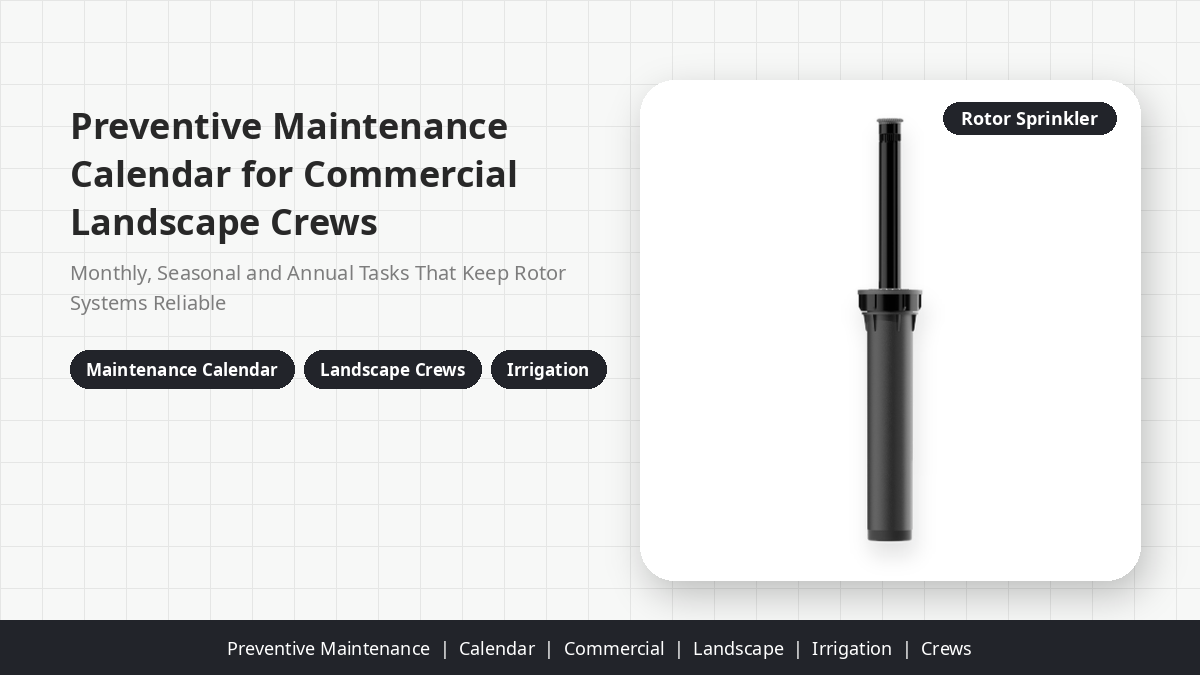
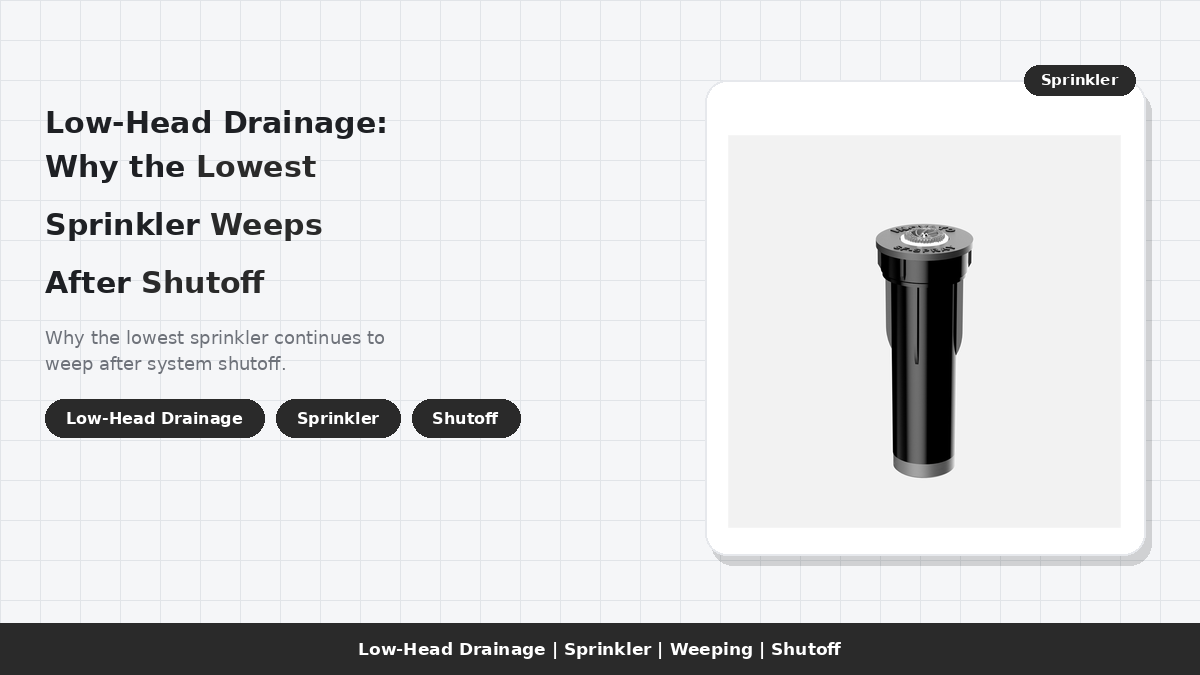
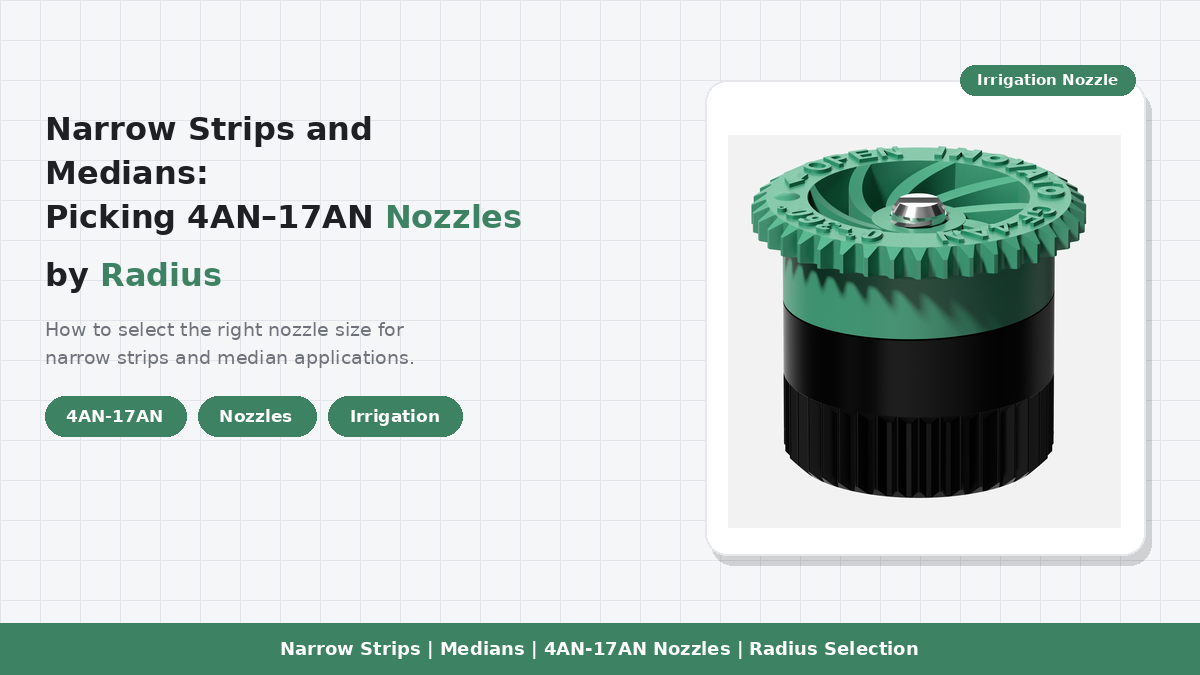
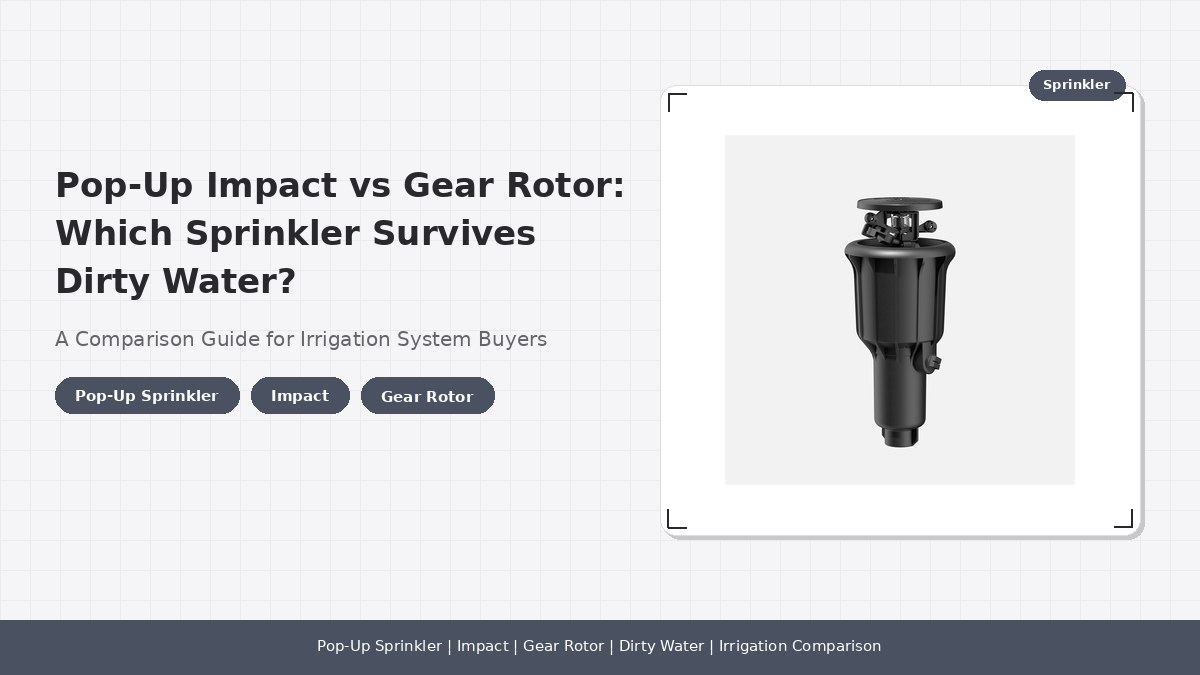
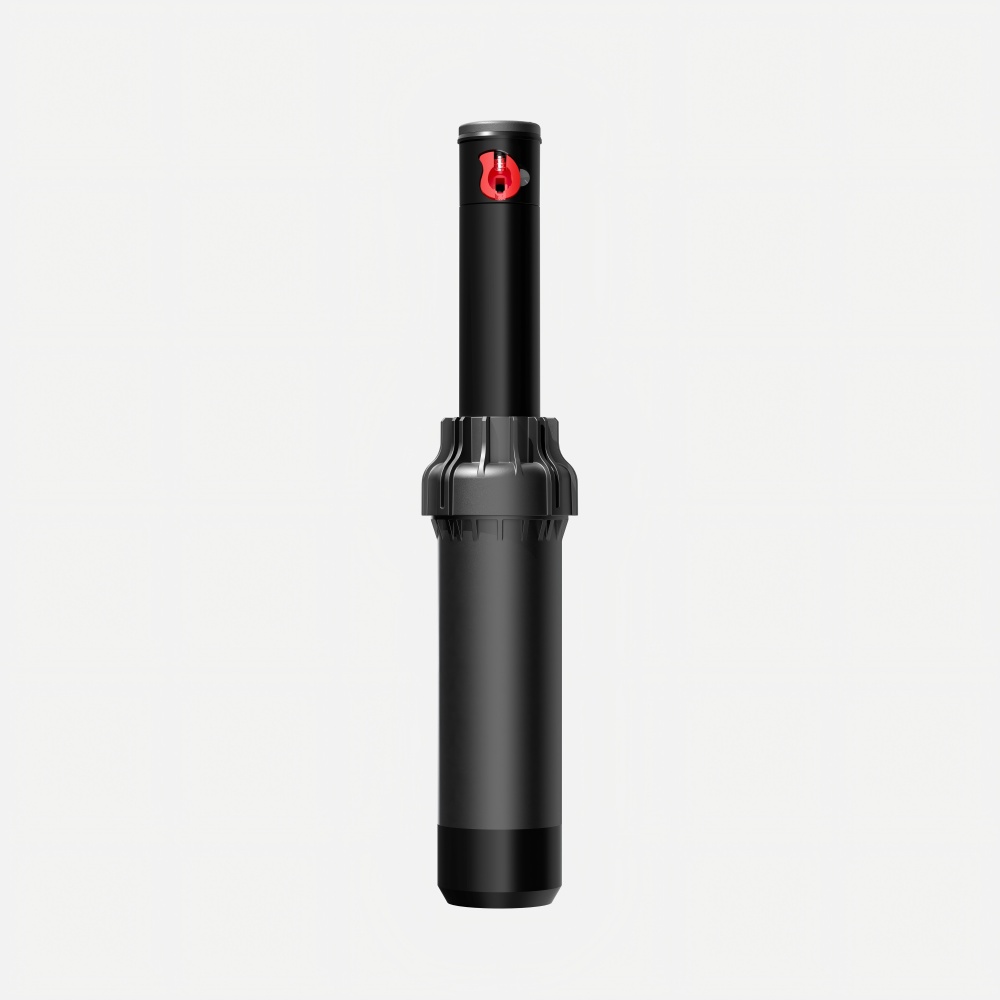
Image attribution: Featured HF01-04 product images are from INOVATO's official product photography archive. The HF01-04 main photo (Figure 1) and the HF01-04 nozzle detail (Figure 2) are original product photography of the HF01-04 turfgrass rotor currently shipping from the INOVATO factory.