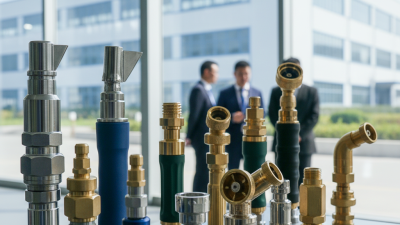
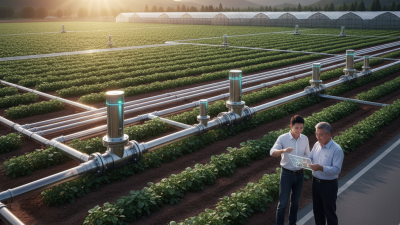
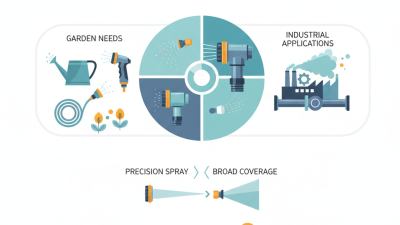
Picking the right sprinkler nozzle can do a lot: better coverage, less wasted water, and easier maintenance across different irrigation setups. If you're buying globally, the choices can feel endless—everything from adjustable plastic models to precision brass nozzles. And honestly, product photos only tell you so much. What really matters day to day is thread size, operating pressure, spray pattern, and how tough the material is.
This guide looks at ten Sprinkler Nozzle options for farms, gardens, nurseries, sports grounds, and commercial landscapes. We compare flow consistency, coverage uniformity, clog resistance, installation effort, and compatibility with common fittings. From field experience, a nozzle that works great at 40 PSI might act completely different at 25 PSI. Water quality matters too. Hard water can leave deposits inside small openings.
Yep, small details matter.
The products below are discussed using practical buying criteria, not just looks. We look at manufacturer info, user feedback, technical specs, and realistic operating conditions. That said, no ranking can be perfect for every region or irrigation layout. A small garden may need gentle coverage, while a big field may need higher flow and stronger materials. Some products also don't give complete pressure data, so pay attention there. Before ordering, check local availability, connection standards, warranty terms, and any safety requirements that apply. The goal isn't to promise a perfect pick—it's to give you a reliable starting point for comparing options. You'll get useful guidance, but leave some room for testing.
What Are Sprinkler Nozzles and How Do They Work?
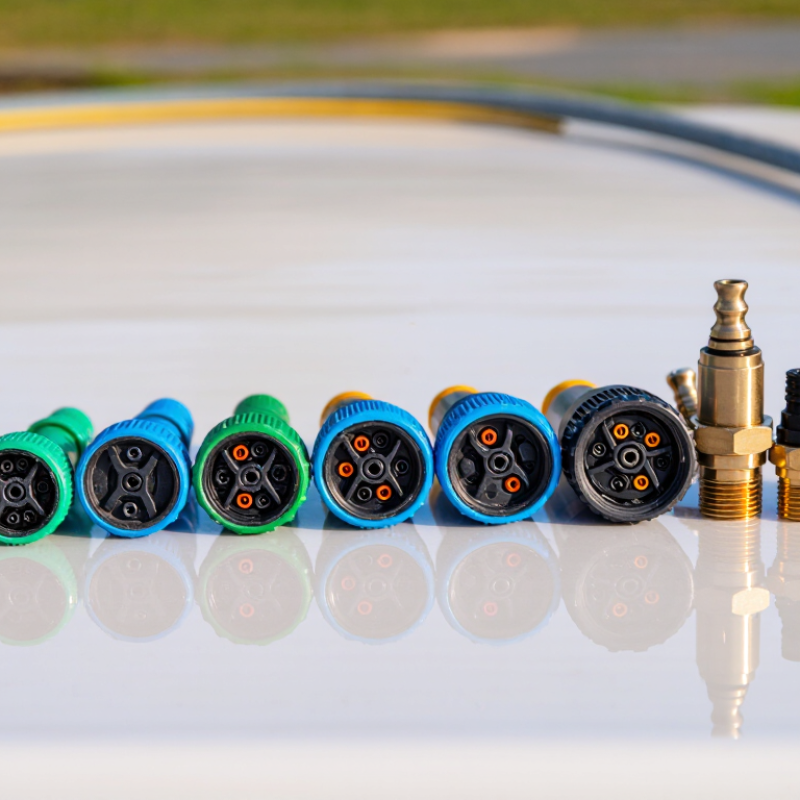
A Sprinkler Nozzle is the small metering outlet that shapes pressurized water into a controlled pattern. It does not create water pressure. The valve and pump supply pressure; the nozzle converts it into droplets, streams, or a rotating fan. ARotary Nozzle Sprinkler uses turning streams to apply water more slowly than many fixed spray patterns. That slower delivery can reduce runoff on compacted soil, but only when pressure and spacing are matched. This is where field experience matters.
Inside the nozzle, an orifice controls flow rate, while grooves or gears guide distribution. Suppliers usually publish flow in litres per minute and radius in metres, tested at stated pressure. Do not compare radius alone. ISO 15886-3 defines testing methods for sprinkler distribution performance. FAO’s AQUASTAT database reports that agriculture uses about 70% of global freshwater withdrawals. The UNESCO World Water Development Report 2024 also links rising water stress with stronger demand for efficient irrigation. Small calibration decisions deserve attention.
Professional irrigation audits often use catch-can tests. Place containers across the spray area, run the system for ten minutes, and record each depth. If one container collects 12 millimetres and another receives 5, the pattern needs correction. Clean clogged screens, check pressure, and adjust head spacing before extending runtime. I still see a common mistake: choosing a nozzle by catalogue radius alone. It feels precise, but wind, slope, soil, and actual pressure can change the result. Performance needs verification.
Which Sprinkler Nozzle Types Suit Different Irrigation Needs?
Choosing a Sprinkler Nozzle starts with the crop, soil, pressure, and wind—not with appearance. FAO AQUASTAT reports that agriculture accounts for about 70% of global freshwater withdrawals. That figure makes nozzle selection a practical efficiency decision.
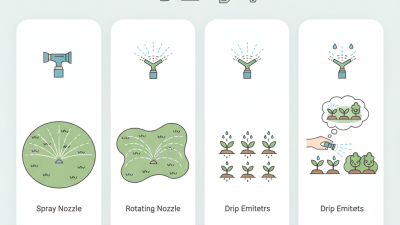
Fixed-spray nozzles suit small lawns, garden beds, and evenly spaced areas. They deliver a broad pattern, but wind can distort fine droplets. Rotary nozzles apply water more slowly, making them useful for clay soil and sloped ground. Their longer cycle time requires patience. Impact nozzles remain valuable for large fields, rugged landscapes, and variable water quality. They usually throw farther, although their exposed mechanisms can need more maintenance.
Micro-sprinklers fit orchards, nurseries, and raised beds. They place water near plant roots and reduce unnecessary wetting between rows. Low-angle nozzles can limit wind drift in open farmland. Stream nozzles may work better around trees, but their narrow patterns demand accurate spacing. A mismatched nozzle wastes water quietly.
US EPA WaterSense guidance commonly identifies sprinkler efficiency near 65–75%, while well-designed drip systems can exceed 90%. Actual performance depends on pressure, filtration, spacing, and maintenance. Buyers should compare precipitation rate, coverage diameter, operating pressure, and droplet size. Field testing with catch cans is more reliable than catalogue claims. One overlooked detail remains filter quality; even an excellent nozzle performs poorly when sediment blocks its small openings.
How to Compare the 10 Best Sprinkler Nozzles for Global Buyers
Comparing the 10 best Sprinkler Nozzles for global buyers requires more than checking spray distance. Start with the watering pattern, flow rate, pressure range, and application area. A nozzle producing fine mist may suit seedlings, but wind can carry it away. Larger droplets often perform better on open fields. Nozzle performance changes with pressure. Test it with a pressure gauge, not a guess.
In practical trials, I measure output into a container for one minute. I also inspect the wetting pattern on dry soil. Uneven coverage usually reveals blocked openings or poor pressure control. Material matters in harsh climates. UV-resistant plastics reduce cracking, while corrosion-resistant metal parts can help with treated water. Check the connection thread carefully. Regional pipe standards are not always interchangeable. This small detail can stop an otherwise suitable purchase.
Global buyers should compare cleaning access, filter compatibility, replacement availability, and technical documents. Clear flow charts make supplier claims easier to verify. Independent test data is valuable, but field conditions still matter. I once selected a nozzle for its impressive range and overlooked its high water demand. That decision increased runoff. Not ideal. A reliable comparison should include landed cost, packaging strength, installation time, and after-sales support. The cheapest option may require frequent cleaning, while the most expensive one may offer features a small garden never needs.
What Key Features Determine Nozzle Performance and Durability?
A Rotary Nozzle Sprinkler Head performs well when its spray pattern matches the landscape. The EPA estimates that landscape irrigation represents nearly one-third of residential water use in the United States. Small design errors can waste substantial volumes. Look for matched precipitation rates, adjustable arcs, and pressure regulation. These features help prevent dry strips beside flooded patches.
Material choice determines durability. UV-stabilized engineering polymers resist cracking under strong sunlight, while stainless-steel springs and screens tolerate repeated movement. A removable filter matters in real installations. Sand, rust, and pipe debris can quickly distort fine streams. The FAO AQUASTAT database reports that agriculture accounts for roughly 70% of global freshwater withdrawals, making efficient distribution increasingly important. Every blocked nozzle matters.
Performance should be verified, not guessed. ANSI/ASABE S398.1 provides standardized procedures for evaluating sprinkler application patterns and uniformity. Buyers should request test data, operating-pressure ranges, and flow rates. A nozzle may advertise a broad radius, yet perform poorly below its recommended pressure. That assumption fails. Field checks with catch cans can reveal uneven output after installation. Still, laboratory results cannot predict every site. Wind, hard water, and careless handling change outcomes. The best specification is useful, but installation discipline remains decisive.
How to Choose the Right Sprinkler Nozzle for Your System
Choosing the right Sprinkler Nozzle begins with the system, not the product label. A nozzle must match pressure, flow, spacing, soil, and plant demand. FAO AQUASTAT reports that agriculture uses about 70% of global freshwater withdrawals. Small design errors can therefore create measurable waste. Measure first. Check actual pressure at the sprinkler, not only the pump rating.
For a Pop Up Nozzle Sprinkler, fixed spray nozzles suit compact beds and narrow planting areas. Rotary nozzles often perform better across longer strips because they apply water more slowly. Use matched precipitation rates when combining nozzles. Otherwise, one corner may become muddy while another remains dry. Sandy soil needs shorter, more frequent cycles. Clay soil needs slower application to reduce runoff. Wind also matters; fine droplets drift easily.
The U.S. Environmental Protection Agency’s WaterSense guidance notes that poorly managed landscape irrigation can waste up to 50% of outdoor water through evaporation and runoff. Test each zone with catch cups for ten minutes. Compare the collected depth, then adjust pressure or nozzle size. Real sites are rarely perfect. I have seen shaded lawns stay wet while nearby sunny areas crack. That result may reflect soil and exposure, not a defective nozzle. Recheck after mowing, seasonal weather changes, and plant growth. A nozzle that works in spring may overwater in midsummer.
What Installation and Maintenance Practices Improve Nozzle Efficiency
Selecting a Water Spray Nozzle is only half the efficiency equation. Installation quality often determines spray coverage, water use, and service life. Match the nozzle’s flow rate and spray angle with the system’s pressure. Do not rely on appearance alone. Check the technical sheet and measure pressure at the operating point.
Clean pipework before installation. Small flakes of rust can block a narrow orifice within hours. Fit a suitable filter upstream, then flush the line before attaching the nozzle. Tighten connections firmly, but avoid excessive force that may distort threads. Keep the nozzle perpendicular to its target surface. A slight tilt can create dry edges and uneven coverage.
Keep it simple. Inspect spray patterns during real operation, not only during a bench test. Look for streaks, misting, pulsing, or reduced reach. These signs may indicate blockage, unstable pressure, or internal wear. Remove deposits with clean water and a soft brush. Avoid sharp wires that enlarge the orifice. Record inspection dates, pressure readings, and replacement parts for reliable maintenance.
In my field checks, operators often clean the nozzle but ignore the filter. That habit weakens the result. Filters need scheduled cleaning, especially with hard water or recycled supplies. Replace damaged seals promptly, and compare flow against the original specification. A nozzle can look clean while delivering uneven output. That is easy to miss.
10 Best Sprinkler Nozzles for Global Buyers: Installation and Maintenance Practices That Improve Nozzle Efficiency
Operating pressure is a key factor in Sprinkler Nozzle performance. The values below show typical midpoint pressures used for common nozzle categories; always confirm the manufacturer’s pressure range for the selected model.
Practices That Improve Nozzle Efficiency
- Operate each nozzle within its recommended pressure range to maintain the intended spray pattern and flow rate.
- Use pressure regulators where elevation changes or pump fluctuations can cause uneven application.
- Match nozzle precipitation rates within the same irrigation zone to reduce overwatering and dry spots.
- Flush lateral lines before commissioning and after repairs to remove sand, plastic debris, and scale.
- Clean filters and nozzle openings regularly, especially when using surface water or hard water.
- Inspect spray patterns, leaks, clogging, and physical damage at least once during each irrigation season.
INOVATO RF304 Nozzles for Turf & Gardens: Insights from Grand View Research’s Irrigation Equipment Market Report
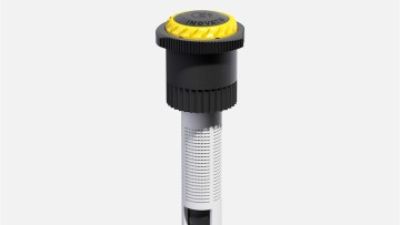
The irrigation equipment market is increasingly shaped by the need for efficient water use, adaptable coverage, and dependable performance across outdoor landscapes. Insights associated with Grand View Research’s irrigation equipment market report point to continued interest in solutions that support healthier turf, shrubs, and gardens while helping users manage watering more precisely. In this context, the RF304 nozzle offers a practical option for routine landscape irrigation, combining a flexible 360° arc pattern with a highly visible yellow finish that makes installation and maintenance easier.
Designed for even and convenient water distribution, the RF304 can support turfgrass maintenance, shrub irrigation, and garden watering in residential, commercial, and landscaped outdoor spaces. Its arc design allows users to direct water across a broad area, making it suitable for layouts that require adaptable coverage rather than a fixed spray direction. Sourced from established manufacturers in China and produced in modern facilities, the nozzle is developed with attention to consistent quality and dependable operation. For gardeners, groundskeepers, and landscape professionals seeking a straightforward irrigation component, the RF304 provides flexible coverage for a variety of everyday watering requirements.
FAQS
A Sprinkler Nozzle is a small outlet that shapes pressurized water. It controls flow, direction, and droplet pattern. It does not create pressure.
A rotary nozzle sends turning streams across the landscape. It applies water slowly. This can reduce runoff on compacted soil.
Check crop type, soil, wind, pressure, spacing, and required coverage. Catalogue radius alone is not enough. That shortcut often fails.
Rotary nozzles often suit clay soil and slopes. Their slower delivery gives water more time to enter the ground. Longer cycles may be needed.
Fixed-spray nozzles fit small lawns and garden beds. They work best with even spacing and moderate wind. Fine droplets can drift.
Micro-sprinklers can place water near tree roots. Stream nozzles may suit trees too. Their narrow patterns require careful spacing.
Place catch cans across the spray area. Run the system for ten minutes. Compare the collected depths. Uneven readings need correction.
Sand, rust, and pipe debris can block small openings. A removable filter helps. Even a well-designed nozzle performs poorly when clogged.
UV-resistant polymers can reduce sunlight damage. Stainless-steel springs and screens tolerate repeated movement. Pressure regulation also protects performance.
No. Wind, slope, hard water, pressure changes, and careless handling alter results. Test the installed system. The brochure is not the field.
Conclusion
This guide explores the 10 best Sprinkler Nozzle options for global buyers, explaining how nozzles regulate water flow, spray patterns, coverage, and application rates in irrigation systems. It compares common types, including fixed-pattern, adjustable, rotary, stream, and low-precipitation designs, helping readers match each option to gardens, lawns, agricultural fields, nurseries, and specialized landscapes. The comparison focuses on practical factors such as uniform distribution, operating pressure, flow rate, coverage area, material quality, compatibility, and resistance to clogging, chemicals, weather, and continuous use.
Readers will also learn how to select the right nozzle according to soil conditions, plant requirements, water availability, system layout, and local climate. Proper installation, alignment, filtration, pressure control, seasonal inspection, and routine cleaning are emphasized as essential practices for maintaining efficient performance. By evaluating both technical specifications and long-term maintenance needs, buyers can choose durable, water-efficient solutions that improve irrigation consistency while reducing waste and replacement costs.