You know, China’s Garden Sprinkler industry is really gaining ground these days. As landscapes become more complex and demanding, there's a growing need for water distribution that’s both precise and efficient. China, with its huge manufacturing capacity, competitive prices, and flexible private-label options, is stepping up to meet this demand. Suppliers are providing solutions for everything—from gardens and nurseries to parks, farms, and even residential projects around the world.
Now, here’s a little eye-opener: According to the Food and Agriculture Organization, about 70% of the world’s freshwater is used for agriculture. That’s a massive chunk! So, choosing the right outdoor irrigation products isn’t just a matter of convenience—it’s essential. The U.S. EPA also points out that inefficient sprinkler systems can waste a ton of water. All this means that adjustable nozzles, pressure controls, timers, and even smart irrigation tech are in high demand.
Performance is everything, right?
A good Garden Sprinkler should spray evenly, have a stable rotation, and be built to last. Plus, they should be easy to maintain. Chinese manufacturers are now blending plastic molding, stainless-steel parts, and automated testing to get better quality. But, hey — don’t just rely on what’s in the catalog. Real-world testing is key because spray distances can change based on pressure, wind conditions, water quality, or even how high you install the sprinkler.
Chris Perry, an irrigation researcher and co-author of the book “Does Improved Irrigation Technology Save Water?”, once said, “There is no such thing as a water-saving irrigation tech.” That’s a pretty strong warning, but it’s worth paying attention to. A well-designed sprinkler can definitely boost efficiency, but if you ignore good scheduling, you might end up wasting water anyway.
Market reports from sources like Grand View Research suggest that irrigation equipment and smart watering tech are still on the rise. But keep in mind, numbers vary a lot because everyone defines things a little differently. So, if you’re shopping around, it’s smart to compare things like testing methods, certifications, warranty terms, and how easily you can get replacement parts.
In this guide, we look at China’s top Garden Sprinkler manufacturers and suppliers, based on practical criteria. Things like product consistency, engineering support, export experience, and transparent documentation matter way more than flashy brochures. Mistakes happen — the trick is to evaluate carefully so you can avoid them and find the best options for your needs.
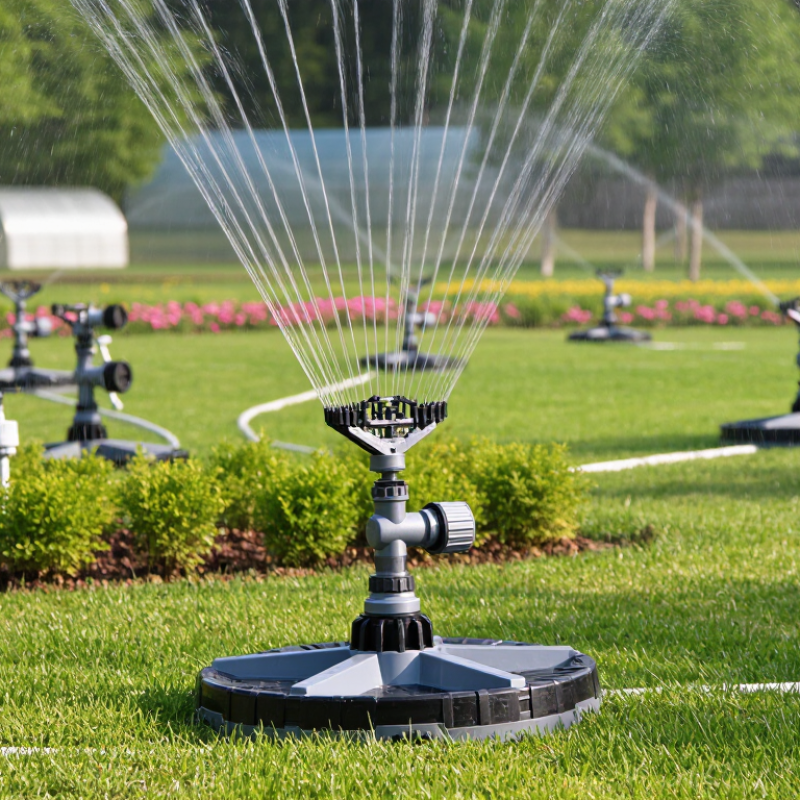
China’s Garden Sprinkler manufacturers produce several practical systems for lawns, nurseries, and small farms. Impact sprinklers rotate through a strong water pulse, making them suitable for wide, open areas. Their metal or reinforced plastic bodies can tolerate frequent outdoor use, but poor water pressure may reduce rotation.
Oscillating sprinklers move water through a row of small openings. They create a rectangular pattern and work well on narrow lawns or planted beds. Rotary Sprinklers use multiple arms or rotating heads for circular coverage. They usually apply water more gently than impact models.
Spike sprinklers are easy to place in soil, while tripod versions raise the spray above flowers and low crops. Micro-spray and misting types deliver smaller droplets for seedlings, greenhouse plants, and hanging baskets. Too much mist can drift in windy weather.
Selectionrequires more than checking the advertised coverage. Measure water pressure, hose size, connection type, and the actual garden shape. In supplier evaluations, buyers should request spray-pattern tests and material details. UV-resistant plastics are useful in strong sunlight, while stainless steel parts can improve durability. A common mistake is choosing the largest sprinkler for a weak pump. It may look efficient, yet leave dry patches. Another concern is uneven watering near the edges. Simple field testing with shallow containers can reveal this problem before large-scale purchasing. Manufacturers that provide clear flow-rate data, inspection records, and replacement-part information are generally easier to assess reliably.
China’s sprinkler manufacturing industry combines large production capacity with practical irrigation expertise. Many factories produce impact, rotary, gear-drive, and micro-sprinkler systems. Their product lines often support farms, landscaping projects, and home gardens.
A strong supplier should show clear material specifications and reliable flow data. Brass, stainless steel, and UV-resistant engineering plastics serve different working conditions. Factory testing may include pressure checks, spray-radius measurement, and long-cycle operation. These details matter when choosing a Water Sprinkler For Garden use. Custom nozzle sizes, adjustable arcs, and threaded connections can simplify installation. Export experience also helps suppliers understand packaging, documentation, and regional standards. Still, low pricing can distract buyers from durability. A sample may perform well, while a larger batch varies slightly. That weakness deserves careful review.
Tips: Request test videos, material reports, and a small sample order. Check spray coverage at several water pressures. Ask how rejected units are handled. Compare actual water use, not only advertised range. A simple field test can reveal uneven rotation, blocked nozzles, or leaking joints. Also, keep installation conditions realistic. Clean water is not always available. Some designs need filters, but product descriptions may explain this poorly. That gap should encourage further questions.
Agriculture accounted for approximately 64.0% of China’s total water use in 2023, making water-efficient irrigation a major demand driver for sprinkler and garden irrigation equipment. This market environment encourages manufacturers to focus on uniform coverage, adjustable flow control, water conservation, corrosion resistance, and compatibility with automated irrigation systems.
Source: China Water Resources Bulletin 2023. Values are shown in billion cubic meters.
China’s Garden Sprinkler supply base covers several practical categories, each serving a different watering pattern.
Impact sprinklers suit lawns and open beds. Rotary models spread water more evenly across larger areas. Micro-sprinklers work well in nurseries, greenhouse rows, and young plants. Hose-end sprinklers remain simple for home gardens. They are easy to replace.
Leading manufacturers usually specialize in molded plastic parts, metal impact heads, micro-irrigation assemblies, or complete watering kits.
Some suppliers provide OEM and ODM production, while others focus on standard wholesale models.
During supplier evaluation, check nozzle consistency, connection size, pressure range, and material thickness. Ask for flow-rate data under real operating pressure. A polished catalog is not enough.
Practical testing should include outdoor placement, water distribution, and repeated connector use.
Look for stable rotation, clean spray edges, and seals that resist cracking after sun exposure.
Agricultural buyers may need filters, regulators, and spare nozzles from the same supplier. Residential buyers often value quick installation more than maximum coverage.
One weakness remains: published coverage figures can look optimistic. Test samples before a large order.
Also review packaging, inspection records, production capacity, and response speed. Reliable communication matters when specifications change.
Reliable Garden Sprinkler Heads begin with materials that tolerate pressure, sunlight, and repeated temperature changes. Many Chinese suppliers use UV-stabilized polypropylene for bodies and stainless steel or brass for internal springs. EPDM seals can improve resistance to water and outdoor aging. However, material claims require evidence. A resin certificate alone does not prove long-term field performance.
FAO AQUASTAT reports that agriculture accounts for about 70% of global freshwater withdrawals. This makes spray efficiency more than a sales feature. During production, experienced factories should test flow rate, pressure range, nozzle alignment, and spray uniformity. ISO 15886 test methods offer useful guidance for sprinkler distribution testing. Dimensional checks also matter. A small nozzle variation can create a visible dry patch.
Traceability remains essential. Each batch should connect to material records, mold settings, pressure tests, and final inspection results. The ISO Survey reports millions of organizations holding ISO 9001 certification worldwide, but certification does not guarantee perfect products. That distinction is easy to miss. Suppliers should provide pressure-flow curves and sample test records, not only polished certificates. I would also question factories that avoid salt-spray or UV-aging data. Outdoor products sometimes fail quietly after one season. More independent testing would make comparisons fairer.
Choosing a reliable Chinese sprinkler supplier requires more than comparing prices. FAO AQUASTAT reports that agriculture uses roughly 70% of global freshwater withdrawals. This makes water efficiency a practical purchasing concern. Ask for flow-rate, pressure, and distribution-uniformity data for each Rotating Garden Sprinklermodel. Suppliers should explain testing methods, materials, nozzle tolerances, and expected service life. ISO 15886 provides relevant guidance for agricultural Irrigation Sprinkler performance. A serious factory should understand these requirements, not merely repeat them.
Visit the production site when possible, or request a live video inspection. Check injection-moulding machines, assembly benches, quality records, and packed cartons. Ask for samples from different production batches. One attractive sample proves little. Request independent laboratory reports when claims involve water savings or durability. Confirm whether test results match your operating pressure, water quality, and installation height. Small details matter, such as thread accuracy, filter access, and resistance to sunlight. I would also test several units outdoors, because laboratory confidence can fail in dusty gardens. That is an uncomfortable but useful lesson.
Tips: Get a written specification before negotiation. Include flow range, spray radius, materials, packaging, inspection steps, lead time, and warranty terms. Check communication speed and technical accuracy. A supplier that answers vaguely may create expensive delays later. Compare at least three factories, then review one small trial order. Do not judge reliability from low pricing alone. A cheaper sprinkler can waste water, jam quickly, or produce uneven coverage. Ask how complaints are recorded and corrected. Their after-sales process often reveals more than their catalogue.
China’s Garden Sprinkler suppliers serve wholesalers, landscaping contractors, and online retailers worldwide. When ordering aGarden Rotating Sprinkler, define the application before discussing price. Measure coverage radius, water pressure, inlet size, and expected operating hours. A low-cost model may perform poorly with weak pumps or uneven water flow.
Request technical drawings, material details, spray-range data, and sample units. Check whether the body uses UV-resistant plastic, corrosion-resistant metal, or a mixed construction. Ask for nozzle consistency and rotation testing. Small differences can create dry patches. They matter. Customization may include color, logo placement, packaging, connector standards, and private-label instructions. However, complex molds can increase tooling costs and delay production. A practical mistake is approving artwork before confirming carton dimensions.
Export orders require careful document control. Confirm product codes, packing lists, invoices, and shipping marks with the supplier. Destination markets may require specific materials, labeling, packaging, or water-connection standards, so verify current requirements with an experienced customs broker. Inspect samples before mass production, then use pre-shipment checks for quantity, leakage, rotation, and packaging damage. Factory photos help, but they are not enough. Consider an independent inspection when the order is large. Clear payment stages, written tolerances, and a defined remedy for defects reduce disputes. I would also leave time for rework; production schedules are rarely perfect.
| Evaluation Dimension | Common Industry Data or Requirement | Ordering Considerations | Customization Options | Export Considerations |
|---|---|---|---|---|
| Product Types | Impact sprinklers, gear-drive rotors, oscillating sprinklers, impulse sprinklers, spray nozzles, and micro-irrigation accessories. | Select the product according to lawn size, crop type, required coverage, water source, and installation method. | Housing shape, sprinkler head type, nozzle configuration, connector type, and application-specific accessories. | Confirm the product classification, packaging format, destination-market requirements, and applicable customs codes. |
| Typical Materials | UV-stabilized polypropylene, ABS, acetal, brass, stainless steel, zinc alloy, rubber, and engineering plastics. | Request the material specification for the body, nozzle, spring, shaft, seal, and connection components. | Material grade, color, corrosion resistance, UV resistance, seal compound, and metal-to-plastic component combinations. | Verify that materials are suitable for the destination climate and comply with any water-contact or chemical-resistance requirements. |
| Operating Pressure | Many residential and light-commercial sprinklers operate within approximately 2–5 bar, depending on the design and nozzle. | Provide the available water pressure and flow rate before selecting the sprinkler model and nozzle. | Nozzle size, pressure-compensation features, flow-control components, and connection specifications. | Include pressure and flow data in technical documents so installers can correctly size pumps, pipes, and regulators. |
| Coverage and Spray Pattern | Coverage varies by pressure, nozzle, installation height, wind, and sprinkler design; common patterns include full-circle, part-circle, strip, and fan spray. | Ask for tested radius, flow rate, distribution data, and recommended spacing rather than relying only on nominal product descriptions. | Adjustable arc, interchangeable nozzles, low-angle spray, narrow strips, and matched-precipitation nozzle sets. | Use metric and imperial specifications where required, and provide clear installation diagrams for overseas users. |
| Connection Standards | Common configurations include hose-end fittings, BSP threads, NPT threads, quick-connect fittings, and barbed connectors. | Specify thread type, nominal size, gender, sealing method, and hose or pipe compatibility before placing an order. | Thread conversion adapters, custom connector dimensions, quick-connect systems, and regional fitting configurations. | Avoid mixing BSP and NPT specifications; provide dimensional drawings and thread tolerances in the commercial documents. |
| Order Quantity | Minimum order quantities vary by product complexity, packaging method, mold requirements, and whether private labeling is requested. | Request separate quantities for samples, standard products, customized products, and repeat production orders. | Custom color, packaging, printing, and tooling generally require higher quantities than standard stock products. | Calculate the order quantity according to carton capacity, pallet utilization, container loading, and local inventory demand. |
| Samples and Pre-Production Approval | A sample evaluation normally covers dimensions, water distribution, spray distance, leakage, connection fit, and appearance. | Approve a signed sample or reference specification before mass production. | Prototype revisions may include color matching, nozzle changes, logo placement, packaging artwork, or component updates. | Keep approved samples, inspection records, and product photographs for receiving inspection and dispute prevention. |
| Quality Control | Typical checks include incoming-material inspection, dimensional control, assembly inspection, leak testing, spray testing, and carton inspection. | Define acceptance criteria, sampling level, inspection timing, and corrective-action procedures in the purchase agreement. | Inspection plans can be adapted for special materials, tighter tolerances, custom assemblies, or performance-critical applications. | Consider pre-shipment inspection and retain batch numbers, test reports, packing lists, and photographs. |
| Packaging | Common formats include individual polybags or cartons, inner boxes, master cartons, and palletized export loads. | Confirm pack quantity, carton dimensions, gross weight, net weight, and product protection requirements. | Retail packaging, barcode labels, multilingual instructions, color boxes, inserts, and protective separators. | Use moisture-resistant materials where necessary and ensure shipping marks meet the buyer's logistics requirements. |
| Shipping and Trade Terms | Common arrangements include EXW, FOB, CIF, and DAP, depending on the buyer's logistics capability and destination. | Compare the total landed cost, including product price, inland transport, freight, insurance, duties, taxes, and destination charges. | Custom carton sizes and pallet patterns can improve container utilization and reduce transit damage. | Agree on Incoterms, port of loading, document responsibilities, shipping schedule, and cargo insurance before production. |
| Documentation | Standard export documents may include commercial invoice, packing list, bill of lading, certificate of origin, and inspection records. | Confirm document format, consignee information, product description, quantities, and declared values in advance. | Technical drawings, multilingual manuals, installation guides, retail labels, and customized compliance files. | Check destination-country customs, labeling, packaging, material, and product-safety requirements before shipment. |
| Lead Time Planning | Lead time depends on stock availability, order volume, tooling, packaging approval, production capacity, and seasonal demand. | Request a written schedule covering sample approval, material preparation, production, inspection, and dispatch. | New molds, custom colors, printed packaging, and special components generally add development time. | Add buffer time for port congestion, customs clearance, holidays, transshipment, and inland delivery. |
| After-Sales Support | Support may include spare parts, installation guidance, troubleshooting instructions, replacement procedures, and warranty terms. | Define warranty duration, claim evidence, response time, replacement policy, and responsibility for defective goods. | Spare-part kits, repair instructions, product training materials, and dedicated technical documentation. | Ensure replacement parts can be shipped efficiently and that instructions are available in the destination market's language. |
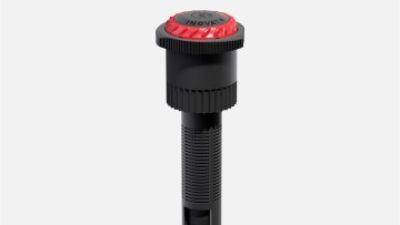
The RF101 Adjustable Nozzle delivers precise irrigation with a flexible spray arc ranging from 90° to 210°. This broad adjustment range makes it easy to match the water pattern to different planting layouts, helping direct water where it is needed while reducing unnecessary overspray. Whether watering a narrow lawn edge, a corner section, or a wider garden area, the nozzle provides controlled coverage for efficient everyday irrigation.
Designed for turfgrass, shrubs, and general garden maintenance, the RF101 offers practical performance across a variety of outdoor settings. Its bright red finish improves visibility during installation, adjustment, and routine use, making the nozzle easier to locate among plants or groundcover. Durable components support dependable operation, while the adjustable design allows users to fine-tune the spray without replacing the entire fitting. From maintaining healthy grass to supplying moisture around ornamental shrubs and flower beds, this nozzle provides a straightforward solution for accurate 90°–210° watering.
Factories commonly make impact, rotary, gear-drive, and micro-sprinkler systems. They serve farms, landscapes, and home gardens.
UV-resistant plastics suit many sprinkler bodies. Brass and stainless steel suit pressure-bearing parts. Seals may use weather-resistant rubber. Ask for supporting material records.
Request flow rates, pressure ranges, spray radii, and uniformity data. Check results at several water pressures. Advertised coverage can be optimistic.
Run the sample with realistic water pressure. Watch for uneven rotation, blocked nozzles, and leaking joints. Measure wet and dry areas on the ground. A short test is useful.
No certification guarantees perfect production. Ask for batch records, pressure tests, and inspection results. A certificate alone may hide variation between batches.
Confirm technical drawings, nozzle sizes, inlet dimensions, packaging details, and written tolerances. Approve samples before mass production. Small differences can create dry patches.
Suppliers may offer custom colors, packaging, connectors, and printed instructions. Complex molds can increase costs and extend schedules. Confirm carton dimensions before approving artwork.
Confirm product codes, packing lists, invoices, and shipping marks. Check destination labeling and connection requirements with a qualified customs professional. Use pre-shipment inspections for leaks, rotation, quantity, and damaged packaging.
Low prices may conceal weak materials or inconsistent batches. Clean water may be unavailable, so filters could become necessary. Factory photos are not enough. I would allow time for rework.
China’s garden sprinkler manufacturing industry offers a broad range of products, including impact sprinklers, Rotary Sprinklers, oscillating models, misting systems, and adjustable spray units for lawns, gardens, nurseries, and light agricultural use. Manufacturers commonly provide practical features such as adjustable coverage, water-saving designs, durable connections, flexible operating pressures, and compatibility with standard irrigation systems. The industry includes factories, specialized suppliers, trading companies, and customized solution providers, allowing buyers to select products based on application, order volume, and budget.
When choosing a reliable Chinese supplier, buyers should evaluate material quality, production capacity, testing procedures, certifications, communication, and after-sales support. Common materials include engineering plastics, stainless steel, aluminum, and brass, with quality control covering dimensions, water flow, spray range, sealing, and durability. Customers should also confirm customization options, packaging, sample approval, minimum order quantities, payment terms, shipping arrangements, and export documentation before placing an order. A clear agreement and consistent inspection process can help ensure the Garden Sprinkler meets performance and delivery expectations.