inquiry
Leave Your Message
0%

Picking the right Water Sprinkler manufacturer isn't just about price — it really impacts coverage, water efficiency, how long installation takes, and how much you'll spend on maintenance down the line. People around the world tend to compare things like the range of products they offer, how experienced their factories are, certification records, availability of spare parts, and the kind of technical support they provide. Sure, a cheaper option might seem appealing at first, but keep in mind that clogged nozzles, uneven spray patterns, or delays in getting replacement parts can end up boosting your project costs more than you'd think.

Well-known brands like Rain Bird, Hunter Industries, The Toro Company, Nelson Irrigation, and Orbit Irrigation cover different needs. Their product lines might include everything from agricultural sprinklers and landscape rotors to impact sprinklers, micro-irrigation parts, and even commercial control systems. When you’re choosing, pay attention to details like operating pressure, flow rate, connection size, spray radius, the quality of materials, and whether it’s suitable for your climate. For example, a brass impact sprinkler might be perfect for tough farm conditions, while a smaller plastic rotor could be just what your home garden needs.

Really, details matter a lot. And to make a solid choice, you want evidence—so take a good look at technical datasheets, independent test results, warranty info, factory audits, and how well their distribution network covers your area before signing any supply agreements. It’s also smart to ask if the manufacturer can support local installation teams and if they can supply replacement seals, filters, or nozzles when needed. Keep in mind, what works in one region might not work as well somewhere else—things like soil type, water quality, wind, and voltage can all affect how things perform in the field.

This guide highlights some of the top Water Sprinkler manufacturers for global buyers. It's meant to help with practical evaluation, not just rank companies arbitrarily. Remember, company reputations can change and public info isn’t always complete—so it’s worth verifying current certifications, production capacity, and export experience directly with each supplier. Taking the time to compare carefully might take a bit longer, but it’s definitely worth it to avoid surprises after installation and keep your project running smoothly.
Top Water Sprinkler Manufacturers for Global Buyers

Water Sprinklers: Types, Functions, and Global Applications

Water Sprinklers serve different jobs, and their design should match the application. Impact sprinklers throw water across wide agricultural fields. Rotary and oscillating models suit lawns and the Water Sprinkler For Garden category. Drip-style micro-sprinklers deliver slower streams around trees, seedlings, and greenhouse beds. Fire-protection sprinklers respond to heat, not smoke. Their fusible elements release water near the developing flame.

The need is substantial. FAO AQUASTAT reports that agriculture accounts for about 70% of global freshwater withdrawals. Efficient sprinkler spacing can reduce dry patches and unnecessary runoff, but only when pressure and nozzle output are checked. A practical test uses catch cans across the coverage area. Uneven depths often reveal blocked filters, poor spacing, or excessive pressure. Small details matter. Field experience also shows that wind can distort spray patterns, especially with elevated nozzles.

Fire systems require stronger evidence and stricter maintenance. An NFPA analysis of reported U.S. structure fires found automatic sprinklers operated in about 92% of cases when present and exposed to fire. They were effective in roughly 88% of those incidents. These figures support sprinkler protection, but they do not guarantee performance everywhere. Corrosion, closed control valves, unsuitable temperatures, and neglected inspections remain real weaknesses. Global buyers should examine flow rates, pressure ranges, installation standards, water quality, and replacement access. A technically impressive sprinkler can still fail when local technicians cannot service it.

Major Manufacturing Regions and Supplier Categories

Top Water Sprinkler Manufacturers for Global Buyers

Major Manufacturing Regions and Supplier Categories

Global buyers usually compare suppliers by production region, product focus, and quality control. East Asia offers broad capacity for agricultural, garden, and commercial irrigation parts. Many factories provide molded plastic bodies, brass fittings, nozzles, and automated assembly. South Asia is active in metal components and cost-sensitive irrigation equipment. Lead times can vary during peak export seasons.

European manufacturers often focus on engineered valves, precision nozzles, and efficient Water Sprinkler System designs. Their documentation is usually detailed, with pressure charts, flow data, and installation guidance. North American suppliers commonly serve large farms, municipal landscapes, and fire-protection projects. They may offer stronger technical support, replacement planning, and system testing services.

Supplier categories matter as much as location. Agricultural specialists understand crop spacing, soil absorption, and uneven field pressure. Landscape suppliers focus on coverage patterns, pop-up mechanisms, and quiet operation. Fire-protection suppliers require stricter testing, traceability, and project coordination. Industrial distributors can combine components from several factories, but compatibility must be checked carefully.

Ask for sample units.

I would not trust a catalog alone. Request material specifications, factory test records, packing photos, and recent production samples. Check thread sizes, spray radius, operating pressure, and resistance to ultraviolet exposure. A low price may hide fragile seals or inconsistent nozzle openings. Some suppliers communicate well before payment, then respond slowly after shipment. That risk deserves attention.

Key Criteria for Evaluating Sprinkler Manufacturers

For global buyers, evaluating sprinkler manufacturers requires more than comparing catalog prices. Product consistency, test evidence, and after-sales capability should guide the decision. The FAO AQUASTAT database reports that agriculture accounts for about 70% of global freshwater withdrawals. Therefore, a small efficiency gap can create serious operating costs.

Request pressure-flow curves, distribution-uniformity results, and material specifications for every Water Sprinkler For Lawn model. A credible manufacturer should explain nozzle performance at different pressures, not only show attractive photographs. Check whether testing follows recognized standards, such as ISO or relevant national irrigation requirements. Ask for samples from regular production, then inspect threads, seals, filters, and spray patterns. Not enough.

Manufacturers also need practical export strength. Confirm spare-part availability, packaging protection, installation instructions, and response times across time zones. The U.S. Environmental Protection Agency states that landscape irrigation can represent nearly one-third of residential water use. This makes leakage control and adjustment support commercially important. I would also examine warranty exclusions carefully. A long warranty means little if wear parts are difficult to obtain. One imperfect point remains: laboratory uniformity may decline in dusty, windy, or hard-water conditions. Buyers should request field data, but many suppliers cannot provide it. That gap deserves honest discussion, not optimistic assumptions. Choose the manufacturer that documents limitations clearly and helps installers correct them.

Top Water Sprinkler Manufacturers for Global Buyers - Key Criteria for Evaluating Sprinkler Manufacturers

Evaluation Dimension Key Data to Review Recognized Reference or Benchmark Recommended Evidence Why It Matters to Global Buyers
Product Certification Approval status for the exact sprinkler model, size, orientation, temperature rating, and finish being purchased. UL 199 listing, FM Approval, or another authority accepted by the destination market Current certificate, approval directory record, product datasheet, and marking photographs. Confirms that the product has been evaluated against recognized fire-sprinkler performance and manufacturing requirements.
Design-Code Compatibility Compatibility with the hydraulic design rules and installation requirements specified for the project. NFPA 13 is a widely used reference for the installation of sprinkler systems; local codes remain controlling. Technical compliance statement, installation instructions, and project-specific design confirmation. Reduces the risk of selecting a sprinkler that cannot be approved by the authority having jurisdiction.
Discharge Coefficient K-factor options available for the required hazard classification and hydraulic calculation. Common nominal K-factors include 2.8, 4.2, 5.6, 8.0, 11.2, and 14.0 in U.S. customary units; availability depends on the product design. Listed K-factor, flow-versus-pressure data, hydraulic calculation inputs, and approval documentation. Directly affects required flow and pressure, pipe sizing, pump selection, and system performance.
Pressure Rating Maximum working pressure, minimum operating pressure, and any pressure limitations for the selected model. 175 psi is a common rated working pressure, but the approved value must be verified for each model. Product data sheet, pressure rating on the approval document, and factory pressure-test records. Ensures safe operation under normal, surge, and system-test conditions.
Temperature Rating Nominal operating temperature range and the correct classification for the installation environment. Ordinary, intermediate, and high-temperature classifications are commonly used; exact temperature limits depend on the listing and code. Temperature-rating table, bulb or fusible-element specification, and installation guidance. Prevents premature activation or delayed operation in spaces with different ambient temperatures.
Sprinkler Type and Orientation Availability of pendent, upright, sidewall, concealed, dry, quick-response, and special-application configurations. The configuration must match the approved application, obstruction rules, ceiling type, and installation position. Type-specific datasheets, layout limitations, installation photographs, and approval scope. Improves installation flexibility and helps avoid field modifications that could invalidate approval.
Response Characteristics Thermal sensitivity and response classification for the intended occupancy and risk profile. Quick-response and standard-response sprinklers are distinct listed product categories. Response classification on the certificate, technical datasheet, and model identification label. Supports correct system design and alignment with occupancy-specific fire-protection requirements.
Materials and Corrosion Resistance Body material, thermal element material, coating, water-quality limitations, and suitability for corrosive environments. Stainless-steel or corrosion-resistant finishes may be required for specific environments; suitability must be confirmed for the application. Material declaration, finish specification, corrosion-resistance data, and environmental installation limits. Extends service life in humid, coastal, chemical, cold-storage, or otherwise aggressive environments.
Connection Standards Thread type, nominal connection size, wrenching requirements, and compatibility with local pipework practices. NPT and BSPT are different thread systems and should not be treated as interchangeable. Dimensional drawing, thread specification, gauge information, and sample inspection report. Prevents leakage, installation delays, adapter dependence, and compatibility problems at the job site.
Quality Management Manufacturing controls, traceability, inspection procedures, calibration, and corrective-action processes. ISO 9001 certification is a useful quality-management indicator, but it does not replace product approval. Valid ISO certificate, audit scope, inspection plan, batch traceability, and nonconformance procedure. Helps buyers evaluate consistency across production batches and reduce quality-related claims.
Testing and Inspection Hydrostatic testing, dimensional inspection, coating checks, marking verification, and sampling frequency. Test procedures should be documented and aligned with the applicable product approval requirements. Test reports, inspection records, calibration certificates, and certificate-of-conformance documents. Provides objective evidence that shipped products match the approved design and purchase specification.
Product Identification Model number, K-factor, temperature rating, orientation, approval marks, date or batch code, and manufacturer traceability code. Every delivered unit should be identifiable against the approved product documentation. Label photographs, packing list, batch records, certificate of conformity, and sample marking inspection. Supports receiving inspection, maintenance, replacement ordering, and regulatory audits.
Production Capacity Monthly capacity, available production lines, material availability, and ability to handle repeat orders. Capacity should be validated against the buyer's forecast, project schedule, and required delivery batches. Capacity statement, production schedule, previous shipment records, and confirmed allocation plan. Reduces the risk of shortages and schedule disruption on large or multi-phase projects.
Lead Time and Delivery Reliability Sample lead time, standard production lead time, export documentation time, and on-time delivery history. Evaluate quoted lead time together with documented on-time delivery performance rather than price alone. Order history summary, agreed production milestones, shipping records, and service-level commitments. Helps buyers coordinate installation, inspection, commissioning, and project handover.
Packaging and Export Readiness Individual protection, carton strength, palletization, moisture control, labeling, and export documentation. Packaging should protect temperature elements, finishes, threads, and approval markings during international transport. Packaging specification, carton drop-test information, packing photographs, and export document checklist. Minimizes transit damage, customs delays, missing documents, and installation-site sorting problems.
Technical Support Availability of application engineers, hydraulic-design assistance, submittal review, and installation guidance. Support should cover product selection, approval limitations, installation, inspection, and maintenance. Technical team profile, response-time commitment, design-submittal process, and service contact details. Improves project accuracy and shortens the time required to resolve technical questions.
Warranty and After-Sales Service Warranty duration, exclusions, claim process, replacement policy, and spare-product availability. Terms should be stated in writing and linked to installation, storage, and maintenance requirements. Warranty document, claim workflow, replacement lead time, and service-case references. Clarifies lifecycle responsibility and limits uncertainty after products are installed.
Total Cost of Ownership Unit price, freight, duties, adapters, inspection, replacement parts, installation effort, and expected service life. Compare landed cost and compliance risk, not only the quoted unit price. Incoterms quotation, landed-cost model, maintenance requirements, and lifecycle-cost assumptions. Provides a more realistic basis for supplier selection and long-term procurement planning.

Product Quality, Certifications, and International Standards

A reliable Grass Water Sprinkler begins with controlled water distribution, not attractive packaging. Global buyers should examine flow rate, operating pressure, spray radius, and coverage uniformity. These figures show how the product performs on real lawns. A useful test report should identify the nozzle, pressure, water volume, and testing method. Without those details, performance claims remain difficult to verify.

Material quality matters in outdoor conditions. UV-stabilized plastics resist sunlight, while stainless steel or treated metal parts can reduce corrosion. Seals should remain flexible after repeated watering cycles. Buyers should also check factory quality systems, such as ISO 9001 certification. Environmental controls under ISO 14001 may provide additional evidence of responsible production. However, a certificate alone does not prove sprinkler performance. It only supports confidence in the manufacturing process.

International compliance requires careful checking. Depending on the destination, products may need CE, UKCA, CSA, or AS/NZS-related documentation. Requirements differ by market and product design. Request certificates, laboratory reports, batch records, and clear installation instructions before placing large orders. Packaging should show model numbers and traceable production information. Small details matter.

Paperwork can look complete.
The product may still disappoint.

In practical evaluations, I would compare several units at the same pressure and measure dry spots after fifteen minutes. This simple check often reveals uneven coverage. It is not perfect, but it exposes weaknesses that photographs cannot show. A dependable manufacturer welcomes these questions and explains limitations honestly.

Procurement, Customization, and Global Shipping Considerations

Selecting top Water Sprinkler manufacturers requires more than comparing unit prices. The FAO’s AQUASTAT data indicates that agriculture uses about 70% of global freshwater withdrawals. Buyers should therefore examine application efficiency, pressure range, flow stability, and spare-part availability. Request test reports, material certificates, production samples, and clear warranty terms. A factory audit can reveal whether quality depends on one skilled technician.

Customization should begin with field conditions. Share water pressure, pipe diameter, coverage radius, soil type, climate, and installation drawings. Manufacturers may adjust nozzles, connection sizes, filters, packaging, and control components. However, customization can increase tooling costs and minimum order quantities. Small design changes may also affect hydraulic performance. That detail is often missed.

Shipping needs equal attention. UNCTAD’s Review of Maritime Transport reports that over 80% of world merchandise trade moves by sea. Confirm Incoterms, carton dimensions, pallet limits, insurance, and port handling charges before signing. Ask for pre-shipment inspection photos and serial-number records. Keep replacement parts in the first shipment.

A practical warning: the lowest quotation is rarely the complete cost. Freight surcharges, testing, and installation support can change the calculation. Procurement plans should include seasonal demand and currency movement. They should also allow time for redesign. Not every specification is perfect. Feedback from installers may expose assumptions that looked reasonable on paper.

Comparing Manufacturers by Industry and Buyer Requirements

Top Water Sprinkler Manufacturers for Global Buyers

Manufacturers should be compared by application, not appearance. Agricultural buyers often need wide coverage, low maintenance, and stable performance under uneven water pressure. Landscaping projects may prioritize compact design, quiet operation, and simple nozzle replacement. Fire protection buyers require tested components, traceable materials, and documented compliance with relevant local standards. Industrial users may demand corrosion resistance, higher flow rates, and custom layouts for cooling or dust control.

In supplier evaluations, I check test records, material specifications, production capacity, and after-sales response times. A factory with strong engineering support can adjust thread sizes, spray angles, or connection types for regional systems. However, the lowest quotation can hide weak seals, inconsistent spray patterns, or expensive replacement parts. That lesson is easy to miss. Buyers should request samples and compare performance under realistic pressure conditions. Certifications matter, but they should match the destination market and actual product model.

Tips: Define flow rate, pressure range, material, and installation environment before contacting manufacturers. Ask for batch inspection records and clear warranty terms. Confirm lead times, minimum order quantities, packaging strength, and spare-part availability. If a supplier avoids technical questions, pause the purchase. A polished catalog is not proof of dependable field performance.

China INOVATO HF02-04 Gear Drive Sprinkler: Features, Applications, and Factory Direct Sourcing

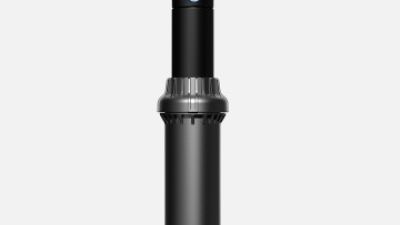
The HF02-04 gear-drive sprinkler is a practical solution for turfgrass, shrubs, and garden beds requiring controlled water distribution. Its 4-inch irrigation nozzle adjusts from 60° to 360°, allowing installers to match spray coverage with different landscape layouts. A ¾-inch inlet supports convenient connection to common irrigation systems, while the package includes eight standard nozzles and four low-angle nozzles for adapting flow and trajectory to planting conditions.

Efficient sprinkler selection is increasingly important as agriculture and landscaping face growing pressure to conserve water. The UN Food and Agriculture Organization reports that agriculture accounts for approximately 70% of global freshwater withdrawals, highlighting the value of precise application and reduced overspray. By choosing the appropriate nozzle and arc setting, users can improve coverage, limit watering beyond property boundaries, and support healthier root zones across mixed planting areas.

For distributors, contractors, and landscaping projects, factory-direct sourcing from China can simplify procurement and provide access to coordinated product specifications, quality inspection, and supply planning. The HF02-04 is suited to residential gardens, commercial green spaces, and ornamental planting beds where adjustable coverage and dependable gear-drive performance are essential. Its combination of multiple nozzle options, flexible arc adjustment, and compact 4-inch design supports efficient installation in diverse irrigation layouts.

FAQS

Which regions commonly supply Water Sprinkler components?

East Asia offers broad capacity for plastic bodies, brass fittings, nozzles, and automated assembly. South Asia often supplies metal parts and cost-sensitive equipment. European suppliers focus on precision valves and engineered designs. North American suppliers commonly support farms, landscapes, and large projects.

How should buyers choose a supplier category?

Agricultural specialists understand crop spacing, soil absorption, and uneven field pressure. Landscape suppliers focus on coverage, pop-up action, and quiet operation. Fire-protection suppliers require strict testing and traceability. Industrial distributors may combine several factories, so compatibility needs checking.

What documents should buyers request before placing an order?

Request material specifications, factory test records, pressure-flow curves, and installation instructions. Ask for packing photos and recent production samples. Documentation matters. A catalog alone can hide weaknesses.

Which sprinkler details should be checked on samples?

Inspect thread sizes, seal quality, filters, nozzle openings, and spray patterns. Measure spray radius at stated operating pressure. Check resistance to ultraviolet exposure. A fragile seal may fail before the sprinkler body does.

Why are pressure-flow curves important?

They show nozzle performance at different pressures. Photographs cannot confirm coverage or water output. Buyers should compare flow rates, spray radius, and distribution uniformity. The numbers may expose an attractive but inefficient design.

How can buyers evaluate production consistency?

Request samples from regular production, not specially prepared units. Compare several nozzles side by side. Look for uneven openings, rough threads, or inconsistent spray patterns. One sample proves very little.

What export and after-sales capabilities should be confirmed?

Confirm spare-part availability, packaging protection, warranty exclusions, and response times. Ask how quickly replacement seals and filters can be supplied. Peak export seasons may extend lead times. That risk is easy to underestimate.

Can laboratory test results predict field performance?

Not completely. Dust, wind, and hard water can reduce field uniformity. Ask for field data and cleaning guidance. Many suppliers cannot provide enough evidence. Buyers should admit that uncertainty.

How does irrigation efficiency affect operating costs?

Small efficiency losses can increase water use across large agricultural or landscape areas. Leakage and poor adjustment also raise maintenance costs. Check pressure settings and coverage during installation. Saving money upfront may create larger costs later.

Conclusion

This guide provides a practical overview of the Water Sprinkler industry for global buyers. It explains the main sprinkler types, their functions, and applications across agriculture, landscaping, fire protection, industrial facilities, and commercial projects. It also examines major manufacturing regions and supplier categories, helping buyers understand the differences between specialized producers, large-scale factories, and custom solution providers.

The article highlights essential criteria for evaluating manufacturers, including product quality, durability, testing procedures, certifications, and compliance with international standards. It also discusses procurement planning, customization options, packaging, lead times, shipping arrangements, and after-sales support. By comparing manufacturers according to industry needs, operating conditions, project scale, budget, and technical requirements, buyers can make more informed decisions and select reliable Water Sprinkler solutions for both standard and specialized applications.

Sophia

Sophia

Sophia is a dedicated marketing professional at Yuyao Sun-rainman Irrigation Equipment Factory, an innovative enterprise established in 2005. With a strong focus on research, development, and production, the company specializes in water-saving irrigation and water purification equipment. Sophia......
Previous 7 Tips for Choosing the Best Rotary Spray Nozzle