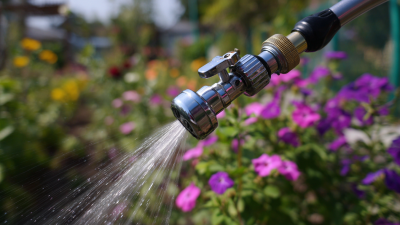
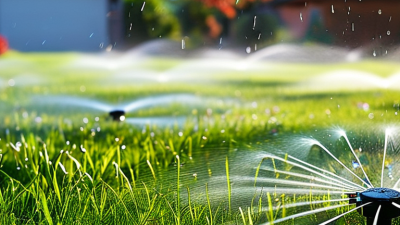
Picking out the right irrigation equipment in 2026 isn't just about comparing how far the spray reaches or checking online reviews — there's more to consider. A good Revolving Sprinkler should provide even coverage, steady rotation, and easy water control. But it also needs to match your landscape, soil type, water pressure, and how much maintenance you're willing to do. For example, a small garden might be perfectly served by a tiny plastic model, while a big sports lawn could demand something sturdier, like a metal unit with a wider spray radius.
In this guide, we’ll take a look at some of the top Revolving Sprinklers for different settings — whether you’ve got a cozy backyard, farm fields, nurseries, or larger commercial landscapes. We’ll cover various types, including rotating-arm, gear-driven, impact, and adjustable-pattern options. From experience, each type tends to perform differently. Some spray water evenly over flower beds, while others handle dusty conditions or uneven water pressure a lot better. The truth is, no single model is perfect for every property.
Performance really matters here. For instance, a sprinkler that can reach 12 meters might still leave dry spots right at its base. And a cheap head might work fine for a season, but then start collecting gunk inside and break down. These are the kinds of practical issues that can be easy to overlook — but they’re worth paying attention to. When testing, think about how well it distributes water, whether the rotation stays steady, how durable the materials really are, how easy it is to adjust, and how simple it is to clean. Sure, manufacturer specs can guide your choices, but real-world results are way more telling.
Plus, when shopping in 2026, the focus is shifting towards smarter watering and easier control. Features like flow adjustment, interchangeable nozzles, and compatibility with modern irrigation setups are becoming more popular. That said, fancy features mean nothing if you don’t install your sprinkler correctly. So, this overview will help you weigh the pros and cons of different Revolving Sprinkler designs, highlighting where each one shines — and where it might fall a bit short.
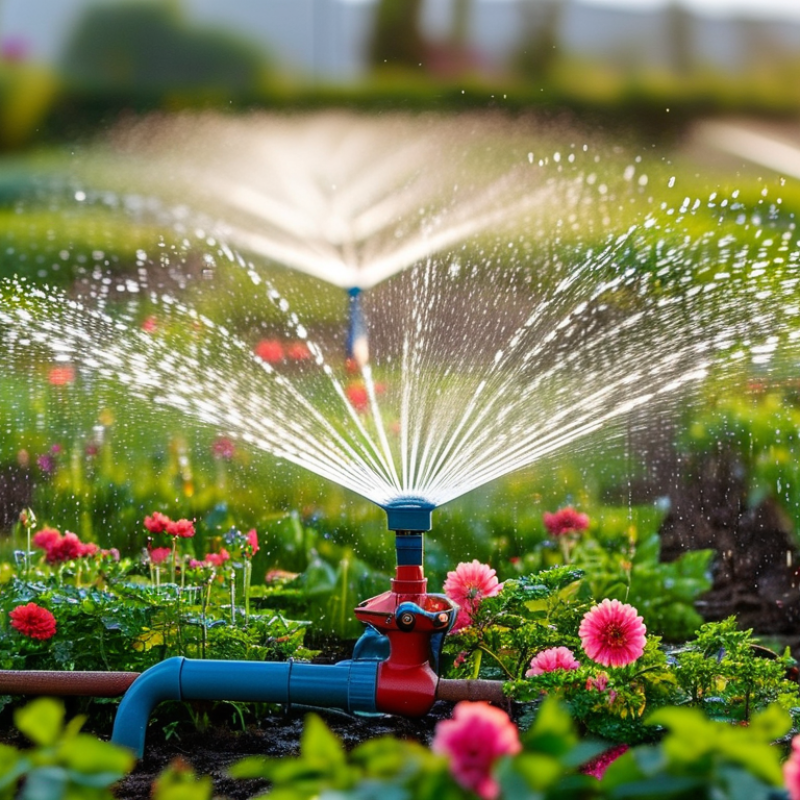
A Revolving Sprinkler distributes water through a rotating head rather than a stationary nozzle. Water pressure drives an impact arm, gear train, or internal turbine. The moving mechanism breaks the flow into repeated pulses or a smooth circular spray. This produces overlapping arcs across lawns, beds, and larger planting areas. Coverage depends on pressure, nozzle size, spacing, and wind.
A simple field test uses shallow cans placed around the spray pattern. Measure the collected water after ten minutes. Uneven depths expose dry zones that visual inspection can miss. Small details matter.
Impact sprinklers work well with moderate water pressure and can handle slightly gritty water. Gear-drive Rotary Sprinklers usually turn quietly and deliver a steadier pattern. Turbine-driven designs use flowing water to rotate internal parts. Low-angle models help reduce wind drift near open lawns. Adjustable arc heads suit corners, narrow beds, and irregular boundaries.
Their differences are practical, not decorative. Impact types may produce more noticeable noise. Gear systems can stop when filters clog. Turbine models may perform poorly at low pressure. I have found that a clean filter often improves coverage more than a larger nozzle.
Still, no setup performs perfectly. Slopes, compacted soil, and changing wind can defeat careful adjustments. Check the pressure range, rotation speed, and replacement-part access before installation.
In 2026, Revolving Sprinklers are available in several practical forms. Impact sprinklers remain useful for large lawns, sports fields, and open gardens. Their rotating arm produces a clear clicking sound and throws water across wide areas. They tolerate moderate water quality and are easy to adjust. However, wind can distort their spray pattern.
Gear-driven Rotary Sprinklers offer quieter operation and smoother coverage. They suit residential lawns, landscaped areas, and narrow planting zones. Adjustable arcs help prevent water from reaching paths or walls. Pop-up Rotary Sprinklers stay below the soil when inactive, reducing trip hazards and improving visual appearance. Portable Rotary Sprinklers work well for temporary beds, small yards, and changing layouts. Some use a tripod, while others connect directly to a hose.
Traveling sprinklers move slowly across grass by following a hose. They can cover broad spaces, but their route needs careful planning. Uneven ground may interrupt movement. Low-pressure rotary models are suitable for areas with limited supply, although their coverage may become inconsistent. In practical installations, matching nozzle size, operating pressure, soil type, and wind exposure matters more than choosing the newest design. I have found that a sprinkler advertised as “wide range” may still leave dry edges. That small weakness deserves attention. A simple catch-can test can reveal uneven watering before plants show stress.
What Are the 2026 Top Revolving Sprinkler Types?
Rotating impact sprinklers remain useful for large lawns, sports fields, and open planting beds. Their pulsing streams can reach 20 to 35 meters, depending on pressure and nozzle size. They create adjustable circles or partial arcs. Strong wind can distort the outer spray, however. I have seen dry strips appear beside fences when the arc was set too narrowly. Coverage matters more.
Gear-driven Rotary Sprinklers suit residential gardens and narrow landscapes. Their slower rotation releases larger droplets with less mist. Typical spray ranges fall between 5 and 15 meters. Many models allow arc adjustments from a small sector to a full circle. This flexibility helps avoid windows, paths, and vegetable beds. The pattern may look even, but pressure changes can leave weak edges.
Traveling Revolving Sprinklers move across larger grass areas while distributing water through rotating arms. They can cover long strips, although their speed affects application depth. A slow pass may create puddles near the starting point. A fast pass may leave pale grass behind. AWater Sprinkler should be tested with shallow collection cups placed across the area. Compare the water depth after one cycle. I sometimes adjust too quickly, before observing a complete rotation. That is a mistake worth avoiding. Soil slope, nozzle height, and wind direction still influence real water distribution.
What Are the 2026 Top Revolving Sprinkler Types?
For lawns, gear-drive rotary sprinklers offer quiet, even coverage. Their slow rotation reduces runoff on sloped ground. Impact rotary sprinklers suit large landscapes and strong water pressure. They throw farther, but their metal arms can feel noisy. For flower beds, adjustable rotary spray heads provide precise arcs around shrubs and paths. Micro-rotary emitters work well beside vegetables and young plants. They apply water gently.
The U.S. Environmental Protection Agency reports that outdoor irrigation can represent more than 30% of household water use. In dry regions, that share may reach 60%. This makes Irrigation And Sprinkler selection a practical water-management decision. A 2024 WaterSense landscape report also emphasizes proper scheduling, soil checks, and equipment maintenance. Large sites should consider pressure-regulated rotary heads and matched precipitation rates. Otherwise, one dry corner may sit beside a muddy patch. I still find “maximum distance” claims less useful than real site testing.
Tips: Measure pressure first. Watch one full rotation. Check the soil afterward. Choose gear-drive rotors for broad lawns, impact rotors for open fields, and micro-rotary units for garden rows. Set different schedules for sun, shade, and soil type. Trim grass around heads. A blocked nozzle changes coverage quickly. Also, inspect during windy weather; even a well-designed sprinkler can waste water then.
| Sprinkler Type | Rotating Mechanism | Typical Spray Pattern | Typical Coverage Diameter | Typical Flow Range | Recommended Water Pressure | Best Application | Main Advantages | Limitations | Water-Distribution Considerations |
|---|---|---|---|---|---|---|---|---|---|
| Impact Sprinkler | A pivoting arm interrupts the water stream and rotates the sprinkler head. | Full-circle or adjustable part-circle | Approximately 18–36 m | Approximately 11–38 L/min | Typically 2.8–5.5 bar | Large lawns, open grass areas, orchards, and long-range landscape zones | Long throw, durable construction, and good tolerance of moderately dirty water | Can be noisier than enclosed rotary designs; exposed moving parts may require cleaning | Wind can distort the long water stream; use catch-can testing to check uniformity |
| Gear-Drive Rotary Sprinkler | An enclosed gear train turns one or more rotating nozzles. | Adjustable arc, commonly part-circle or full-circle | Approximately 7–16 m | Approximately 4–30 L/min | Typically 2.1–4.8 bar | Residential lawns, landscaped beds, and medium-sized turf areas | Quiet operation, adjustable coverage, and cleaner appearance than exposed impact heads | Small filters and gears can be affected by sand, debris, or insufficient pressure | Lower application rates can reduce runoff on sloped or compacted soil |
| Multi-Stream Rotary Sprinkler | Several thin rotating streams sweep across the irrigated area. | Multiple rotating streams in a circular or adjustable arc pattern | Approximately 5–10 m | Approximately 2–15 L/min | Typically 1.7–4.1 bar | Small and medium lawns, narrow strips, and water-conscious residential landscapes | Low precipitation rate, attractive rotating pattern, and reduced overspray compared with some fixed sprays | Coverage may be uneven when installed at the wrong spacing or when pressure is too low | Use head-to-head spacing where possible and avoid placing streams directly against walls or paths |
| Rotary Spike Sprinkler | A compact rotating head is mounted on a ground spike and connected to a hose. | Usually adjustable part-circle or full-circle | Approximately 6–15 m | Approximately 5–25 L/min | Typically 2.1–4.1 bar | Temporary lawn watering, rental properties, and flexible garden layouts | Easy to reposition, requires no permanent installation, and works with standard hose connections | Coverage depends strongly on hose pressure; the spike can move in soft or uneven soil | Place on firm, level ground and avoid excessive hose bends that reduce flow |
| Rotating Garden Sprinkler | One or more small arms or nozzles rotate around a central body. | Full-circle or limited arc, depending on the adjustment design | Approximately 5–12 m | Approximately 4–20 L/min | Typically 1.7–3.4 bar | Vegetable gardens, flower beds, shrubs, and small grass areas | Simple setup, broad coverage, and convenient seasonal movement | Water may land on foliage; low-cost mechanisms can wear faster when exposed to grit | Water early in the day and keep spray away from structures to limit prolonged leaf wetness |
| Traveling Rotary Sprinkler | Water pressure drives rotating wheels or traction components that move the sprinkler along a hose or track. | Moving strip pattern, generally adjustable through nozzle selection and travel path | Effective path width approximately 4–12 m | Approximately 8–30 L/min | Typically 2.8–5.5 bar | Very large lawns, sports-field edges, and broad open landscapes without permanent irrigation | Covers long areas with fewer relocations and can provide gradual watering over a wide path | Needs a clear, relatively level route; turning and hose management require supervision | Travel speed affects application depth, so overlapping passes may be needed for even coverage |
| Low-Pressure Rotary Sprinkler | A pressure-regulated rotating nozzle or low-flow rotor distributes water slowly. | Adjustable arc or full-circle, depending on the nozzle design | Approximately 5–10 m | Approximately 2–12 L/min | Typically 1.4–3.0 bar | Low-pressure residential systems, small turf zones, and areas prone to runoff | Can operate with modest supply pressure and applies water more slowly than many conventional sprays | May not reach the advertised distance at very low pressure; clogged nozzles reduce performance | Confirm actual pressure at the sprinkler and use matched precipitation rates within the same zone |
| Pop-Up Rotary Sprinkler | An underground body rises during irrigation while an internal rotary mechanism distributes water. | Adjustable arc, commonly 40° to 360° | Approximately 5–14 m | Approximately 3–28 L/min | Typically 2.1–4.8 bar | Permanent residential lawns, formal gardens, and landscaped areas where appearance matters | Retracts below ground, reduces trip hazards, and integrates neatly with automatic irrigation controls | Requires installation and maintenance; mowing, soil settlement, and debris can affect head height | Set the top of the head level with finished grade and use head-to-head coverage for consistent results |
| High-Efficiency Rotary Nozzle | A rotating nozzle fitted to a compatible pop-up body produces several narrow streams. | Adjustable arc or full-circle | Approximately 4–9 m | Approximately 1.5–10 L/min | Typically 2.1–4.1 bar | Small lawn sections, narrow planting areas, and retrofit projects | Lower flow than many conventional spray nozzles and improved control over overspray | Not suitable for every existing spray body; performance declines when pressure is outside the operating range | Keep the nozzle type and precipitation rate consistent within each irrigation zone |
Revolving sprinklers are becoming more selective in 2026. Impact, gear-drive, and low-pressure rotary models remain the main choices. Each type suits different soil, pressure, and maintenance conditions.
FAO’s State of Food and Agriculture 2020 reports that agriculture uses about 70% of global freshwater withdrawals. That figure makes efficiency more than a selling point.
Material choice affects service life. Brass and stainless steel resist impact, sunlight, and mineral deposits better than basic plastics. Engineering-grade polymers can reduce weight and cost. However, cheaper plastic parts may become brittle after repeated ultraviolet exposure. That is easy to overlook. Look for sealed bearings, replaceable nozzles, and corrosion-resistant springs. These details matter in dusty fields and hard-water areas.
Adjustability is equally important. Flow control, arc adjustment, and interchangeable nozzles help match water delivery to plant spacing.
The USDA Natural Resources Conservation Service recommends evaluating pressure, spacing, and application rate when designing sprinkler systems. Gear-drive rotors usually provide smoother rotation and lower noise. Impact sprinklers often tolerate rough conditions and simpler maintenance. Low-pressure rotary models can reduce misting when correctly matched to the system. The Irrigation Association emphasizes distribution uniformity as a core performance measure, not merely operating pressure. Still, real sites are imperfect. Wind, uneven terrain, and clogged filters can reduce efficiency quickly. A practical test with catch cans may reveal problems that specifications hide.
Choosing the best 2026 revolving sprinkler depends on the site, not popularity. Impact sprinklers suit open lawns and dusty farm edges because their strong rotating streams tolerate some debris. Gear-drive rotary heads provide quieter, slower coverage for landscaped areas. Traveling sprinklers can cover long, narrow plots, but they need a clear path and steady water pressure.
Compare Irrigation Sprinkler Heads by measurable conditions. Check pressure at the operating point, not only the pump label. Then compare flow rate, spray radius, adjustment range, and precipitation uniformity. A wide radius may look efficient, yet wind can carry water beyond the target. For vegetable beds, smaller rotating heads often reduce runoff. For turf, matched output across zones matters more than maximum distance.
Field experience adds an uncomfortable detail: installation errors can defeat excellent equipment. A tilted head may create dry strips beside wet patches. Filters also require regular cleaning, especially with surface water. I usually test a new layout using catch cups and inspect the soil after one cycle. The result is not always perfect. Still, this simple check reveals overspray, pressure loss, and poor spacing before plants show stress. Also consider repair access, seasonal freezing, and replacement-part availability before choosing a revolving design.
Comparison of typical throw radius and water flow for common revolving sprinkler types. Values represent practical mid-range specifications used for general landscape and light agricultural planning.
Choose an impact sprinkler for large open areas and longer throw distances, a gear-drive rotor for quiet and controlled lawn irrigation, a rotary stream sprinkler for water-efficient planting beds, or a traveling sprinkler where portable coverage is more important than precise zoning.
The SF-PRS40 pressure-regulated sprinkler is designed to deliver dependable and efficient irrigation for agricultural fields, gardens, landscapes, and other watering applications. Its integrated pressure regulation system maintains an operating pressure of 40 PSI, helping produce a more consistent spray pattern even when supply conditions change. This stability supports uniform water distribution across the coverage area and can improve the overall performance of an irrigation system.
By controlling excessive pressure, the sprinkler helps reduce misting, runoff, and unnecessary water loss. Its practical design makes installation and system planning easier for irrigation contractors, growers, and landscape professionals seeking reliable components from China suppliers and factories. The sprinkler body is also suited to long-term use in properly designed watering networks, offering steady operation with routine maintenance.
This pressure-regulated solution can be incorporated into residential, commercial, and agricultural irrigation layouts where water efficiency and consistent coverage are important. It provides a balanced approach to modern irrigation by combining controlled pressure, dependable construction, and responsible water management.
A rotating head spreads water through repeated pulses or a smooth circular spray. Water pressure drives an impact arm, gear system, or internal turbine. The spray creates overlapping arcs.
Place shallow cans around the spray area. Run the sprinkler for ten minutes. Compare the collected water depths. Uneven levels reveal hidden dry zones.
Impact sprinklers can cover broad lawns, sports fields, and open gardens. They tolerate moderate water pressure and slightly gritty water. Their clicking sound may be noticeable.
Gear-driven models provide quieter operation and smoother coverage. They suit residential lawns, landscaped areas, and narrow planting zones. Adjustable arcs help protect paths and walls.
They can serve areas with limited water supply. Their coverage may become inconsistent when pressure drops too far. Check the required pressure before installation.
Wind can distort spray patterns and move water beyond the target area. Low-angle models may reduce drift near open lawns. Even careful adjustments can fail during gusty weather.
Brass and stainless steel resist sunlight, impact, and mineral deposits. Engineering-grade polymers reduce weight and cost. Cheaper plastic parts may become brittle after ultraviolet exposure.
Clean filters, replace worn nozzles, and check moving parts regularly. A clean filter may improve coverage more than a larger nozzle. That result can be easy to miss.
Match the sprinkler to pressure, nozzle size, soil, spacing, and wind exposure. Consider arc adjustment and replacement-part access. No setup performs perfectly.
In 2026, a Revolving Sprinkler remains a practical solution for delivering consistent water across lawns, gardens, and large outdoor landscapes. Its rotating mechanism distributes water in a circular or adjustable pattern, helping reduce dry spots and improve coverage compared with fixed spray heads. Common types include circular, adjustable-arc, traveling, and gear-driven models, each designed for different areas and watering requirements. Coverage distance, spray angle, water pressure, and distribution uniformity are important factors when selecting the right option.
The best sprinkler depends on the size and shape of the landscape, plant type, and available water supply. Smaller gardens may benefit from compact adjustable models, while larger areas often require durable systems with extended range and stable movement. When comparing options, consider corrosion-resistant materials, easy pattern adjustment, reliable rotation, solid construction, and efficient water use. A well-chosen Revolving Sprinkler should provide balanced coverage, operate consistently, and remain suitable for changing seasonal watering needs.