Choosing the right Rotary Spray Nozzle is actually pretty important—whether you're into cleaning, coating, cooling, or agriculture, it can make or break how smoothly things go. If you pick the wrong one, you might end up with uneven coverage, too much drift, clogged passages, or wasting water. And honestly, these issues can sneak up on you slowly. Miss a few spots here and there, and suddenly you've got costly maintenance on your hands.
Michael Chen, who’s a spray application engineer at FlowCore Systems, always reminds folks: “A nozzle isn't just chosen based on pressure; it’s about the result you want to get, reliably and repeatedly.” That’s a good point to keep in mind. Things like flow rate, spray angle, droplet size, what material it’s compatible with, operating pressure, and where you’re installing it all matter. Something that works perfectly on a test bench might act totally different in a dusty factory, a humid greenhouse, or a hot production line.
So, in this guide, I’ve rounded up seven handy tips to help you pick the best Rotary Spray Nozzle for what you need. Sure, it’s about measurements and technical specs, but let’s be honest—sometimes you can’t just check off a list and be done. Experience in the field and honest testing are just as important. You might find out that the most powerful nozzle isn’t always the most efficient. A smaller one could give you better control, or a tough alloy might outlast a cheaper version—things that aren’t obvious right away.
Spend a good moment checking out the spray pattern, look at the liquid flow, measure the pressure—you get the idea. And always question the assumptions behind your choice. The whole process should tie technical data to real-world conditions, and leave some wiggle room for tweaks once you install it. Because, let’s face it, equipment rarely performs perfectly on day one—there’s always a bit of fine-tuning involved.
Define the Cleaning Task and Rotary Spray Nozzle Requirements
Choosing a Water Spray Nozzle starts with the cleaning task, not the catalog diameter.
Identify the soil first. Oil, dried food, mineral scale, and loose dustrequire different impact levels. Record the surface material, target area, cleaning temperature, available pressure, and acceptable cycle time. A Rotary Spray Nozzle may cover a tank evenly, but excessive pressure can damage seals or polished surfaces.
Water use also deserves measurement. The UN World Water Development Report 2024 estimates that agriculture represents about 70% of global freshwater withdrawals, while industry accounts for roughly 20%. That context makes uncontrolled rinsing difficult to justify. The EPA WaterSense at Work guide lists 1.28 gallons per minute as the efficiency limit for commercial pre-rinse spray valves. This benchmark is not a direct rotary-nozzle specification, but it shows why flow data matters. Measure actual flow with a simple container test.
Check the nozzle’s pressure range, spray pattern, rotation speed, temperature rating, and connection size. Then compare cleaning results at the lowest effective pressure. A narrow tank may need focused coverage. A wide vessel may need overlapping patterns. My first instinct is often to choose faster rotation. That assumption can fail. Slow rotation may deliver stronger dwell time on stubborn residue. Inspect the drain, seals, and mounting position after testing. A small alignment error can leave a visible dirty strip. Record the result, even when the trial is imperfect.
Compare Spray Patterns, Coverage, and Rotation Performance
Choosing the best Watering Spray Nozzle starts with its spray pattern. Fixed patterns suit narrow beds, while adjustable arcs handle irregular borders. A full-circle pattern may cover open lawns, but it can overspray paths. The U.S. Environmental Protection Agency’s WaterSense program reports that outdoor use can represent nearly 30% of household water consumption, with inefficient irrigation wasting up to half. Coverage is not just a specification; it affects runoff, soil erosion, and plant health.
Tip: Place catch cups across the target area. Run the nozzle briefly, then compare water depths. Even distribution matters more than impressive distance. A coarse spray may resist wind better, while fine droplets can drift during dry, breezy conditions. Check the actual wetting diameter at your operating pressure. Catalogue figures can look optimistic.
Rotation performance needs a practical test. Observe whether the rotor starts smoothly, maintains a steady sweep, and avoids stopping near one edge. ASABE irrigation testing guidance emphasizes measured application performance under defined pressure and flow conditions. That detail matters because weak pressure can distort both pattern and rotation speed. I would not judge a nozzle from one short demonstration. Test it after installation, when filters are clean, and again after several watering cycles. Small debris can change the result. Tip: Mark the nozzle’s arc with chalk, then inspect dry spots and puddles after operation. Perfect coverage is uncommon, but repeatable coverage is achievable.
7 Tips for Choosing the Best Rotary Spray Nozzle - Compare Spray Patterns, Coverage, and Rotation Performance
| Tip | Selection Dimension | Recommended Specification | Typical Spray Pattern | Typical Coverage Diameter | Typical Rotation Speed | Typical Operating Pressure | Best Use |
| 1 | Match the spray pattern to the target area | Choose a full-coverage rotary pattern when the entire surface must be wetted evenly. | 360° circular or overlapping fan pattern | 1.0–4.0 m | 100–800 rpm | 3–10 bar | Open-area washing, surface wetting, and general cleaning |
| 2 | Check the required coverage | Select a nozzle whose effective coverage is slightly larger than the target diameter to reduce untreated areas. | Concentric circular coverage | 0.5–2.0 m | 200–1,200 rpm | 2–8 bar | Small tanks, equipment parts, containers, and localized cleaning |
| 3 | Verify flow rate and available pump capacity | The nozzle flow must remain within the pump’s continuous flow range; higher flow generally increases cleaning throughput. | Full-circle rotary jet | 1.0–3.0 m | 150–700 rpm | 4–12 bar | Applications requiring consistent water delivery and stable spray energy |
| 4 | Choose the correct rotation performance | Use free-spinning designs for simple coverage and controlled or gear-driven designs when dwell time must be more uniform. | Overlapping radial jets | 1.0–4.0 m | 20–600 rpm | 3–15 bar | Uniform cleaning where excessive or inconsistent rotation can reduce results |
| 5 | Match spray intensity to the surface | Use a moderate-impact pattern for painted, coated, or fragile surfaces and a concentrated jet for durable deposits. | Wide fan to concentrated radial jet | 0.8–3.5 m | 100–900 rpm | 2–12 bar | Painted surfaces, process equipment, light deposits, and heavy soil removal |
| 6 | Confirm material compatibility | Select wetted materials that resist the cleaning liquid, temperature, and expected abrasion. | Uniform 360° rotary pattern | 0.5–4.0 m | 50–800 rpm | 2–15 bar | Water-based detergents, mildly alkaline cleaners, and abrasive service when rated accordingly |
| 7 | Evaluate maintenance and installation requirements | Prioritize accessible strainers, replaceable orifices, suitable connection size, and a design that can be inspected easily. | Consistent circular or radial pattern | 0.8–3.0 m | 100–700 rpm | 3–10 bar | Continuous-duty systems where downtime, clogging, and replacement cost must be minimized |
Note: The performance figures shown are typical engineering ranges for generic Rotary Spray Nozzle configurations. Actual coverage, flow, pressure, and rotation speed depend on nozzle orifice size, liquid properties, installation height, inlet pressure, and pump capacity.
Choose the Right Flow Rate, Pressure, and Operating Range
7 Tips for Choosing the Best Rotary Spray Nozzle
Choose the Right Flow Rate, Pressure, and Operating Range
Tip 1: Match the nozzle’s flow rate to your pump output. Excess flow can cause weak coverage and wasted water.
Tip 2: Check pressure at the nozzle, not only at the pump. Long pipes and filters can reduce pressure before spraying.
Tip 3: Select a working pressure within the nozzle’s rated range. Higher pressure does not always create better coverage.
Tip 4: Confirm the operating temperature and fluid compatibility. Heat, minerals, or cleaning chemicals may affect internal parts.
Tip 5: Watch the spray pattern during a short field test. A Fan Spray Nozzle should produce an even fan without obvious gaps.
Tip 6: Measure coverage at the actual installation distance. A pattern that looks balanced on a workbench may overlap poorly in service.
Tip 7: Leave a practical adjustment margin. Real systems fluctuate. I once selected a nozzle using ideal pump data, and the installed pressure was lower. That shortcut was wrong. Use a calibrated pressure gauge, record flow readings, and compare them with the nozzle’s technical sheet. Small differences matter. Inspect the inlet, filter, and seals before blaming the spray head. Rotate the nozzle by hand only when the system is safely isolated. Reliable selection comes from measured conditions, not assumptions.
Match Nozzle Materials to Chemicals and Working Conditions
Tip 1: Match the nozzle material to the chemical, not just the spray pattern. Stainless steel may handle many cleaning solutions, while plastics can resist specific acids or alkaline mixtures better. Always check a compatibility chart and the chemical’s safety data sheet.
Tip 2: Consider concentration and temperature together. A material that survives a diluted solution may fail in a hot, concentrated bath. Tip 3: Review pressure limits carefully. Excessive pressure can accelerate wear, even when the chemical appears harmless. I once underestimated heat during a wash cycle, and the nozzle deteriorated faster than expected.
Tip 4: Inspect the liquid for suspended particles. Abrasive solids can erode internal passages and change spray coverage. Tip 5: Choose seals and fittings that match the same conditions. A strong nozzle body cannot compensate for a weak seal. Tip 6: Test a sample under real operating conditions before full installation. Check spray shape, surface wetting, leakage, and material changes after several cycles. Short tests can miss long-term damage. Tip 7: Record chemical concentration, temperature, pressure, and inspection dates. This makes replacement decisions more reliable. Compatibility tables are useful, but they are not perfect. Actual equipment conditions may differ. Consult a qualified engineer when the chemical mixture, temperature, or pressure is unusual.
Check Mounting Options, Equipment Compatibility, and Maintenance Needs
Choosing the best Rotary Spray Nozzle requires more than comparing spray patterns. Tip 1: Confirm the mounting thread, flange, or clamp before ordering. Tip 2: Measure the available height and side clearance. A nozzle may fit the opening but still block inspection access. Measure twice. Tip 3: Check whether the connection supports the required pressure and flow rate. I once focused on coverage and overlooked a restricted inlet. That shortcut was a mistake.
Tip 4: Match the nozzle material with the liquid, temperature, and cleaning chemicals. Compatibility charts are useful, but real operating conditions deserve closer review. Tip 5: Inspect the equipment’s pump, pipe size, and control valves together. A nozzle cannot perform correctly when the upstream system delivers unstable pressure. Watch the gauges during operation. Static specifications can hide pulsing, vibration, or sudden pressure loss.
Tip 6: Choose a design that allows quick removal and routine cleaning. Fine openings can collect solids, especially in tanks with poor filtration. Keep a suitable filter upstream, and leave enough hand clearance for service tools. Tip 7: Create a maintenance record covering installation date, flow checks, wear, and cleaning frequency. In my experience, small changes in spray sound often appear before visible performance problems. Still, sound alone is not proof; verify the pattern with a controlled test. Review the setup after the first operating cycle, because the original selection may need adjustment.
Evaluate Durability, Safety Features, and Total Operating Cost
A durable Rotary Spray Nozzle should survive repeated starts, abrasive water, and chemical residue. Inspect the body material, shaft bearings, seals, and replacement-part availability. A Full Cone Spray Nozzle with balanced rotation can reduce uneven cleaning and repeated passes. Ask for cycle-test results, not only a polished product photo. Stainless steel may resist corrosion, but poor seals can still fail early.
I have seen operators replace inexpensive nozzles several times in one season. The purchase price was low. The downtime was not.
Safety deserves equal attention. Select a nozzle with a clearly marked maximum pressure, guarded moving parts, secure couplings, and a shutoff method within reach. Check whether the rotating head can stop safely when flow changes.
NIOSH’s Criteria for a Recommended Standard: Occupational Noise Exposure uses 85 dBA over eight hours as a recommended exposure limit. Measure noise near the operator, especially in enclosed wash areas. Hearing protection alone should not excuse excessive equipment noise. It is an easy mistake.
Total operating cost includes water, compressed air, electricity, labor, maintenance, and disposal. The U.S. Department of Energy’s Improving Compressed Air System Performance sourcebook reports that leaks can waste 20–30% of compressor output. A nozzle that needs higher pressure may quietly increase this loss. Compare flow rate, cleaning time, service intervals, and spare-part costs over one year. I would not choose the cheapest model without a site trial. Actual water quality and operator habits can change the result.
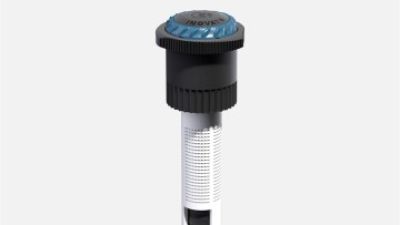
Adjustable RF301 Nozzle 90°–210°: Efficient Irrigation for Turfgrass and Garden Applications
Efficient irrigation is increasingly important as water demand grows. The FAO AQUASTAT database reports that agriculture accounts for approximately 70% of global freshwater withdrawals, while the U.S. Environmental Protection Agency (EPA) notes that outdoor residential water use represents more than 30% of household consumption in many areas. The EPA also estimates that as much as half of landscape irrigation water can be lost through evaporation, runoff, or inefficient application. These figures highlight the value of precise, adjustable watering equipment for turfgrass, shrubs, and garden spaces.
The RF301 Nozzle is designed to support targeted irrigation with an adjustable spray arc from 90° to 210°. This range allows users to match water distribution to different planting layouts, helping reduce overspray onto paths, walls, and other non-growing areas. Its dark blue design provides easy visibility during installation and maintenance, while the versatile arc adjustment makes it suitable for narrow garden beds, lawn edges, shrub zones, and broader turfgrass sections. By directing water where it is needed, the nozzle can help improve coverage consistency and support more responsible irrigation practices.
For landscape professionals, facility managers, and home gardeners, selecting components that combine flexibility and dependable performance can simplify system design. Manufactured in China, the RF301 Nozzle offers a practical upgrade for irrigation systems requiring accurate zone control and adaptable coverage.
FAQS
Match the nozzle’s required flow with the pump’s real output. Excess flow wastes water and weakens coverage. Measure it.
Pump pressure can look correct while pipes and filters reduce pressure. Use a calibrated gauge near the spray head.
No. Stay within the rated pressure range. Excess pressure may waste water, increase noise, and damage internal parts.
Confirm temperature, water quality, minerals, and cleaning chemicals. Heat and residue can weaken seals or moving parts.
Run a short field test at the actual installation distance. Look for gaps, uneven bands, or excessive overlap. Workbench results can mislead.
Inspect the body, shaft bearings, seals, and replacement parts. Ask for cycle-test results, not only attractive photographs.
Check the maximum pressure marking, guarded moving parts, secure couplings, and reachable shutoff. Isolate the system before touching the head.
Include water, electricity, compressed air, labor, maintenance, and spare parts. A cheap nozzle may create costly downtime. I learned that slowly.
Leave adjustment margin for pressure changes. Record flow readings, inspect filters and seals, and compare measured conditions with technical data. Assumptions fail.
Conclusion
Choosing the right Rotary Spray Nozzle starts with clearly defining the cleaning task, including the target surface, level of contamination, required coverage, and available equipment. Compare spray patterns, cleaning reach, and rotation performance to ensure the nozzle can deliver consistent results without unnecessary water or energy use. It is also important to match the flow rate, operating pressure, and working range with your system’s capabilities, since poor selection may reduce cleaning efficiency or cause equipment problems.
Material compatibility should be considered when the nozzle will contact cleaning chemicals, high temperatures, or demanding environments. Check mounting methods, connection sizes, equipment compatibility, and access for routine inspection and maintenance. Finally, evaluate construction quality, safety features, service life, and total operating cost rather than focusing only on the initial purchase price. A well-matched Rotary Spray Nozzle can improve cleaning consistency, reduce downtime, control resource consumption, and provide reliable performance over the long term.