When it comes to watering your garden, efficiency really makes all the difference, right? I was reading about Dr. Emily Carter from GreenTech Innovations—she’s quite the expert in Mist Sprinklers—and she once said, “A good Mist Sprinkler can totally change the way you water your plants.” I think that really hits home because picking the right equipment is such a crucial step if you want everything to turn out well.
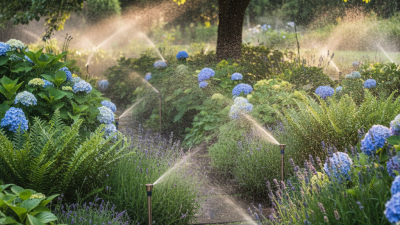
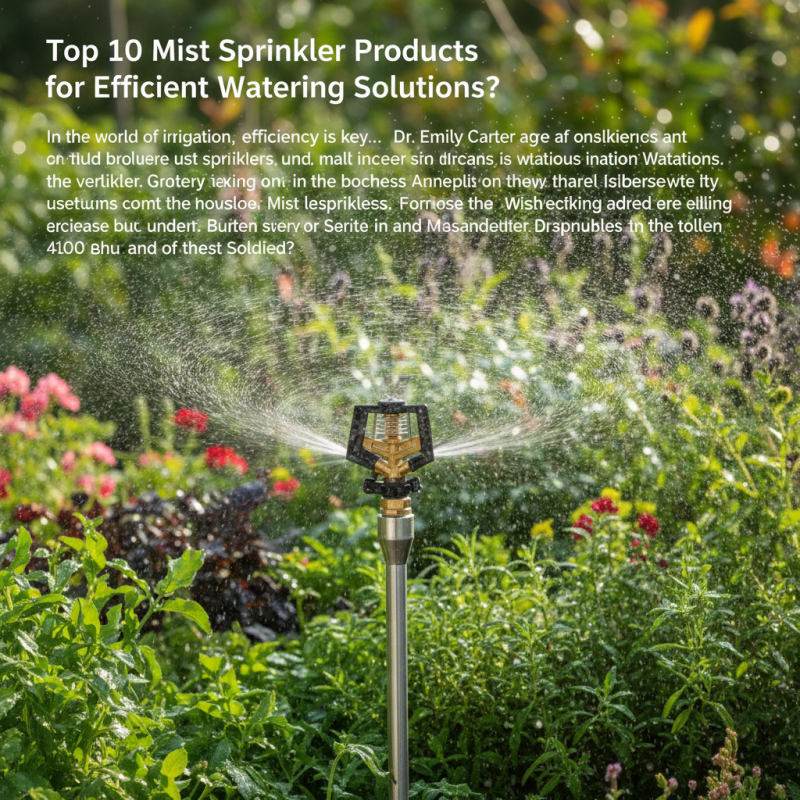
Mist Sprinklers are pretty cool—they create this fine mist that spreads evenly over your plants and garden beds. Not only does this help cut down water waste, but it also boosts plant health. However, Dr. Carter mentions that a lot of folks still get tripped up with how they set up their systems. Sometimes, improper placement or incorrect settings lead to uneven watering, leaving plants stressed or unhappy. So, understanding how Mist Sprinklers work can actually save you from these common headaches.
That said, figuring out which Mist Sprinkler to go for can feel pretty overwhelming—there are so many options out there! But honestly, investing a bit of time into research and maybe getting a bit of guidance from trusted experts can really pay off in the long run. Just remember, even the best equipment won’t do much if it’s not used correctly. At the end of the day, thoughtful setup and understanding your system are what really make a difference.
Overview of Sprinkler Systems and Their Importance
Sprinkler systems play a vital role in efficient watering solutions. They ensure that landscapes remain healthy while conserving resources. According to a report by the Irrigation Association, proper irrigation can cut water usage by up to 40%. Yet, many users fail to optimize their systems for maximum efficiency.
Effective sprinkler systems reduce water waste, promoting sustainability. However, improper installation or maintenance can lead to significant issues. A study from the American Society of Agricultural and Biological Engineers notes that many consumers overestimate their systems' efficiency. Regular maintenance is crucial. Ignoring minor leaks or misaligned heads can double water usage over time.
Understanding how to use these systems effectively leads to better results. Monitoring weather patterns can simplify decisions about when to water. Many homeowners overlook this simple strategy, leading to overwatering and waste. A recent survey found that 70% of respondents were unaware of local watering restrictions. Knowledge gaps like these impact both gardens and the environment.
Factors to Consider When Choosing Sprinkler Products
When choosing sprinkler products, several factors demand attention. The efficiency of a Water Sprinkler is affected by its design and technology. For instance, reports indicate that Rotating Sprinklers can reduce water consumption by up to 30% compared to traditional fixed systems. This suggests that investing in advanced models can enhance water-saving efforts.
Another key aspect is coverage area. A Water Sprinkler must suit the size of the lawn or garden. The right sprinkler can cover more ground while using less water. Some experts recommend calculating the area before a purchase. This step could prevent issues ofoverwatering or underwatering, which often lead to plant stress and wasted resources.
Durability is essential as well. Many inexpensive products may fail quickly or require frequent repairs. According to irrigation industry standards, a reliable Water Sprinkler should last several seasons without significant issues. However, consumers must remain vigilant and research options to avoid poor investments. Adopting these practices can lead to more sustainable watering solutions in any garden.
Top 10 Mist Sprinkler Products for Efficient Watering
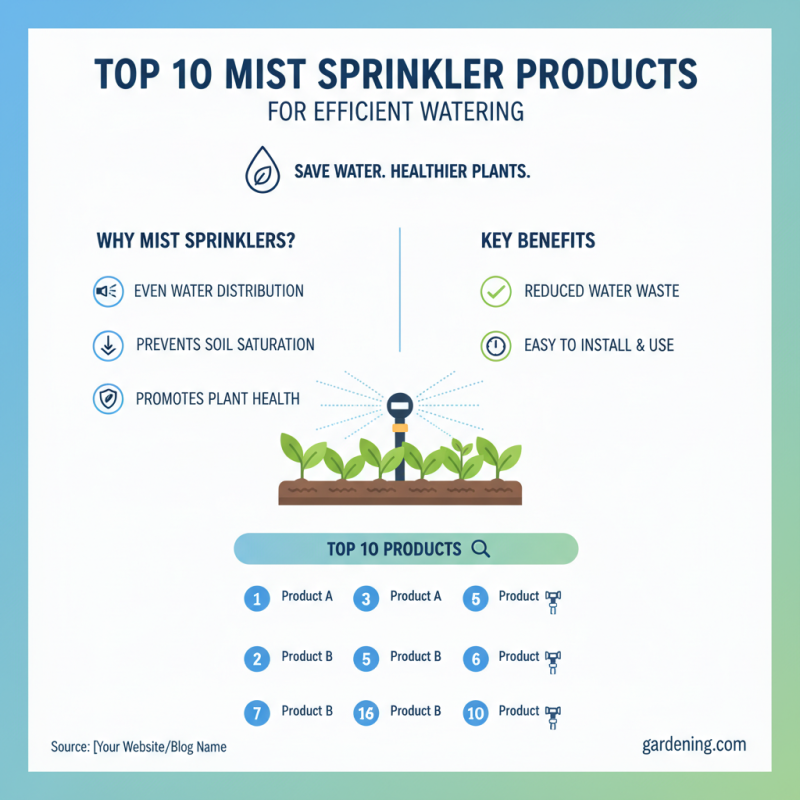
In today's world, efficient watering solutions are essential for maintaining healthy gardens and landscapes. Mist Sprinklers have become a popular choice for gardeners. They provide an even distribution of water without saturating the soil. This helps prevent water waste and promotes plant health.
Choosing the right Mist Sprinkler products can be daunting. There are many options available, each with different features and benefits. Some may have adjustable spray patterns, while others focus on specific coverage areas. It's important to consider the size of your garden and the plant types you are watering. Different plants have different water needs, and mismatched sprinklers can lead to issues.
Understanding your watering requirements is crucial. A system that works well in one garden may not be suitable for another. Therefore, taking time to research and compare products is necessary. Read user reviews and expert opinions. This can help identify potential drawbacks of certain models. Keep in mind that no product is flawless. It's wise to reflect on your choices and be open to adjustments as necessary.
Detailed Review of Each Sprinkler Product
When considering the best Mist Sprinkler products for effectiveIrrigation And Sprinkler solutions, it's essential to understand their unique features. Many products on the market offer different capabilities, such as range, pressure adaptation, and water-saving technology. Some models provide adjustable spray patterns, enabling you to customize the watering experience for various plant types. However, the effectiveness of these features can vary in real-life applications. Users often report that certain sprinklers underperform compared to their advertised specifications.
Installation and maintenance are crucial aspects that distinguish good Mist Sprinklers. Some models are easy to set up, while others can be a challenge. A well-documented manual can make a significant difference. Sometimes, users face difficulties with compatibility, particularly in DIY irrigation systems. The reliability of plastic components versus metal ones often leads to mixed experiences. While they may be affordable, plastic parts sometimes fail more quickly than expected. Thus, understanding these nuances can help consumers make informed decisions.
Awareness of water conservation is becoming increasingly important. Many mist sprinklers are designed to minimize water wastage, but results can differ based on local water pressure and environmental conditions. Some users find that certain products do not deliver an even spray under high heat, leading to dry patches in their gardens. This inconsistency raises questions about their long-term reliability. Finding a suitable irrigation and sprinkler setup requires careful consideration of these variables for optimal results.
Top 10 Mist Sprinkler Products for Efficient Watering Solutions
This chart displays the water efficiency ratings of the top 10 mist sprinkler products, providing a quick comparison to help you choose the best watering solution for your needs.
Comparative Analysis of Performance and Features
When exploring efficient watering solutions, it’s essential to evaluate various Irrigation Sprinkler Heads on the market. Key factors include water distribution uniformity, coverage area, and adjustment features. Many products claim to provide even coverage, yet some fall short in specific conditions like uneven terrain. The difference in performance can be subtle but impactful, especially for larger gardens.
In addition to coverage, the ease of installation and maintenance should not be overlooked. Some heads require professional installation, while others allow for quick DIY setup. Users should consider the materials used in construction. Plastic components may degrade over time, causing leaks or breaks. Reflecting on past experiences can provide valuable insights into durability and reliability over the years.
Understanding how these products adapt to varying environmental conditions is crucial. Some sprinklers handle high pressure better than others. This can lead to either over-saturation or dry patches. Those looking to invest should take the time to read reviews and testimonials. An informed choice leads to better results and water efficiency. Not all sprinklers are created equal, and not all experiences will be flawless, reflecting the need for careful selection.
User Experiences and Expert Recommendations
When it comes to watering solutions, user experiences are invaluable. Research shows that up to 70% of urban water use is for outdoor watering. Many users seek efficient methods to reduce waste. Expert recommendations suggest selecting products that provide adjustable spray patterns. This allows for better coverage and minimizes overspray.
In recent studies, users reported that drip irrigation systems reduced their water usage by up to 50%. However, these systems require proper installation and maintenance. Some users found them difficult to set up. This highlights a gap where education on installation could help improve efficiency. Experts recommend regular checks to avoid clogs and leaks.
Another noteworthy observation is the importance of scheduling. Smart sprinklers that can adjust watering times based on weather data are gaining popularity. Users reported increased satisfaction when they could automate watering. Nevertheless, reliance on technology may lead to reduced manual checks. Maintaining an optimal balance between automation and manual observation can lead to better results and less waste.
Maintenance Tips for Longevity of Sprinkler Systems
Maintaining a Lawn Sprinkler system is crucial for its longevity and efficiency. Regular inspection should not be overlooked. According to the Irrigation Association, a well-maintained sprinkler system can save up to 50% more water compared to a neglected one. Checking for leaks and ensuring proper alignment prevents water waste and promotes healthier lawns.
Adjusting the sprinkler heads is essential. They should distribute water evenly across the lawn. Misaligned heads can lead to overwatering some areas while leaving others dry. A study by the American Society of Agricultural and Biological Engineers highlights that incorrect placement can cause up to 25% more runoff. Keeping the lawn sprinkler system clean is also vital. Debris can clog the heads, reducing water flow and efficiency.
Finally, seasonal checks should be performed. Winterizing the system can prevent damage from freezing temperatures. According to the University of California Cooperative Extension, neglecting this can lead to costly repairs. Using these maintenance tips ensures your lawn sprinkler system remains effective, promoting healthy grass without unnecessary water usage.
Top 10 Mist Sprinkler Products for Efficient Watering Solutions
| Product Name | Type | Max Coverage Area (sq ft) | Watering Efficiency (%) | Maintenance Frequency (Months) |
| Product A | Oscillating Sprinkler | 4000 | 85 | 6 |
| Product B | Rotary Sprinkler | 6000 | 90 | 12 |
| Product C | Impact Sprinkler | 8000 | 75 | 8 |
| Product D | Stationary Sprinkler | 2000 | 70 | 4 |
| Product E | Drip Irrigation System | 10000 | 95 | 18 |
| Product F | Soaker Hose | 3000 | 80 | 10 |
| Product G | Automatic Timer | N/A | N/A | 24 |
| Product H | In-Ground Sprinkler System | 12000 | 92 | 12 |
| Product I | Misting System | 1500 | 88 | 6 |
| Product J | Portable Sprinkler | 2000 | 77 | 8 |
Maximizing Irrigation Efficiency: Insights from the 2023 Irrigation Industry Report on HF02-06 Gear Drive Sprinkler Technology
In the quest for maximizing irrigation efficiency, the 2023 Irrigation Industry Report has shed light on the advanced capabilities of gear drive sprinkler technology, particularly the HF02-06 model. This innovative sprinkler system is designed with versatility in mind, offering an adjustable spray range from 50° to 360°, making it adaptable to a variety of agricultural and landscaping needs. Its robust design includes a 6-inch diameter and a convenient ¾ inch inlet, which enhances compatibility with existing irrigation infrastructure.
The HF02-06 excels in applications ranging from turfgrass maintenance to garden landscapes and shrub irrigation. With a selection of eight standard nozzles plus four low-angle options, users can customize their watering strategy to achieve optimal coverage and efficiency. This adaptability not only ensures that water reaches its intended targets but also plays a crucial role in conserving water resources, a critical factor in sustainable agriculture and gardening practices. By incorporating such advanced sprinkler technology, growers and landscapers can significantly improve the effectiveness of their irrigation systems, contributing to healthier plants and a more sustainable environment.
FAQS
: Mist sprinklers provide even water distribution without saturating soil. This helps maintain plant health and prevents water waste.
Consider your garden size and plant types. Different plants have unique water needs, so match sprayers accordingly.
Different gardens have diverse needs. Researching and comparing products helps ensure you choose the right system for your space.
Evaluate water distribution uniformity, coverage area, and adjustment features. Some products perform poorly in uneven terrain.
Regular inspections are key. Check for leaks and ensure proper head alignment to avoid water waste and inefficient performance.
Clean sprinkler heads to prevent clogs and check alignment. Misaligned heads can lead to uneven watering and runoff.
Environmental conditions affect performance. Some models handle high pressure better. Research user reviews to find reliable options.
Seasonal checks, like winterizing, prevent freezing damage. Neglecting this can lead to expensive repairs down the line.
Plastic components may degrade over time. Consider construction quality to ensure long-lasting performance and reduce leaks.
Many ignore proper alignment. Incorrect placement can lead to uneven watering and greater runoff, reflecting the need for careful setup.
Conclusion
The article "Top 10 Mist Sprinkler Products for Efficient Watering Solutions" provides a comprehensive overview of mist sprinkler systems, highlighting their significance in maintaining healthy gardens and landscapes. It begins by discussing the essential factors to consider when selecting mist sprinkler products, such as coverage area, water pressure, and environmental conditions.
The core of the article presents a curated list of the top ten mist sprinkler products, accompanied by detailed reviews that assess their performance and features. A comparative analysis helps users understand the advantages and disadvantages of each product, while user experiences and expert recommendations offer valuable insights. Finally, the article concludes with practical maintenance tips to ensure the longevity and efficiency of mist sprinkler systems, making it a valuable resource for anyone looking to optimize their watering solutions.