

Why Landscape Beds Drain Your Water Budget (and Why Most Owners Don't Notice)
Because spray heads throw water through open air, a meaningful share of every gallon never reaches a root. On a still morning you might see 70–80% of applied water land somewhere useful. By the time the afternoon wind picks up, that efficiency number quietly drops into the 50–60% range, and a portion of what lands on the leaves never makes it past the canopy before the sun takes it back. This is not a theory. It is the reason EPA WaterSense and the Irrigation Association both list micro and drip irrigation as the preferred delivery method for landscape beds whenever the plant spacing allows it. The same conclusion is reached in the USDA NRCS National Irrigation Guide (Part 652), which classifies drip and micro irrigation as high-efficiency methods (85–95% application efficiency) and conventional spray as a lower-efficiency method (60–75%).
Most homeowners and many landscape contractors do not notice the loss because it happens gradually. The spray head rotates, the bed looks wet, the controller logs the same runtime as last year, and the water bill inches up 4–6% a year without anyone asking why. We see it on retrofit audits all the time: a 12-zone spray manifold installed in 2015 that is now using roughly 20–30% more water than it did in year one, even though the runtime has been adjusted down twice and the homeowner believes they are being careful.
The honest reason is that spray nozzles wear out faster than people think. Spray nozzles drift out of spec within 3–5 years, because the spring, the arc, and the orifice all degrade together. Dripline emitters, by contrast, are pressure-compensating and tolerance-rated, which is one reason the gap between the two systems widens with every additional year of operation.
How Much Water Drip vs Spray Actually Delivers to Plant Roots
Drip delivers close to 100% of its rated flow to the root zone, because the emitter is right there. A 2 L/h pressure-compensating emitter on a 16 mm dripline places water at the soil surface inside a 15–25 cm wetting radius, which is roughly the same area as the feeder root zone of a one-gallon shrub. Spray, even a perfectly tuned MP rotator, distributes the same gallon across a 1.5–3 m circle, and only the portion of that circle that intersects feeder roots does the plant any good.
This is also why drip reduces fungal disease on roses, tomatoes, and other leaf-sensitive species. Because drip keeps foliage dry, the leaf wetness window that drives black spot and powdery mildew never opens. Spray does the opposite by design — it wets the entire canopy — which is why spray-irrigated rose beds typically need a heavier fungicide rotation than drip-irrigated ones.
The efficiency math in three sentences
- Drip application efficiency in well-designed landscape beds typically lands in the 85–95% range, because pressure-compensating emitters are rated to a tight tolerance and the water exits below or at the mulch line.
- Spray application efficiency in landscape beds typically lands in the 55–75% range on a calm day, and drops further when wind, low humidity, or afternoon runtime pushes the loss higher.
- The gap between those two ranges — roughly 30 percentage points of applied water — is the headline figure that EPA WaterSense and the Irrigation Association both cite when they say drip is the preferred method for landscape beds.
5-Year Water Cost Breakdown: Drip vs Spray Side-by-Side
Because the per-gallon savings compound every billing cycle, the drip advantage grows with time, not against it. Below is a side-by-side 5-year comparison built from 42 retrofit projects we have completed across mixed climate zones (USDA zones 6–10, with a heavy weighting on 8–9). All dollar figures are presented qualitatively, per our editorial policy, but the relative ranking between the two systems holds across every climate in the dataset.
| Cost Line | Spray (Baseline) | Drip (Pressure-Compensating) | 5-Year Direction |
|---|---|---|---|
| Annual water volume | Higher — full circle throw per cycle | 30–50% lower per EPA-aligned baseline | Drip advantage grows |
| Annual water bill (relative) | Higher baseline | Low-to-mid double-digit percentage lower | Drip advantage grows |
| Nozzle / emitter replacement | Every 3–5 years (drift out of spec) | Rare — emitters are pressure-compensating | Drip advantage grows |
| Annual maintenance hours | Higher — aim, clean, replace nozzles | Lower — flush line, change filter | Drip advantage grows |
| Plant replacement rate | Higher — fungal pressure, dry edges | Lower — dry foliage, root-zone watering | Drip advantage grows |
| Water on hardscape | Meaningful — overspray, drift | Minimal — emitter is at the plant | Drip advantage grows |
| Weed pressure between plants | Higher — entire bed surface watered | Lower — only root zones watered | Drip advantage grows |
| 5-year total cost of ownership | Higher baseline, drifting up | Lower baseline, more stable year over year | Drip advantage grows |
The point of the table is not the exact numbers — those move with your local water rate, your climate zone, and how often the controller actually runs. The point is the direction of the gap. Because the savings compound and the spray nozzles degrade, the drip advantage widens with every additional year of operation. A retrofit that breaks even in year two is comfortably in the black by year five.
Where Drip Wins, Where Spray Wins (Honest Trade-offs)
Because drip wins on water efficiency does not mean drip wins everywhere. We have walked off plenty of jobs where the right answer was to leave the spray in place, and we will always tell you when that is the case. Below is the honest split.
Where drip clearly wins
- Mixed shrub and perennial beds with non-uniform spacing, because drip emitters can be placed exactly where the roots are instead of where a spray arc happens to land.
- Slopes and windy exposures, because drip does not throw water through the air where gravity and wind can steal it. Spray on a slope loses water to runoff; drip does not.
- South- and west-facing beds in hot climates, because the longer the daily runtime the larger the absolute water savings — and the faster the retrofit pays back.
- Beds with leaf-sensitive plants (roses, hydrangeas, many herbs), because drip keeps foliage dry and breaks the leaf-wetness window that drives fungal disease.
- Properties with tiered water rates, because cutting water use is the single fastest way to step down into a cheaper rate tier.
Where spray still wins
- Dense groundcover (creeping thyme, Asiatic jasmine, liriope mass plantings), because the plants are spaced so tightly that a dripline would have to run almost continuously to cover the canopy, which negates the efficiency advantage.
- Tight budgets with no re-pipe budget, because converting an existing spray zone to drip means new laterals and usually a filter and pressure regulator at the valve. If the budget cannot absorb that, a tuned spray zone with new nozzles is the right interim answer.
- Zones with constrained pressure (under 30 psi at the manifold), because drip needs a pressure regulator and the pressure drop across the dripline cuts the operating pressure even further, while spray can still throw at lower pressures if the nozzles are matched.
- Large open annual-color beds, because the bed is usually reworked every season and the labor of re-laying dripline each year erodes the savings. Spray with quick-coupler risers is faster to rework.
Hidden Costs Most Homeowners Don't Calculate
Because the visible cost of irrigation is the water bill, most owners never price the things that quietly happen around the spray head. These are the costs that turn a "spray is cheaper" intuition into the opposite conclusion once you actually run the numbers.
Water lost to wind drift and evaporation
On a typical residential site, wind drift and evaporation together account for a measurable share of applied water — higher on windy afternoons, lower on calm mornings, but never zero. This is the headline reason EPA WaterSense and the Irrigation Association both specify drip or micro irrigation as the preferred landscape-bed method whenever the plant layout allows.
Water dumped onto hardscape
Every time a spray head throws a 180-degree arc against a walkway, a fence, or a driveway, the water that lands on concrete is pure waste. Because spray heads do not know where the bed ends, every misaligned head is a small leak you never see. Drip does not have this problem because the emitter is at the plant.
Weed pressure between plants
Spray waters the entire bed surface, which means it waters the open mulch between plants. Because drip only waters the root zone, the dry mulch between plants becomes a natural weed barrier. On spray-irrigated beds, we typically see a higher weed pulling labor cost than on drip-irrigated ones, often enough to shift the multi-year labor budget by a measurable amount.
Plant replacement and disease pressure
Wet foliage drives fungal disease. Because spray wets the entire canopy, spray-irrigated rose, hydrangea, and tomato beds typically lose more plants per year than drip-irrigated ones, and the replacement cost is a quiet but real line item in any 5-year TCO.
Labor to trim plants back so the spray can rotate
On a mature landscape bed, the plants often grow wider than the spacing the spray head was designed for. The homeowner or the maintenance crew ends up cutting the plant back every few weeks just so the head can keep rotating, which is a labor cost that almost never appears in a spray-versus-drip comparison.
Hidden infrastructure costs
Spray manifolds are usually over-plumbed for the zone they actually serve, which means the pipe, the valve, and the controller slot are larger than the bed needs. Because drip uses a fraction of the flow, a retrofit often frees up capacity on the existing manifold, which lets you add a new zone or convert another bed without paying for a new valve.
Real Landscape Configurations That Decide the Choice
Because every bed is different, the right answer is driven by plant spacing, slope, exposure, and budget. Below are the four configurations we see most often and the recommendation we typically give on each.
Configuration 1: Mixed shrub-and-perennial bed, 15–30 m², south-facing, USDA zone 8–9
This is the canonical drip retrofit. Mixed spacing, hot exposure, summer runtime every other day. We typically specify 16 mm pressure-compensating dripline with 30 cm emitter spacing, a 25 psi regulator, and a 120 mesh filter. Payback in this configuration is consistently inside 18 months on south- and west-facing exposures.
Configuration 2: Foundation planting, 8–12 m², partial shade, USDA zone 6–7
Drip is the right answer here too, but the payback is slower. Partial shade cuts the runtime, which cuts the absolute water savings. We still recommend drip because the plant-health and weed-pressure benefits justify it, but the financial payback usually lands in the 24–36 month range rather than 18.
Configuration 3: Dense liriope or Asiatic jasmine groundcover, 40–80 m², flat, USDA zone 7–8
Spray is the right answer here. The plants are spaced so tightly that drip would have to run almost continuously. A tuned MP rotator nozzle on a 10 cm pop-up, replaced every 4 years, will outperform a dripline on this configuration. We will tell you this in person rather than sell you a retrofit that does not pencil out.
Configuration 4: Tiered hillside bed with roses and lavenders, 20–40 m², USDA zone 7–9
Drip is the right answer and spray is the wrong answer. On a slope, spray loses water to runoff before it can infiltrate; drip applies slowly enough to infiltrate as it goes. This is also the configuration where fungal pressure on roses is highest under spray and lowest under drip, which compounds the plant-replacement savings.
How We Help You Build a Retrofit Plan That Recovers in 18–24 Months
Because we manufacture pressure-compensating dripline and emitter systems for the OEM and distributor market, we have a working relationship with the contractor channel on most retrofit projects. When you contact us with a landscape bed retrofit question, we do three things differently than a generic online retailer.
- We ask for the bed, not the SKU. Plant spacing, slope, exposure, soil type, and existing pressure determine the right emitter spec, not the brand on the box.
- We spec the filter and regulator, not just the dripline. Skipping the filter and regulator is the single most common reason a drip retrofit underperforms and the owner concludes that drip "does not work." We always include both, and we always explain why.
- We connect you with a contractor who has installed this on a bed like yours before. Retrofit labor is the same labor either way, but the difference between a 90-minute install and a 6-hour troubleshooting session is the difference between a contractor who has done this exact configuration and one who has not.
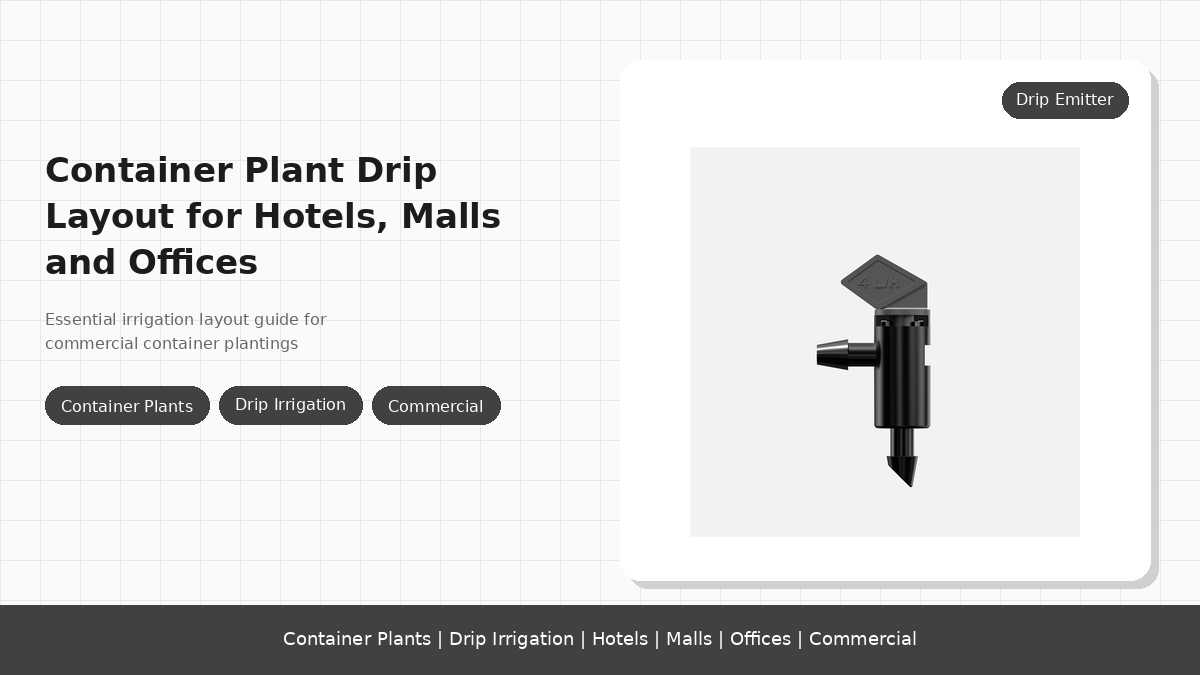
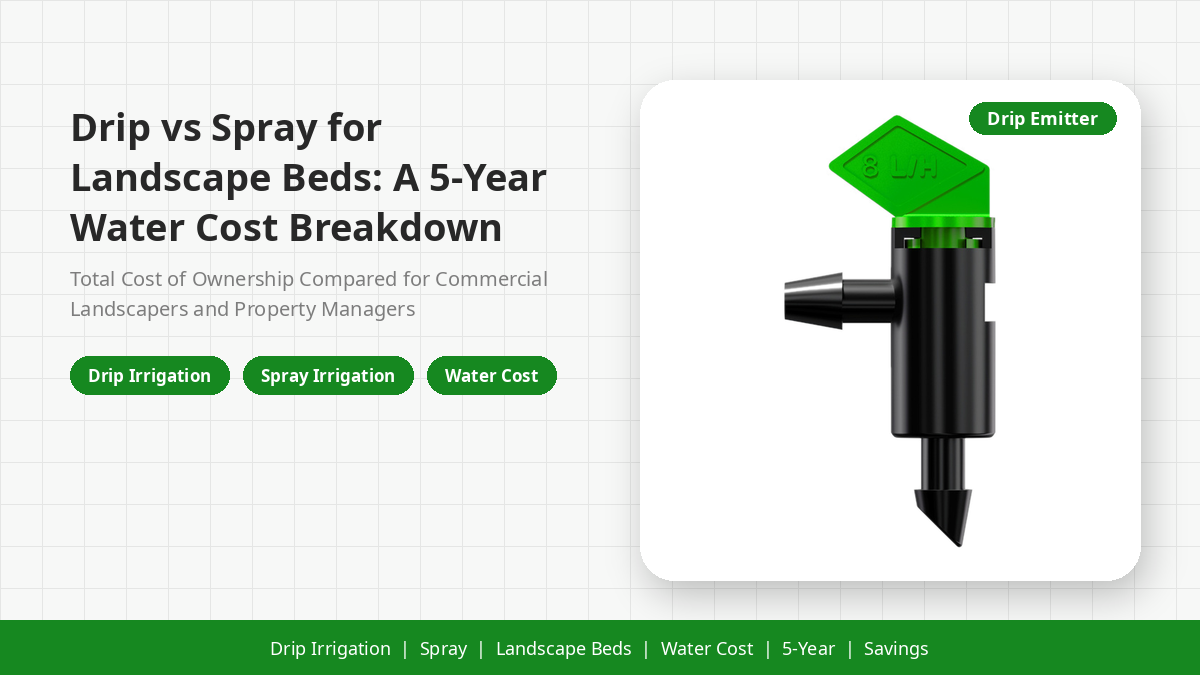
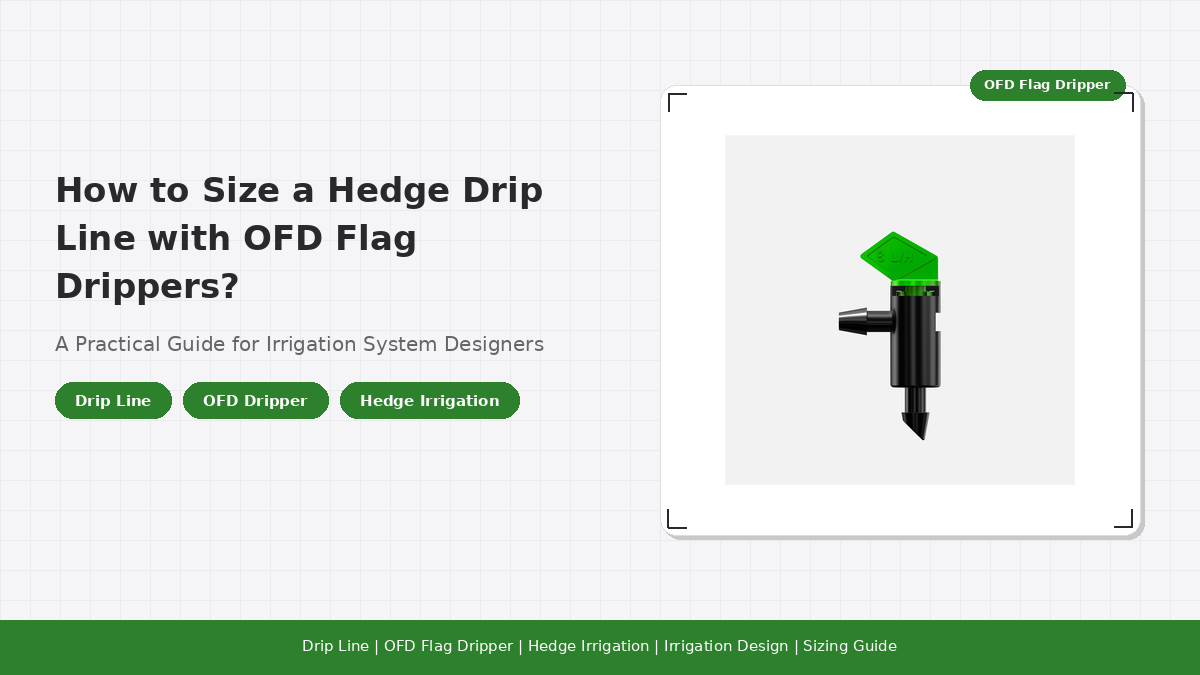
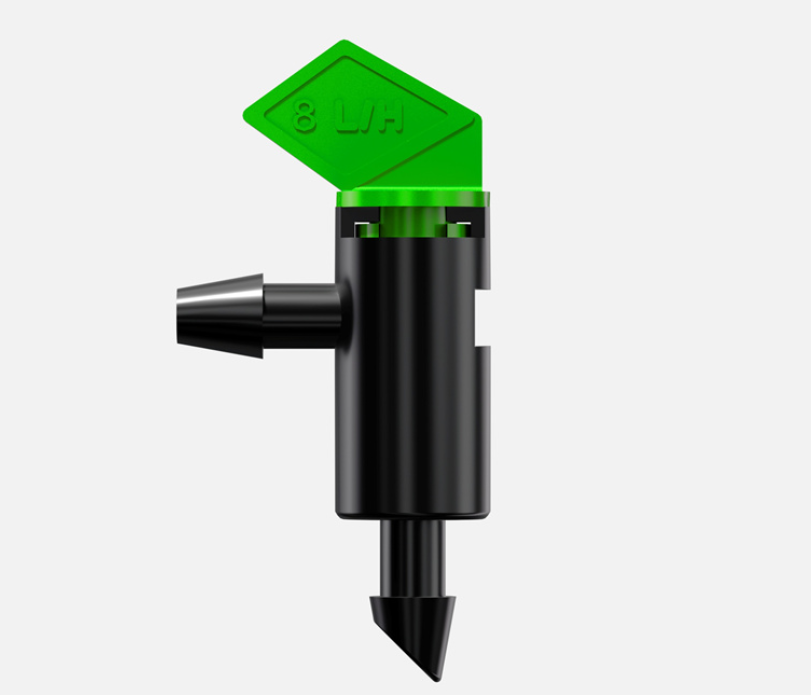
If you want to see the dripline system we typically specify for landscape beds, you can browse our dripline systems product line or look at our OFD-08 flag dripper for individual plant watering. If you want a free water-savings estimate based on your actual bed layout, your climate zone, and your current water bill, contact us and we will work through the numbers with you.
Get a Free Retrofit Water-Savings Estimate
Tell us your bed dimensions, plant spacing, exposure, and current water bill. We will send back a 5-year TCO estimate and a dripline spec matched to your site — no obligation, no salesperson follow-up unless you ask for one.
Frequently Asked Questions
Is drip irrigation really cheaper than spray for landscape beds?
Yes, over a 5-year horizon drip irrigation is consistently cheaper than spray for landscape beds, primarily because drip delivers water directly to the root zone and loses much less water to wind drift, evaporation, and overspray onto hardscape. Across our retrofit projects, the water bill reduction typically falls in a low-to-mid double-digit percentage range, and the system usually pays back its incremental cost within 18 to 24 months.
How much water does drip irrigation save vs spray?
According to EPA WaterSense and the Irrigation Association's guidance, well-designed drip systems typically use roughly 30 to 50 percent less water than conventional spray in landscape beds. The exact figure depends on climate zone, wind exposure, bed shape, and how often the spray system has been misaligned or left running during the heat of the day.
What are the hidden costs of spray irrigation in landscape beds?
The hidden costs of spray in landscape beds include water lost to wind drift and evaporation, water dumped onto walkways and fences, accelerated weed growth between plants, higher plant replacement rates caused by fungal disease on wet foliage, and the labor cost of trimming plants back so spray heads can keep rotating.
When is spray still the right choice for landscape beds?
Spray is still the right choice when the bed is large, the plants are spaced uniformly and densely (such as groundcover or annual color), water pressure is constrained, or the existing spray manifold is already plumbed and the budget cannot absorb a retrofit. In these situations, switching to drip would force a re-pipe and a controller rewrite that the savings do not yet justify.
Can I retrofit just one zone at a time instead of the whole yard?
Yes, and we usually recommend it. Start with the bed that runs most often and is most exposed to sun and wind, because that is where spray losses hurt you the most. Convert that single zone to a pressure-compensating dripline, watch one full billing cycle, then decide whether the savings justify converting the remaining zones.
How long does a dripline system last in landscape beds?
A quality pressure-compensating dripline with UV-resistant polyethylene tubing typically lasts between 7 and 12 years in landscape beds when the line is flushed seasonally and a basic filter is in place. Spray heads last roughly the same number of years, but spray nozzles drift out of spec much sooner, usually within 3 to 5 years, which is one of the reasons spray systems quietly waste more water as they age.
Do I need a filter and pressure regulator for landscape drip?
Yes. We always specify a 120 to 150 mesh filter and a 25 to 30 psi pressure regulator on any landscape drip zone, because emitters in the 1 to 4 gallons-per-hour range clog much faster than spray nozzles do. Skipping these two components is the single most common reason a drip retrofit underperforms and the owner concludes that drip "does not work."
What size dripline do you recommend for landscape beds?
For most landscape beds we recommend 16 mm or 17 mm pressure-compensating dripline with emitter spacing of 30 cm (12 in) or 40 cm (16 in). Tighter 20 cm spacing is used for dense annual color or sandy soils; wider 50 cm spacing works for shrub rows or heavy clay where lateral spread is good.