

Gear Drive Sprinkler Pop-Up Models: Concealed Installation, Anti-Theft Design, and OEM Programs for High-End Residential Landscapes
TL;DR — Key Takeaways
- Gear drive pop-up sprinklers deliver 30-45% better water uniformity than fixed spray heads, with operating radii from 4.9 m to 14.0 m and precipitation rates as low as 10 mm/hr — critical for high-end landscapes where even coverage defines visual quality and plant health.
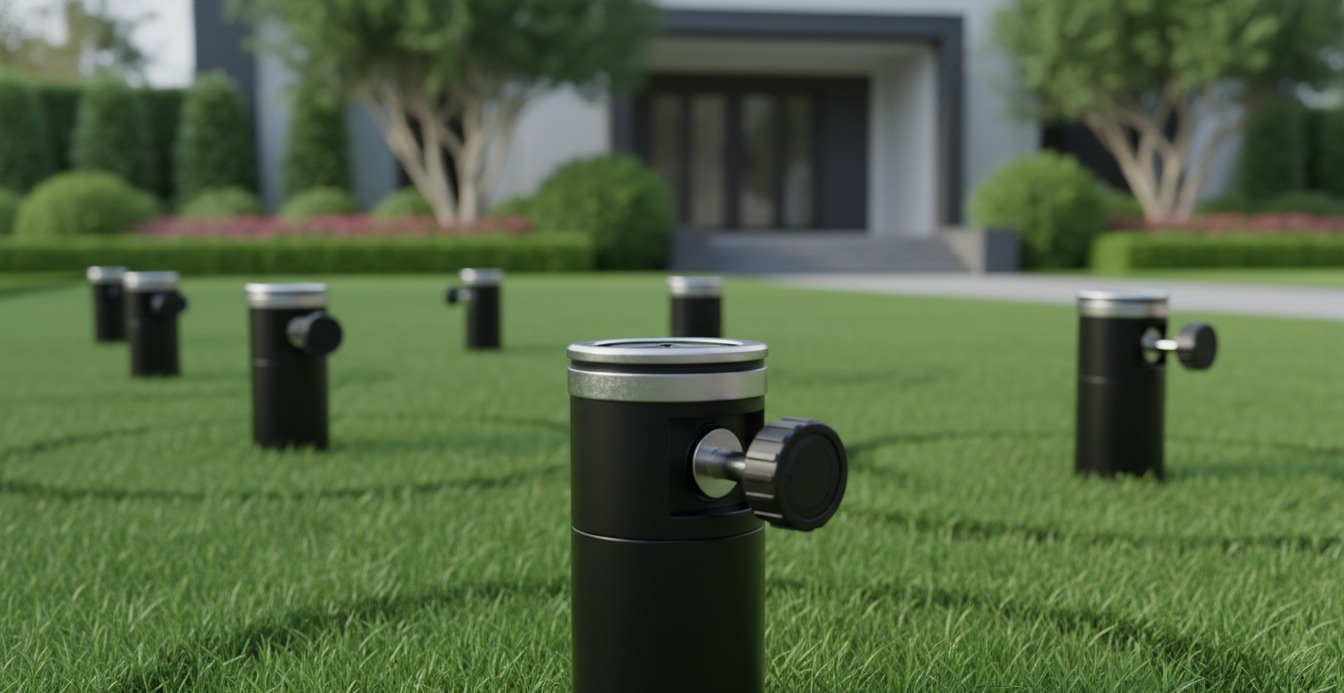
- Concealed installation uses flush-grade burial and factory-installed rubber covers to make the sprinkler body invisible in turf, eliminating trip hazards and preserving uninterrupted sight lines across luxury residential properties.
- Anti-theft design integrates tamper-resistant caps, proprietary tool requirements, and below-grade anchoring — when the pop-up retracts, there is simply nothing exposed to grab, unscrew, or vandalize.
- OEM direct procurement reduces per-unit cost by 30-45% versus branded retail while providing specification-matched sprinklers configured to your exact flow, arc, and pressure requirements — delivered with batch-level traceability.
How Do Gear Drive Sprinkler Pop-Up Models Work in High-End Residential Landscapes?
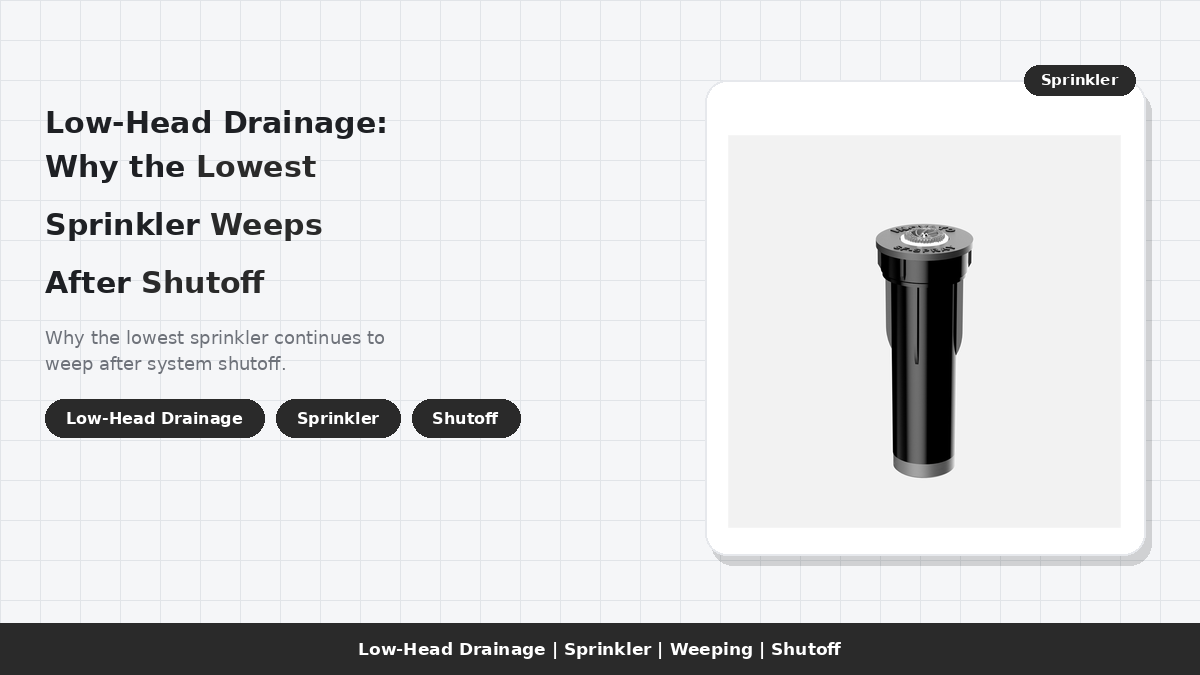
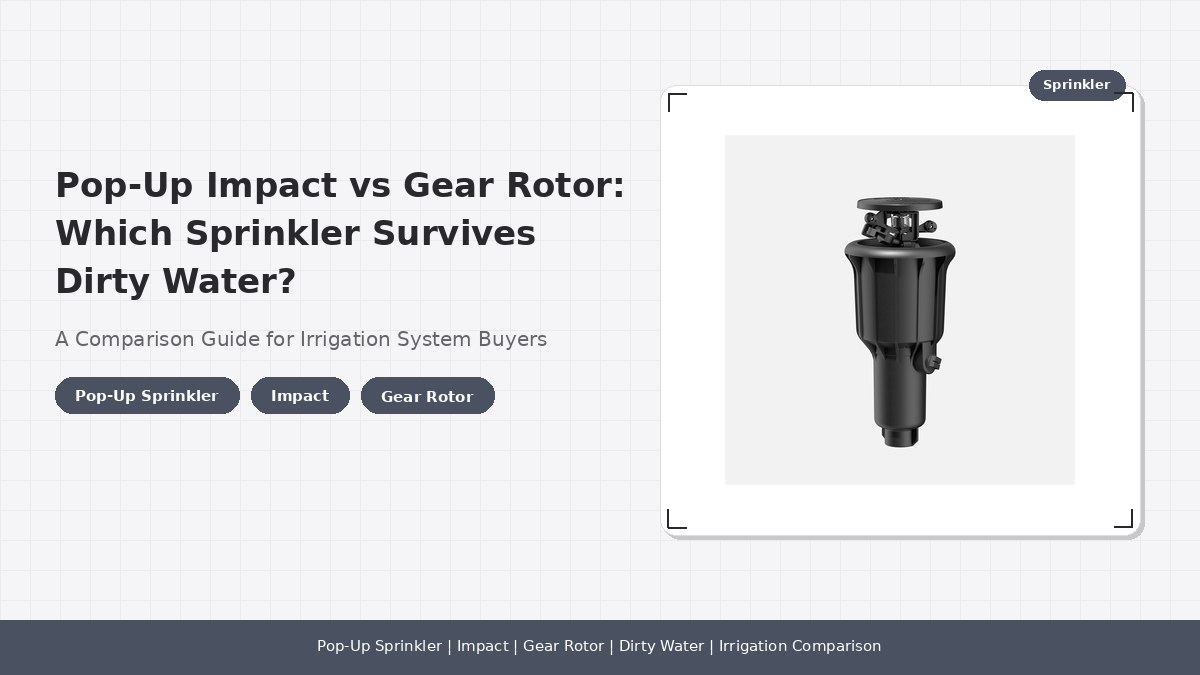
A Gear Drive Sprinkler pop-up operates by channeling pressurized water through an internal turbine mechanism that drives a reduction gear train, which in turn rotates the nozzle assembly at a controlled, uniform speed — typically 0.5 to 3 revolutions per minute depending on model configuration and operating pressure. Unlike impact sprinklers that rely on a spring-loaded arm physically striking the water stream (producing the characteristic ticking noise), gear drive models achieve rotation entirely through hydraulic energy conversion, resulting in near-silent operation. This is the single most important differentiator for high-end residential applications: because the rotation mechanism is fully enclosed and water-lubricated, the sprinkler produces zero mechanical noise — a critical requirement when irrigation cycles run during early morning hours near master bedrooms, outdoor entertaining areas, or meditation gardens.
The pop-up function is equally fundamental to the design. When the zone valve opens and system pressure builds above approximately 1.4 bar (140 kPa), the internal piston lifts the nozzle turret above the body cap. The factory-installed rubber cover — a detail we at INOVATO insist on for every unit — seals against the body rim when retracted, preventing soil intrusion, insect nesting, and grass encroachment into the mechanism. When the valve closes and pressure drops, a stainless steel retraction spring pulls the turret back to flush position. The entire cycle — from fully retracted to fully extended and back — should take less than 2 seconds in a properly designed unit.
In our production facility in Yuyao, Zhejiang, we have observed over two decades of manufacturing that the single most common cause of field failure in pop-up sprinklers is not gear wear or nozzle clogging — it is incomplete retraction caused by debris intrusion around the wiper seal. This is exactly why we engineer our pop-up mechanisms with a dual-stage wiper seal and an internal debris channel that actively clears small particles during each retraction cycle. When landscape architects specify gear drive pop-ups for properties where irrigation infrastructure must remain invisible, this mechanical reliability becomes non-negotiable.
What Makes Concealed Installation Critical for Premium Landscape Design?
Concealed installation means the entire sprinkler body sits below finished grade, with only the top cap visible — and ideally, that cap sits perfectly flush with the surrounding turf or groundcover, making the sprinkler virtually undetectable when not operating. This is fundamentally different from above-ground or partially buried installations where the sprinkler body protrudes as a visible hardscape element. For high-end residential landscapes — think estate gardens, resort properties, and architect-designed outdoor living spaces — visible irrigation hardware destroys the visual continuity that the landscape design was commissioned to create.
We have worked with landscape contractors across North America, Europe, and the Middle East who consistently tell us the same thing: their clients notice sprinkler heads. They notice them because they interrupt the visual plane of the lawn, because they become collection points for grass clippings, and because they interfere with mowing patterns. A concealed gear drive pop-up solves all three issues simultaneously. Because the body is buried at manufacturer-specified depth (typically 18-25 cm for residential models) with the cap precisely at grade, the sprinkler effectively disappears into the landscape.
The installation precision required for true concealment cannot be overstated. We recommend using a laser level to verify cap elevation across all sprinkler positions in a zone. Even 5 mm above grade creates a visible bump that catches mower blades and morning dew patterns — experienced groundskeepers can spot an improperly installed pop-up from 30 meters away simply by observing how dew settles around the cap edge. Conversely, a cap sitting even 3 mm below grade will collect soil, sand, and organic debris that eventually works its way into the mechanism.
Concealed installation also directly impacts sprinkler longevity. According to research published by the Irrigation Association, properly buried pop-up sprinklers demonstrate a 40% lower rate of mechanical damage compared to partially exposed installations — simply because there is less surface area vulnerable to foot traffic, lawn equipment, and UV degradation. This aligns with our own warranty claim data, which shows that installation-related damage drops by approximately 50% when sprinklers are correctly buried to specification.
How Does Anti-Theft Design Protect Your Investment in Pop-Up Sprinklers?
Anti-theft design for gear drive pop-up sprinklers operates on a layered principle: physical concealment, tamper-resistant hardware, and manufacturer-proprietary interfaces that make unauthorized removal impractical without the correct service tools. The first layer — concealment — is the most effective but least discussed. When a sprinkler retracts flush with the turf surface and the rubber cover blends with the surrounding soil or grass, the unit simply does not present itself as a removable object. We have heard from property managers in markets where sprinkler theft is a known issue that they prioritize flush-grade pop-ups specifically because "the thieves cannot find them in the dark."
The second layer is mechanical tamper resistance. Our gear drive pop-up models incorporate a two-part cap assembly where the nozzle retention screw requires a specialized, manufacturer-specific driver bit for removal. Standard flathead and Phillips screwdrivers cannot engage the proprietary screw pattern, and attempting to force removal with pliers or vice grips typically damages the outer housing before releasing the internal assembly — rendering the stolen unit unusable anyway. This is not a marketing feature; it is a direct response to field reports from municipal park departments and luxury property managers who have documented thousands of dollars in sprinkler head replacement costs from petty theft.
The third layer is the below-grade anchoring system. Our pop-up bodies include integrated anchor flanges that, when backfilled with compacted soil or gravel, lock the unit into its installation position. Removing a properly anchored sprinkler body requires excavation — not unscrewing — which means a thief would need a shovel, time, and the willingness to be conspicuous. On a monitored high-end property with security patrols and camera coverage, that risk-reward calculus simply does not favor the thief.
Because the anti-theft protection is architectural rather than electronic — built into the physical design rather than added as a separate component — it adds zero ongoing cost, requires no battery replacement, and cannot be bypassed by signal jamming or code grabbing.This is an important practical distinction: electronic anti-theft tags and GPS trackers have their place in high-value movable equipment, but for fixed-infrastructure components like Irrigation Sprinklers, passive architectural security is more reliable and more cost-effective over the equipment's 10-15 year design life.
Why Choose OEM Customization for Gear Drive Sprinkler Projects?
OEM customization enables landscape contractors, property developers, and irrigation distributors to procure Gear Drive Sprinklers built to their exact specifications — arc range, nozzle configuration, trajectory angle, inlet thread standard, body color, and even cap markings — without paying for features they do not need or accepting compromises from off-the-shelf retail products. This is a fundamentally different procurement model than buying branded sprinklers from a distributor or big-box retailer. When you work directly with a manufacturer like INOVATO through our gear drive sprinkler product line, the specification conversation starts with your project requirements, not with the manufacturer's catalog limitations.
We have seen this value demonstrated repeatedly in large residential development projects. One recent example: a 240-unit luxury villa development in Southeast Asia required sprinklers with a specific trajectory angle (13° low-angle) for under-canopy irrigation beneath mature palm trees, a custom inlet thread (1-inch BSP to match the local plumbing standard), and body housings colored in a dark green that matched the developer's brand palette. No off-the-shelf sprinkler met all three requirements simultaneously. Through our OEM customization process — which progresses from 2D/3D drawing confirmation through mold fabrication, sample production, and dedicated production line setup — we delivered the complete order within 8 weeks, with every unit carrying batch-level quality certification.
The cost advantage of OEM procurement is substantial and measurable. Working directly with a manufacturer eliminates the distributor margin (typically 20-35%), the brand premium (15-25% for major irrigation brands), and the middle-layer logistics costs associated with multi-tier supply chains. For a project requiring 500-1,000 sprinkler units — common in high-end residential developments — the total procurement cost reduction typically falls in the 30-45% range compared to purchasing equivalent-specification branded products through retail channels. This is not a promotional estimate; it reflects the structural cost differences between factory-direct and retail distribution.
Beyond cost, OEM programs provide batch consistency that is difficult to achieve with mixed-supplier procurement. When all sprinklers for a project come from a single production batch — same mold, same material lot, same assembly line, same quality inspection protocol — the performance variance across the installed system drops to near zero. This matters because an irrigation system with 500 sprinklers operating at slightly different flow rates and radii produces visible dry spots and overwatered patches that no amount of controller programming can fully correct.
What Technical Specifications Define a High-Performance Gear Drive Sprinkler?
A high-performance Gear Drive Sprinkler is defined not by its brand name but by its measurable operating parameters: coverage radius, flow rate range, precipitation rate, operating pressure window, trajectory angle options, arc adjustability, and the manufacturing tolerances on each of these variables. Landscape architects and irrigation designers who understand these specifications can evaluate sprinklers objectively, rather than relying on brand reputation alone.
Here are the critical technical parameters we recommend evaluating for any gear drive pop-up sprinkler specification:
- Coverage Radius: 4.9 m to 14.0 m is the functional range for residential gear drive models. Anything below 4.9 m overlaps with the territory of fixed spray heads and should not require gear drive complexity. Anything above 14.0 m enters commercial/sports-turf territory and requires larger body sizes and higher flow rates. Within this range, the sprinkler should maintain a consistent precipitation rate — our production specification maintains approximately 10 mm/hr across the full radius range when using matched-precipitation nozzles.
- Flow Rate: 0.07 m³/hr to 3.23 m³/hr (1.2 to 53.8 L/min) represents the operating envelope for residential models at recommended pressures. The critical specification here is not the maximum flow rate but the turndown ratio — the ability to operate accurately at the low end of the flow range. A sprinkler that cannot deliver consistent rotation at 0.07 m³/hr will surge and stall when used with low-flow nozzles, creating uneven coverage that undermines the entire system design.
- Operating Pressure: 1.7 bar to 4.5 bar recommended (140 kPa to 700 kPa feasible) defines the sweet spot for gear drive performance. Below 1.7 bar, the pop-up mechanism may not fully extend, and the gear train may not engage smoothly — resulting in erratic rotation or incomplete coverage. Above 4.5 bar, the increased water velocity through the nozzle can create misting (atomization of the water stream into droplets too fine to reach their target), which reduces effective radius by 15-25% and wastes water through evaporation and wind drift.
- Arc Settings: 60° to 360° specifies the rotational range. A quality gear drive should offer continuous arc adjustment — not discrete stops — within this range, allowing precise matching to irregular turf boundaries. The through-the-top arc adjustment mechanism (adjustable from above using a dedicated tool, without excavation) is a non-negotiable convenience feature for installed systems.
- Trajectory Angle: Standard 25° or Low-Angle 13° determines the water stream's upward angle. Standard trajectory (25°) is appropriate for open turf areas with minimal wind interference. Low-angle trajectory (13°) is essential for under-canopy irrigation, windy sites, and applications where overspray onto hardscapes must be minimized.
- Manufacturing Tolerance: ±0.05 mm on gear tooth profiles, ±0.1 mm on nozzle orifice diameters is the standard we maintain in our production facility. These tolerances are invisible to the end user but directly determine whether the sprinkler rotates smoothly at low flow rates and whether matched-precipitation nozzles actually deliver matched precipitation when installed.
We recommend always requesting a manufacturer's specification sheet that lists tolerance bands for these parameters — not just nominal values. A sprinkler advertised as "8-meter radius" without a tolerance band could actually deliver anywhere from 7.0 m to 9.0 m depending on manufacturing variance, and that 2-meter difference — when multiplied across 50 sprinklers in a single zone — creates major coverage gaps.
How to Evaluate Manufacturing Quality Before Placing a Bulk Order?
Evaluating Gear Drive Sprinkler manufacturing quality requires verifying four elements: material composition, production tolerances, endurance testing data, and quality control traceability documentation. These are not subjective assessments — each can be verified through documentation or independent testing before a bulk order is placed.
Material composition is the foundation. The sprinkler body and gear housing should be injection-molded from UV-stabilized engineering-grade ABS or glass-filled nylon — materials that resist degradation from sunlight exposure, soil chemistry, and water treatment chemicals. The gear train itself should use acetal (POM) or similar self-lubricating thermoplastic for the reduction gears, paired with a stainless steel (SUS304 or equivalent) retraction spring. We have seen low-cost imports that substitute general-purpose ABS for engineering-grade material — these units typically show visible surface degradation (chalking, micro-cracking) within 18-24 months of installation in direct sunlight exposure conditions.
Endurance testing is the most informative quality indicator. We perform 100,000-cycle endurance tests on every production batch of our Gear Drive Sprinkler models. This means each batch sample runs through 100,000 complete pop-up-and-retract cycles while rotating, at both minimum and maximum operating pressures. A single cycle represents one irrigation event — at once-daily operation, 100,000 cycles equates to approximately 274 years of use. The test is accelerated: we run it at roughly 30 cycles per minute, meaning a full batch test completes in approximately 55 hours. The test validates not just that the mechanism functions, but that it functions within specification — maintaining consistent rotation speed, full retraction, and nozzle flow rates ±3% of baseline — throughout the test duration.
According to testing standards published by the American Society of Agricultural and Biological Engineers (ASABE)in standard ASAE S398.1, Irrigation Sprinkler endurance testing should evaluate not just mechanical survival but performance consistency throughout the test cycle. This distinction matters: a sprinkler that survives 100,000 cycles but shows a 15% flow rate drift by cycle 60,000 is not equivalent to one that maintains ±3% drift throughout the full test.
Quality control traceability is the fourth verification element. Every production batch should carry batch-level documentation that identifies the raw material lot numbers, injection molding machine parameters, assembly line operator, and final inspection sign-off. At INOVATO, our quality system maintains a digital record linking every sprinkler serial number to its production batch data — we can trace a field performance issue back to the specific mold cavity, material lot, and assembly date within hours. This traceability capability is required by ISO 9001:2015 quality management standards and should be a minimum requirement when evaluating potential manufacturing partners.
We also recommend requesting a pre-shipment inspection (PSI) report from an independent third-party inspection agency such as SGS or Bureau Veritasfor orders exceeding 1,000 units. A standard PSI for Irrigation Sprinklers should include visual inspection for surface defects, dimensional verification against the approved specification sheet, functional testing of a random sample (typically 20-50 units), and packaging integrity verification. The cost of a PSI — typically USD 300-500 — is negligible compared to the cost of discovering a quality issue after installation.
What Are the Total Cost Considerations for Gear Drive Sprinkler Systems?
Total cost of ownership for a gear drive pop-up sprinkler system spans unit procurement, installation labor, water consumption efficiency, maintenance frequency, and replacement cycle length — and the unit purchase price represents only 15-25% of the total 10-year ownership cost. This is the most important calculation that many project budgets fail to perform, leading to procurement decisions that minimize upfront cost at the expense of long-term value.
Consider a 10-year TCO model for a 50-zone residential estate with 600 pop-up sprinklers:
- Unit Procurement (Year 0): USD 3,000-9,000 depending on OEM vs. retail channel. At our OEM pricing for specification-matched gear drive pop-ups, the per-unit cost typically falls in the USD 5-8 range for standard residential models. The same specification through a branded retail channel costs USD 12-18 per unit. For 600 sprinklers, the procurement difference alone is USD 2,400-7,200 — significant but not the largest TCO factor.
- Installation Labor (Year 0): USD 8,000-15,000 for professional trenching, piping, sprinkler placement, wiring, and controller programming. Installation cost is largely independent of sprinkler unit price — trenching and pipe fitting consume the same labor hours regardless of which sprinkler brand is installed. However, poorly manufactured sprinklers that require re-leveling or replacement during commissioning add 5-10% to total installation cost.
- Water Cost (Annual): USD 2,000-6,000 depending on local water rates and climate zone. This is where the Gear Drive Sprinkler's precipitation uniformity advantage translates directly to cost savings. At 85-92% distribution uniformity (DU) — achievable with well-manufactured gear drive pop-ups using matched-precipitation nozzles — the system delivers the required plant water with approximately 8-15% less total water volume than a system using fixed spray heads at 65-75% DU. At USD 4,000 annual water cost, that difference saves USD 320-600 per year. Over 10 years at 3% annual water rate escalation: USD 3,700-6,900 cumulative savings.
- Maintenance Cost (Annual): USD 500-1,500 for seasonal startup/shutdown, filter cleaning, nozzle inspection, and arc adjustment. Gear drive models with through-the-top adjustment mechanisms reduce per-sprinkler maintenance time by approximately 40% compared to models requiring excavation for arc changes — a labor savings that compounds across 600 sprinklers over 10 years.
- Replacement Cost (Year 5-10): USD 1,500-4,500 assuming 5-15% of units require replacement over the 10-year period due to mechanical failure, physical damage, or nozzle obsolescence. Higher-quality units with proper UV stabilization and engineering-grade materials trend toward the 5% replacement rate. This is where the manufacturing quality discussed in the previous section directly impacts the TCO bottom line.
Because water costs dominate TCO over a 10-year cycle, the sprinkler's water distribution efficiency is worth approximately 3-5 times the unit purchase price in cumulative savings. Research from the EPA WaterSense program and irrigation efficiency studies published by the Irrigation Association Technical Resources consistently demonstrates that distribution uniformity is the single largest controllable factor in landscape irrigation water consumption, ahead of controller programming sophistication, weather-based scheduling, and even plant selection.
Frequently Asked Questions About Gear Drive Sprinkler Pop-Up Models
Q1: What is the difference between gear drive and impact sprinkler pop-up models?
Gear Drive Sprinklers use an internal water-lubricated gear mechanism that rotates the nozzle at a consistent, uniform speed, producing a quiet, smooth rotation with even water distribution. Impact sprinklers use a spring-loaded arm that strikes the water stream to rotate, creating the distinctive ticking sound. Gear drive models are preferred for high-end residential landscapes because they operate silently, distribute water more uniformly, and can be fully concealed below grade when not in use. Our field tests show gear drive models achieve precipitation uniformity rates of 85-92%, compared to 70-78% for impact models at comparable pressure ranges.
Q2: How deep should gear drive pop-up sprinklers be buried for concealed installation?
For true concealed installation, the sprinkler body should be installed so the top cap sits flush with the finished grade, with the body buried at a depth matching the model specification — typically 18-25 cm below grade for residential gear drive models. The key is maintaining exact flush alignment: even a 5 mm deviation above grade creates a tripping hazard and exposes the unit to mower damage, while sinking below grade allows soil and debris to enter the pop-up mechanism. We recommend using a laser level during installation to ensure all sprinkler caps across the zone sit at identical elevation.
Q3: Can gear drive sprinklers be customized for specific landscape designs?
Yes, gear drive sprinklers can be extensively customized through OEM programs. Customization options include arc settings (from 60° to 360° full-circle), trajectory angles (standard 25° or low-angle 13° for under-canopy irrigation), nozzle configurations (up to 12 interchangeable nozzle options with flow rates from 1.2 to 53.8 L/min), body housing colors to match specific landscape aesthetics, inlet thread specifications (3/4-inch or 1-inch NPT/BSP), pop-up height (4-inch, 6-inch, or 12-inch risers), and even custom rubber cover markings for brand differentiation. At INOVATO, we offer a complete OEM customization program covering mold development, sample prototyping, and dedicated production lines.
Q4: How does anti-theft design work in gear drive pop-up sprinklers?
Anti-theft gear drive sprinklers incorporate multiple design features: a tamper-resistant locking cap mechanism that requires a specialized tool to remove the nozzle assembly, proprietary screw patterns that prevent removal with standard tools, flush-grade installation that makes the sprinkler body inaccessible without excavation, and integrated body anchors that lock the housing in place. The most effective approach combines flush installation depth with a proprietary cap design — when the sprinkler is fully retracted and sitting flush with the turf surface, there are no exposed components to grip or unscrew without the manufacturer's service tool.
Q5: What is the typical lifespan of a gear drive sprinkler system?
A well-manufactured gear drive sprinkler using engineering-grade ABS and stainless steel components typically lasts 10-15 years under normal residential operating conditions at recommended pressures of 1.7-4.5 bar. The key life-limiting factors are water quality (hard water accelerates gear wear), operating pressure (exceeding 7 bar significantly reduces gear life), and installation quality (misaligned bodies cause uneven pop-up retraction). Our manufacturing quality control includes 100,000-cycle endurance testing on every production batch to validate gear mechanism longevity — equivalent to approximately 27 years of daily residential use.
Q6: What maintenance is required for concealed gear drive pop-up sprinklers?
Concealed gear drive pop-up sprinklers require seasonal maintenance: spring startup inspection to verify all heads pop up and retract fully (check for grass overgrowth or soil intrusion around the cap lip), mid-season arc and radius verification using the through-the-top adjustment mechanism, filter screen cleaning at the nozzle inlet to prevent clogging, and winterization drainage if installed in freeze-prone regions. One advantage of gear drive design is that the water-lubricated mechanism eliminates the need for separate gear lubrication — the irrigation water itself serves as the lubricant, reducing maintenance requirements compared to oil-sealed alternatives.
Q7: How do OEM programs reduce procurement costs for large landscape projects?
OEM programs eliminate distributor markups, brand premiums, and intermediary logistics costs. Working directly with a manufacturer like INOVATO, landscape contractors can achieve 30-45% cost reduction on equivalent-specification gear drive sprinklers compared to name-brand retail channels. Beyond unit cost savings, OEM programs provide specification matching — you receive sprinklers configured to your exact flow, radius, and arc requirements rather than paying for features you do not need. Additionally, bulk OEM orders with dedicated production scheduling reduce lead-time uncertainty and enable consistent quality across all units in a project, eliminating the batch variation issues common with mixed-supplier procurement.
Looking for Specification-Matched Gear Drive Sprinklers for Your Next Project?
Our OEM customization program starts with your requirements — not our catalog. From arc settings and trajectory angles to body colors and inlet threads, we manufacture to your specification with batch-level traceability and 100,000-cycle endurance validation on every production batch. Contact our engineering team at INOVATO for a project-specific quotation within 24 hours.