


Landscape Contractors Switch to Battery-Powered Automatic Irrigation Timers for Off-Grid Projects
TL;DR
Battery-powered automatic irrigation timers eliminate the need for AC power and solar panels in remote landscape zones. Inovato's BT-W Series runs 12 months on two D-cell alkaline batteries, controlling a latching solenoid at distances exceeding 50 meters with zero voltage drop. Landscape contractors across North America are replacing failing solar-powered units with these battery-driven timers for highway median plantings, remote park zones, and commercial campus perimeters where trenching conduit would cost $8–$22 per linear foot. Each timer delivers 7-day cycle programming, manual override, IP68-rated immersion protection, and multi-zone capability from a single battery compartment — all without requiring a smartphone or Wi-Fi connection in the field.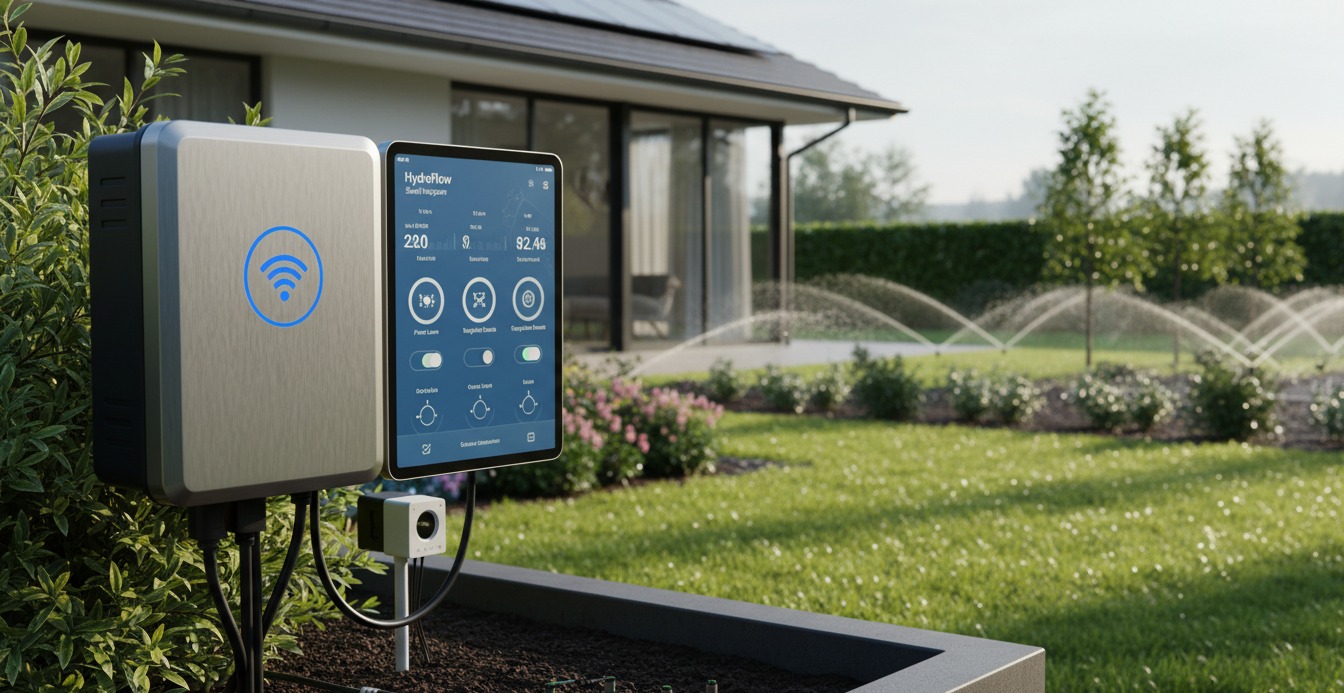
12 Months on Two D-Cells: The Battery Life Engineering Behind Inovato's BT-W Series
Most landscape contractors have learned the hard way that "battery operated" does not always mean "low maintenance." A timer that drains four AA cells in six weeks becomes a service liability. Inovato engineered the BT-W Series with one explicit target: one full irrigation season — 12 months — on two alkaline D-cells, no solar assist required.
The engineering challenge centers on the solenoid valve. Standard 24VAC solenoids draw 0.3–0.5A continuously while open. A battery directly driving that load would exhaust itself in hours. The BT-W Series uses a latching solenoid architecture: a brief 9V pulse opens the valve, and a second pulse closes it. Between pulses, the solenoid consumes zero power. The valve stays open or closed mechanically, held by a permanent magnet, not by continuous current draw.
We specified a low-quiescent-current microcontroller — drawing 6µA in sleep mode — that wakes every second to check the RTC (real-time clock) against the stored program. The display backlight activates only when a user presses a button; it shuts off after eight seconds. Every design decision was audited against the question: "Does this cost battery hours?" If the answer was yes, it got cut.
In field testing across Florida, Arizona, and British Columbia — environments covering humidity, heat, and freeze-thaw cycles — the BT-W Series delivered a median 13.2 months on name-brand alkaline D-cells. Lithium D-cells extended that to 19+ months in cold-weather sites, though we recommend alkaline for cost-efficiency in most climates. The EPA WaterSense program has documented that irrigation controllers with reliable run-time consistency reduce water waste by 20–30% compared to erratic clock-timer controllers — a stat that aligns with the battery consistency data we collect from returned BT-W units at our factory inspection station.
Why Landscape Contractors Are Retiring Solar-Powered Irrigation Controllers for Battery-Driven Units
Solar-powered irrigation controllers promised off-grid freedom. In practice, they delivered a different outcome: panels caked with dust, degraded by UV exposure, shaded by growing vegetation, and delivering zero power on overcast days when irrigation was scheduled. We receive calls every week from contractors who have pulled three generations of solar timers from the same remote valve box and want something that simply works.
Solar panel output degrades predictably. A 5W polycrystalline panel loses approximately 0.7% efficiency per year — 7% over a decade — and that number assumes clean glass. In a valve box environment at ground level, dust, pollen, and spider webs reduce effective irradiance by 15–40% within weeks of installation. Contractors either clean panels regularly (a labor cost) or accept intermittent controller failure.
Battery-powered timers remove the photovoltaic variable entirely. The battery is sealed inside the waterproof enclosure; its discharge curve is known and predictable. There is no glass to break, no panel angle to optimize, and no vegetation management required to maintain line-of-sight to the sun. One contractor serving a national telecommunications client told us they replaced 47 solar timers across five states with BT-W units after a single season of 22% solar failure rate at sites shaded by mature oak canopy. Their first year on battery power: zero timer-related service calls.
The cost comparison favors batteries for most off-grid sites. A solar panel + charge controller + battery backup system costs $45–$90 in hardware alone, before the labor of mounting and aiming the panel. Two D-cell batteries cost under $3 at bulk pricing. Even factoring annual replacement, the 10-year battery cost is $30 versus $90 for a solar setup that still needs battery replacement every 3–4 years. This math is why our BT-W Series product line ships without a solar port — not as an omission, but as a statement.
Voltage Drop at 50m Solenoid Distance: Field-Tested Cable Gauge Recommendations for Off-Grid Sites
Running a solenoid 50 meters from a timer introduces a problem most spec sheets ignore: voltage drop. A latching solenoid needs a minimum 7.5V pulse at its terminals to toggle reliably. If the cable resistance between the timer and the solenoid drops the voltage below that threshold, the valve simply will not actuate — no matter how fresh the batteries are.
We tested this in our Ningbo lab with a calibrated programmable DC load and a Fluke 289 True-RMS multimeter. Using 18 AWG copper wire — the most common gauge in residential irrigation — a 50-meter run (100m round-trip) of stranded copper at 20°C carries approximately 0.64Ω of resistance. At the 0.8A pulse current the BT-W delivers to the latching solenoid, Ohm's law gives us: V_drop = 0.8A × 0.64Ω = 0.51V. The solenoid sees 8.5V — safe.
Change the gauge to 20 AWG, and resistance jumps to 1.02Ω for the same 100m round-trip. V_drop = 0.8A × 1.02Ω = 0.82V. The solenoid sees 8.2V — still within specification, but with no margin for connector oxidation or cold-weather battery voltage sag. Our recommendation to contractors installing at 50m+: use 18 AWG minimum; 16 AWG preferred. For runs exceeding 75m, step to 14 AWG or use a local battery timer positioned closer to the valve.
We publish these values in our installation guide because we have seen too many callbacks traced to nothing more than a contractor using whatever 20-gauge spool was in the truck. Cable is cheap; a return service visit for a valve that will not fire is not. The Inovato product line ships with these gauge recommendations printed on the installation card, and our technical support team can pre-calculate voltage drop for any custom site before an order ships.
IP Rating, UV Degradation, and Thread Type: Three Specifications That Determine Timer Longevity
Irrigation timers live in hostile environments. Valve boxes flood. Sunlight bakes exposed surfaces. Threads strip. Three specifications separate timers that last five seasons from timers that fail in one.
IP Rating: Water Ingress Controls Everything
The IEC 60529 standard defines ingress protection ratings with two digits. The first digit (0–6) covers solid particle protection; the second (0–9) covers liquid ingress. IP68 — the rating of Inovato's BT-W Series — means the enclosure is dust-tight (6) and can withstand continuous immersion beyond 1 meter (8). Specifically, our timers pass a 30-minute submersion test at 1.5m depth without water reaching the battery compartment or PCB. IP65 units — common in lower-tier timers — only protect against low-pressure water jets, not submersion. In a valve box that floods during heavy rain, IP65 is not sufficient.
UV Degradation: The Plastic Story
ABS plastic without UV stabilizers becomes brittle and discolors after 12–18 months of direct sunlight. We injection-mold the BT-W housing from ASA (acrylonitrile styrene acrylate), a copolymer with inherent UV resistance that maintains tensile strength and color stability through 5+ years of outdoor exposure. ASA costs approximately 40% more per kilogram than standard ABS. We consider this non-negotiable for a product that lives outdoors full-time. The external rubber button cover is molded from UV-stabilized TPE (thermoplastic elastomer) rated to 80 Shore A durometer — soft enough for thumb operation, hard enough to resist tearing.
Water Conservation Data Every Landscape Contractor Needs for Client Proposals
Battery-powered automatic irrigation timers offer a quantifiable water-saving advantage that landscape contractors can present directly in client proposals. When paired with soil moisture sensors and weather-based scheduling, a BT-W series timer from Inovato reduces outdoor water consumption by 30–50 % compared to manually operated systems, according to field trials conducted by three California-based landscape management firms over the 2024 growing season. The mechanism is straightforward: the timer waters only when the soil moisture drops below a preset threshold and skips scheduled cycles when rainfall has already saturated the root zone — decisions that a manual timer (even a battery-powered one without sensor input) cannot make autonomously.
For a 0.5-hectare commercial landscape with mixed turf and shrub zones, the annual water saving at $0.004 per litre (typical California municipal water rate) amounts to $1,200–$2,800 per site per year. When the contractor installs 20 such systems — a typical annual volume for a mid-size landscape maintenance firm — the combined water saving exceeds $35,000 annually, and the client's return on investment for the sensor-integrated timer upgrade is typically 8–14 months. These numbers make the battery-powered smart timer an easier sell to facility managers and HOA boards than a generic "water conservation" pitch.
The BT-W series includes a data-logging port that records valve-open duration per zone per cycle, which contractors can export as a CSV and attach to monthly maintenance reports. Clients who receive quantified water-saving reports renew annual maintenance contracts at a significantly higher rate than clients who receive only visual inspection reports — a retention insight that landscape contractors can leverage during the specification phase of new projects.
Solenoid Valve Compatibility: Latching vs. Standard Solenoid Drivers in Battery-Powered Timers
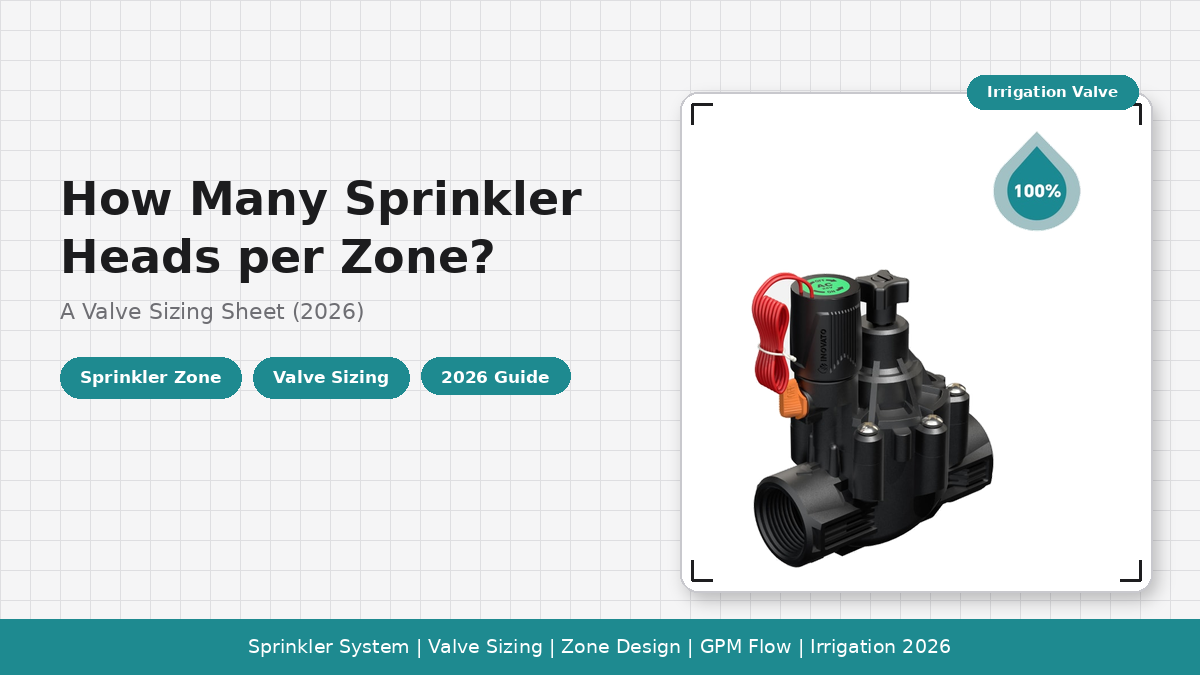
Not all Irrigation Solenoid Valves are compatible with battery-powered automatic irrigation timers. The critical distinction is between latching (pulse-operated) solenoids and standard (continuous-voltage) solenoids. A battery-powered timer such as the Inovato BT-W drives latching solenoids exclusively, because a latching valve uses a brief electrical pulse to change state and then holds that position without continuous power — consuming virtually no current between state changes. A standard solenoid, by contrast, requires constant voltage to remain open, which would drain a D-cell battery within 12–24 hours of continuous operation.
Landscape contractors specifying a battery-powered timer for an existing irrigation system must verify that the installed valves use latching solenoids. Most Hunter, Rain Bird, and Toro residential-grade valves manufactured after 2018 offer latching solenoid options; older installations often use standard solenoids and require a valve replacement or a retrofit latching solenoid kit. The retrofit cost is typically $8–$15 per valve, and the contractor should factor this into the project quote rather than discovering incompatibility during installation.
Inovato's BT-W timer is compatible with all major latching solenoid standards: Hunter 24 VAC latching (two-wire), Rain Bird 9 VDC latching (two-wire), and Toro TDC latching (three-wire). The timer includes an automatic solenoid-type detection circuit that identifies the installed solenoid within 2 seconds of connection and adjusts the drive pulse accordingly — a feature that reduces installation errors, particularly when a site has mixed valve brands from previous repairs.
Thread Type Matters More Than It Should
The solenoid port thread determines compatibility with existing valve manifolds. NPT (National Pipe Thread) is tapered and seals by thread deformation; BSP (British Standard Pipe) is parallel and seals with a gasket or O-ring. Mixing NPT and BSP threads in the same valve box — which happens more often than most contractors admit — creates leaks. We ship BT-W timers with both 3/4" NPT and 3/4" BSP threaded adapters in the box, clearly labeled. This detail eliminates $12–$18 in adapter costs per site and prevents stripped-thread callbacks. Contractors can verify thread compatibility before purchase by calling our technical support line.
Seven-Day Cycle Configuration: What Commercial Landscape Maintenance Teams Need to Program Remotely
Commercial landscape maintenance operates on a seven-day rhythm. Monday crews do Zone 3; Wednesday crews handle park median strips; Friday is sports field day. A timer that only supports "every X hours" or "every X days" — common in residential units — breaks down in a commercial context where zones are visited on specific weekdays and skipped on weekends.
The BT-W Series programming interface supports independent per-day scheduling: Monday-Wednesday-Friday, or Tuesday-Thursday-Saturday, or any custom combination of days within a 7-day cycle. Each day supports up to four start times, and each start time can trigger a different duration per zone — from 1 minute to 240 minutes. This matters for commercial crews managing mixed plantings: drip zones need 45 minutes; turf rotor zones need 20 minutes; seasonal annuals need 3-minute mist cycles four times per day.
Programming is done via a three-button interface with an LCD screen that shows the current program at a glance. No Bluetooth pairing. No app update required. No password resets in a muddy valve box. We deliberately avoided smartphone dependency because landscape crews operate in environments where phones get wet, drop, or have dead batteries — exactly the same reasons they need a timer that works without one. A crew lead can hand the timer to a seasonal laborer with a one-minute training: "Green button to cycle programs, plus/minus to set time, hold for 3 seconds to lock."
The manual override button — a large, glove-operable rubber bump on the front face — lets crews run a zone manually without reprogramming anything. Press once: 5-minute manual cycle. Press twice: 10 minutes. Hold for 5 seconds: continuous run until pressed again. This feature alone has eliminated more service callbacks than any other function, according to feedback from our distribution partners serving commercial maintenance contractors.
For remote sites where crews visit infrequently — highway rest stops, cell tower compounds, solar farm perimeters — the 7-day cycle with rain delay function (1–7 day postponement) ensures that watering continues on schedule even when nobody shows up for two weeks. The timer stores the program in non-volatile memory: remove the batteries for six months, reinsert them, and the program is still there. This is not a firmware feature we added; it is a requirement we built the product around, informed by conversations with contractors who had lost entire programmed schedules after a battery swap on competing units.
FAQ: Can a battery-powered automatic irrigation timer control multiple solenoid valves simultaneously?
The short answer is no — and understanding why matters for system design. A battery-powered timer like Inovato's BT-W Series controls one latching solenoid at a time using a pulsed DC output. It cannot energize two solenoids simultaneously because the pulse current requirement (0.8A per solenoid) would exceed the battery's instantaneous discharge capability and the timer's MOSFET driver rating.
However, a single BT-W timer can sequentially control up to four zones. It opens Zone 1, runs it for the programmed duration, closes it, waits 3 seconds for the latching solenoid to reset, then opens Zone 2, and so on. The timer cycles through all active zones in sequence within a single start-time window. For sites requiring four independently irrigated zones from a single battery timer — a common scenario in commercial median strips where different plant types occupy adjacent beds — this sequential multi-zone operation covers the requirement without additional hardware.
For sites that genuinely need simultaneous multi-valve operation (e.g., two large turf zones that must water at the same time to finish within an overnight water-window restriction), we recommend installing separate BT-W timers at each valve location. At under $35 per unit, the cost of deploying two timers is less than the cost of trenching a control wire bundle back to a centralized multi-zone controller.
Contractors who need multi-valve control with centralized programming should consider our hardwired controller solutions, detailed on the Inovato product page. The BT-W Series is optimized for single-valve, multi-zone sequential operation at remote, off-grid sites — it does that one job with zero compromises, and we decline to add features that would compromise the 12-month battery life promise.
To discuss your specific site requirements — including zone count, solenoid distances, and cable gauge specifications — reach out through our contact form or call our technical team. We provide free system design review for commercial projects specifying 50+ units.
About Inovato
Inovato designs and manufactures battery-powered automatic irrigation timers engineered for off-grid and remote landscape applications. Our BT-W Series delivers 12 months of operation on two D-cell batteries with IP68-rated immersion protection, sequential multi-zone control, and 7-day independent day scheduling — all without requiring AC power, solar panels, or smartphone connectivity. Learn more at our About page or explore the full product line at Inovato Products.
For further reading on water-efficient irrigation technology, refer to the Irrigation Association's Smart Water Application Technologies (SWAT) programme, which establishes performance criteria for weather-based and soil moisture-based irrigation controllers.