



North American Residential Irrigation Contractors Specify SF-PRS Pressure Regulating Spray Bodies for Consistent Nozzle Performance on Sloped Lawns
When we talk to irrigation contractors at industry events, one of the most consistent pain points we hear is callbacks on sloped residential installations. The homeowner calls back two weeks after install saying certain areas are turning brown while others are waterlogged. The contractor sends a tech out, adjusts the runtime, maybe swaps a nozzle — and three weeks later, the call comes again. The root cause is almost always the same: pressure imbalance across the zone created by elevation change, and nobody addressed it at the component level during the original install.
The SF-PRS pressure regulating spray body exists precisely to solve this problem. It is not a luxury upgrade. It is the correct engineering solution to a physics problem that no amount of runtime tweaking will fully resolve.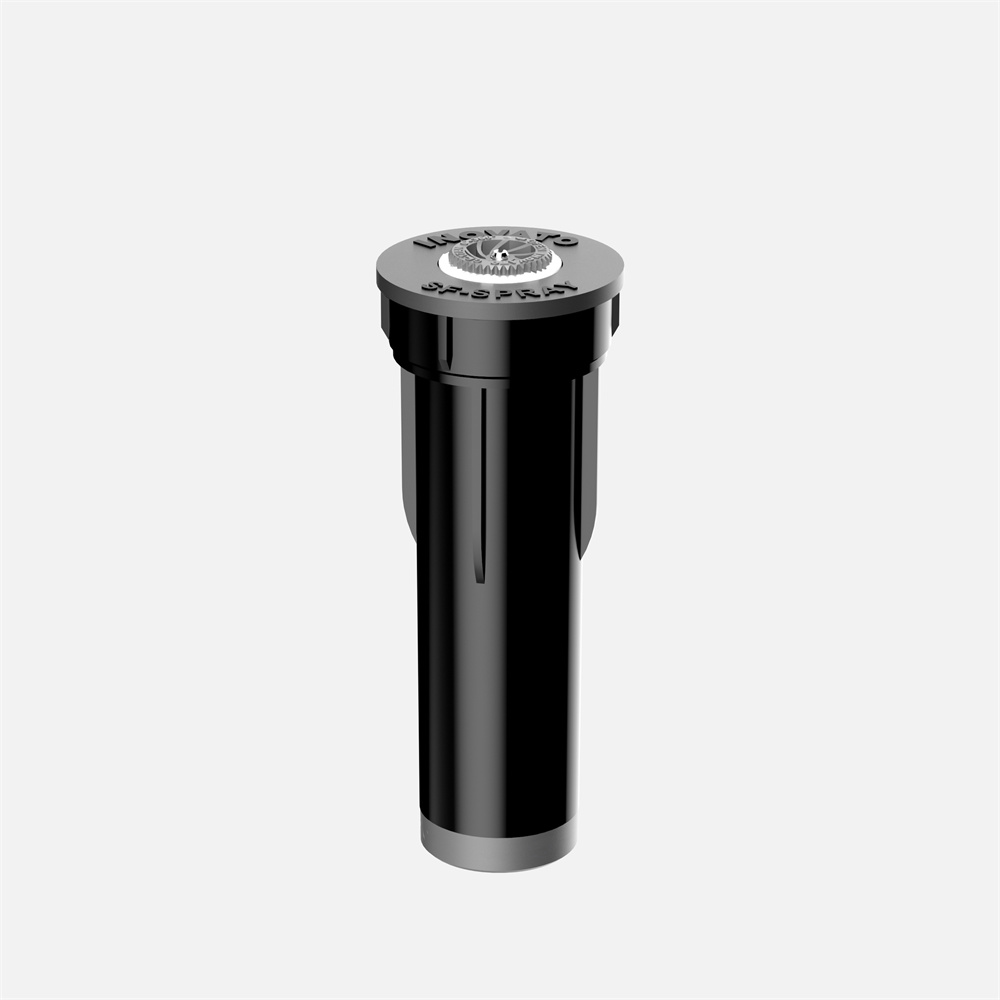
The Physics of Sloped Lawns Nobody Talks About Enough
Here is what happens on a sloped residential property that most training programs gloss over. You have a lateral line running up a 6% grade with six spray heads spaced at 12-foot intervals. The static pressure at the pump or zone valve is, say, 45 PSI. That pressure has to push water uphill to the top head while simultaneously supplying the bottom heads. Due to elevation change alone, each foot of rise costs approximately 0.433 PSI. Across a 5-foot elevation gain from bottom to top head, you are already looking at a differential that will affect performance.
But that is only part of the story. When any of those heads are operating, dynamic pressure adds another variable. The bottom heads on the slope experience higher inlet pressure because gravity is working with the flow rather than against it. The top heads are fighting gravity. Without regulation, you get a situation where the bottom heads are over-pressured — throwing heavy, chunky droplets that splash and cause runoff — while the top heads are under-pressured, producing a weak, narrow pattern that leaves dry spots.
We have seen this play out on properties across the Midwest, the Pacific Northwest, and the suburban developments around Atlanta and Dallas-Fort Worth, where rolling terrain is the norm rather than the exception. The solution is not to adjust the nozzles after the fact. The solution is to install pressure regulating spray bodies from the beginning so each head regulates down to its nominal operating pressure regardless of what is happening at the inlet.
What Makes a Spray Body "Pressure Regulating" and Why It Matters for Nozzle Performance
A conventional spray body is essentially a plumbing fitting with a check valve and a nozzle seat. Water passes through it more or less at whatever pressure exists in the lateral line. The nozzle then does what physics dictates at that pressure: higher pressure produces finer atomization and greater throw distance; lower pressure produces heavier droplets and shorter radius. On flat terrain, this is manageable because the pressure differential between heads on the same zone is typically minimal — perhaps 2 to 5 PSI across the entire lateral.
On sloped terrain, the differential can exceed 10 to 15 PSI between the highest and lowest head on the same zone. At that point, no single nozzle selection can compensate. You would need different nozzles at every elevation change, and even then, a system that performs correctly on a cool morning when inlet pressure is stable will fail on a hot afternoon when demand across the zone causes pressure fluctuations.
The SF-PRS spray body addresses this by incorporating a pressure regulating mechanism — a spring-loaded diaphragm cartridge inside the body that maintains a consistent outlet pressure, typically 30 PSI nominal, across an inlet range of 15 to 70 PSI. When the inlet pressure rises above the setpoint, the diaphragm restricts flow to hold the outlet steady. When it drops, the diaphragm opens to compensate. The result is that every nozzle on that zone sees the same operating pressure, which means every nozzle performs as designed.
Why Contractors Are Making SF-PRS the Default Spec on Sloped Lots
Three years ago, pressure regulating spray bodies were often positioned as premium or specialty items — something you spec for commercial hillside work or athletic field installations where performance requirements were strict. Residential contractors typically reserved them for the most challenging sites or avoided them due to cost and perceived complexity.
That calculus has shifted. Several factors are driving SF-PRS adoption as a default residential specification on any slope:
- Callback reduction: A single callback — dispatch, labor, drive time — can cost $125 to $250. If an SF-PRS spray body prevents one callback per slope installation over the warranty period, the math heavily favors the regulating body. Contractors who have tracked this data report callback rates dropping by 40 to 60 percent on sloped residential zones where they switched to pressure-regulated bodies.
- Homeowner satisfaction scores: Irrigation contractors are increasingly judged on the Aesthetic Performance Index — whether the lawn looks uniformly green with no dry patches, no runoff tracks, and no overspray onto hardscape. SF-PRS bodies deliver the uniform coverage that produces high homeowner satisfaction scores, which translates into referrals and positive online reviews.
- Water efficiency and code compliance: As municipalities adopt outdoor water use restrictions tied to the EPA WaterSense program and regional conservation mandates, contractors need systems that perform correctly at lower total water application rates. Over-pressured heads waste water through misting and overspray. Pressure regulation ensures each head uses exactly the water volume needed for its pattern area.
- No additional design complexity: The SF-PRS spray body threads onto standard 1/2-inch risers and swing joints. It does not require a separate pressure regulation zone, a separate valve circuit, or any modification to the lateral line layout. Our contractors spec it as a direct one-for-one replacement for a conventional spray body on any slope zone.
Installation Practices That Maximize SF-PRS Performance on Sloped Terrain
We have worked with enough contractor teams to know that the equipment only performs as well as the system around it. An SF-PRS spray body installed on a poorly designed layout will still disappoint. Here are the installation practices our technical support team emphasizes when we do jobsite walkthroughs with contractors spec'ing SF-PRS bodies on sloped residential projects.
Match the Regulating Pressure to Your Nozzle Selection
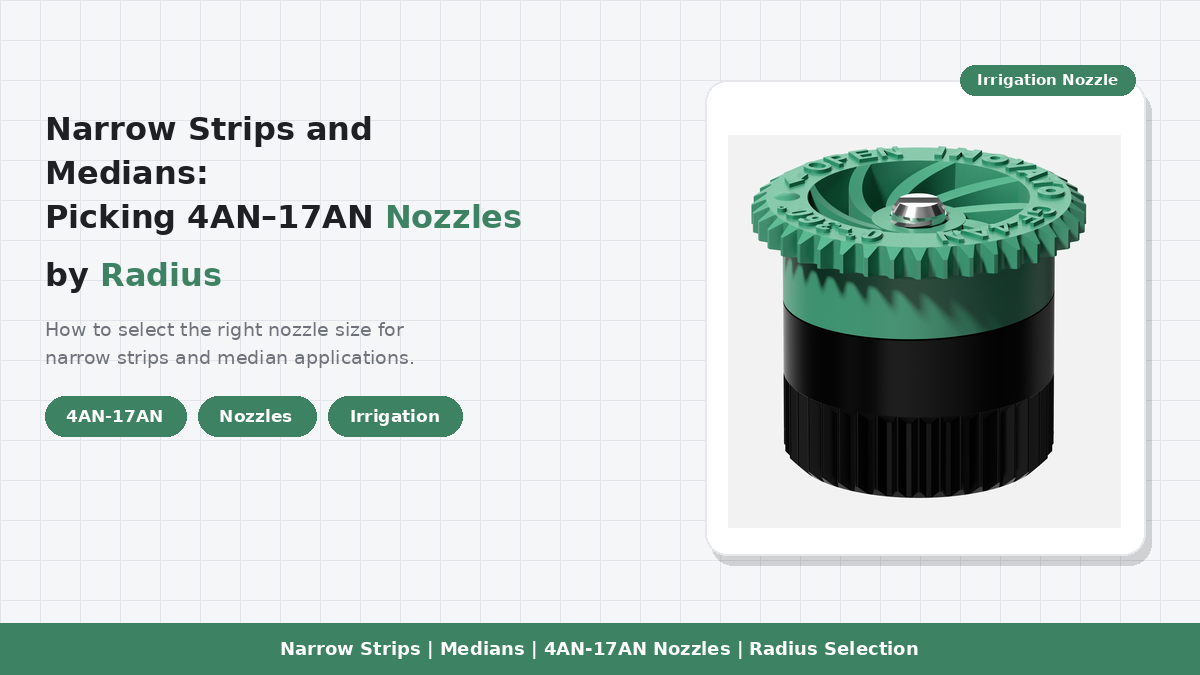
Our SF-PRS units regulate to a nominal 30 PSI outlet pressure. This is calibrated for standard residential Misting Nozzles — the 1.5 GPM to 3.0 GPM range most commonly used on 12 to 18-foot spacing. Before you finalize your nozzle schedule, confirm that the nozzles you have selected are rated for optimal performance at 30 PSI. Most manufacturer catalogs provide separate performance data for 25 PSI, 30 PSI, and 35 PSI. If your design pressure is different, contact our technical team — we can discuss custom spring configurations for specialty applications.
Account for Static Head in Your Zone Layout
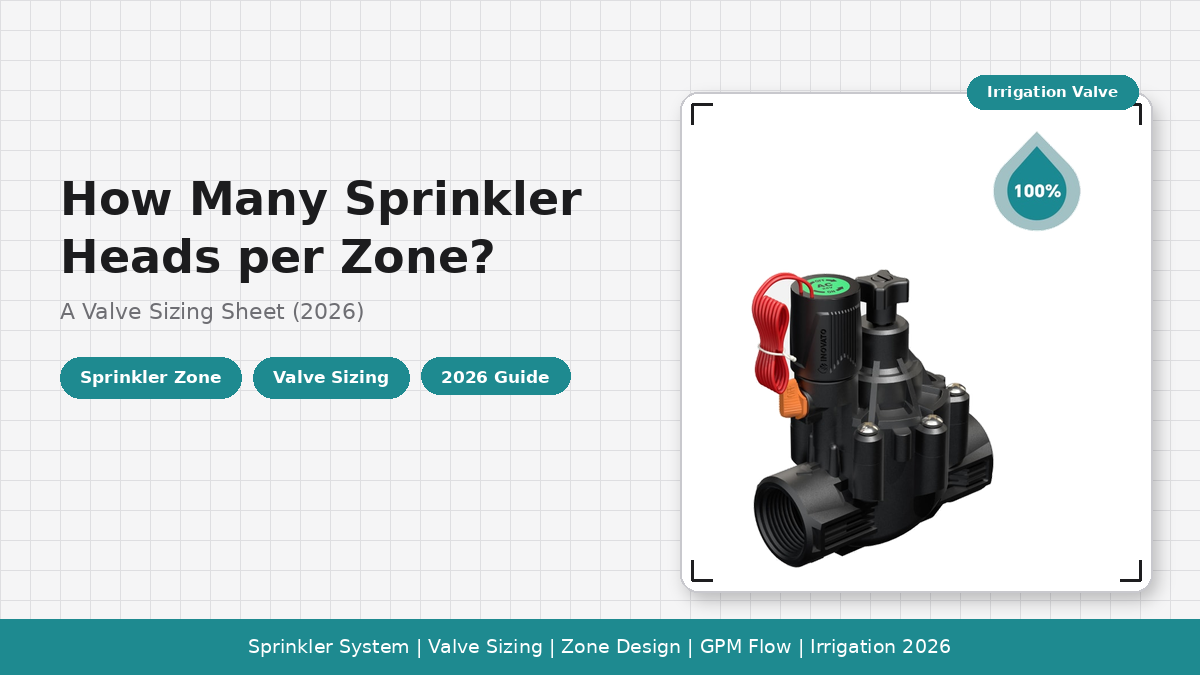
Pressure regulation at the head compensates for dynamic pressure variations, but you still need to account for static head pressure in your hydraulic calculations. The zone should be laid out so that the cumulative pressure loss from friction loss in the pipe plus elevation change does not push the inlet pressure below the SF-PRS operating minimum of 15 PSI at any head on the zone. Our technical documentation includes a simple pressure loss worksheet that takes the guesswork out of this calculation.
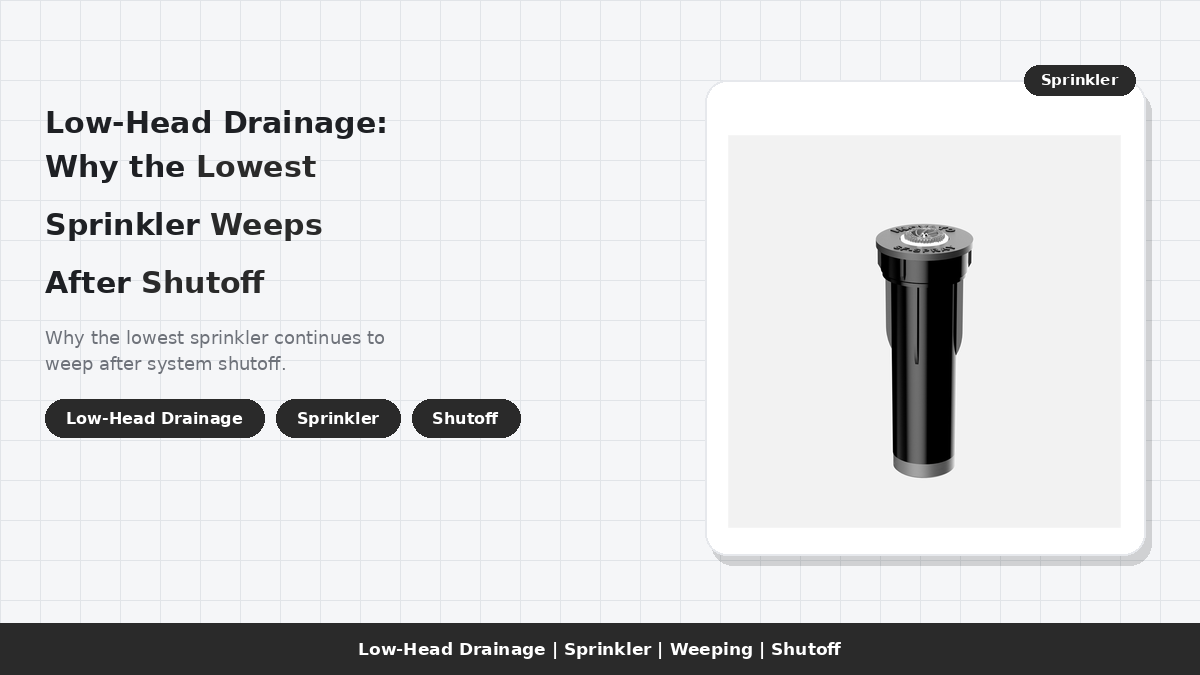
Use Check Valve Features to Prevent Low-Head Drainage
On sloped terrain, the elevation differential between heads can cause low-head drainage — water draining from higher heads back through the lateral line after the zone shuts off. This causes puddling at the lower heads and can contribute to erosion. All INOVATO SF-PRS spray bodies come with an integral 6-foot check valve as standard. This prevents backflow and eliminates the drainage issue without requiring a separate check valve fitting at each head location.
Verify Coverage with a Pre-Season Distribution Test
We recommend that contractors run a distribution test on every slope installation before closing the job and walking away. This means placing catch cans at each nozzle's radius edge, running the zone for a defined period, and measuring the catch volumes. The distribution uniformity index should be 0.70 or above for a properly functioning system. If it is lower, the issue is almost always nozzle selection or spacing rather than the spray body itself — but catching it before the homeowner moves in is what separates contractors who get callbacks from those who get referrals.
Real-World Performance: What the Field Data Shows
We collect performance data from contractor field reports and our own testing facilities to continuously validate the SF-PRS design. Here is what we consistently observe when contractors switch from conventional spray bodies to pressure-regulated bodies on sloped residential zones.
On properties with 4% to 8% grades, zones using conventional spray bodies typically show a distribution uniformity index between 0.48 and 0.58 in our testing — below the threshold generally considered acceptable for healthy turf. The same zones with SF-PRS bodies consistently achieve DU ratings of 0.72 to 0.81, which represents a meaningful improvement in turf health outcomes and water use efficiency.
The pressure differential across heads on a regulated zone typically stays within a 2 to 3 PSI band, even when the inlet pressure fluctuates by 20 PSI or more during peak demand periods. This stability is what allows the nozzles to perform as the manufacturer intended, with the correct droplet size, throw distance, and precipitation rate.
Contractors who have tracked their callback data over multiple seasons report that the SF-PRS body pays for itself within the first 12 to 18 months on any slope installation through reduced service visits alone. On properties with multiple slope zones — which is common in new construction with grade-separated lot layouts — the cumulative savings are even more significant.
The Retrofit Business Case: Upgrading Existing Systems
A significant portion of the SF-PRS market growth is coming from retrofit applications. As homeowners experience dry spots and runoff problems on sloped yards, they call contractors back for solutions. Rather than redesigning the entire zone — replacing pipe, re-trenching, modifying valve circuits — the most cost-effective solution is often as simple as swapping the spray bodies.
Because the INOVATO SF-PRS spray body uses a standard 1/2-inch female threaded bottom inlet, it is a direct fit for the vast majority of residential irrigation risers installed in North American systems. The retrofit process requires the same tools as a standard spray body replacement: a pair of slip-joint pliers or a spray body wrench, Teflon tape or thread sealant, and about five minutes per head. There is no need to drain the lateral, no need to modify fittings, and no change to the existing nozzle schedule.
For the contractor, this creates a high-margin service offering. The parts cost is modestly higher than a conventional spray body, but the labor to install is identical. The homeowner gets a problem solved rather than patched. And the contractor establishes credibility by solving an issue that likely eluded previous service providers.
Industry Standards and Compliance Considerations
Contractors who operate in municipalities with active WaterSense programs or tiered water budgets will find that pressure regulation aligns naturally with compliance requirements. The Irrigation Association's best management practices for water efficiency specifically cite pressure regulation at the head level as a recommended strategy for reducing water waste in landscape irrigation systems. Our SF-PRS bodies are designed to support these practices, and we provide documentation that contractors can submit to municipalities or water districts as evidence of water-efficiency measures installed on the property. The EPA WaterSense program provides certification criteria aligned with pressure-regulated system specifications.
The ISO 7711 series, which governs irrigation equipment performance standards, includes test protocols for pressure-regulating devices. Our SF-PRS bodies are designed and validated against these protocols, and our technical data sheets provide full performance curves showing regulated outlet pressure across the full inlet pressure range, as validated against published field research from the Cooperative Extension Service. We believe in transparent specifications because contractors deserve reliable data when they are building a system that will be judged on its performance for years.
For commercial or HOA-specified projects, the USDA Rural Development water conservation programs and various state-level rebate programs have increasingly recognized pressure-regulated irrigation components as qualifying equipment for water-efficiency incentives. We maintain documentation packages that contractors can use when pursuing these rebates on behalf of their commercial clients.
Conclusion: Specification Discipline Prevents Callback Pain
The case for specifying SF-PRS pressure regulating spray bodies on sloped residential Irrigation Installations is straightforward: the physics of elevation change create pressure differentials that no nozzle selection or runtime adjustment can fully compensate for. The only reliable engineering solution is pressure regulation at each head. Contractors who adopt this specification as standard practice on slope zones eliminate the most common cause of callbacks, deliver measurably better turf health outcomes, and position themselves as professionals who understand the technical details that separate adequate irrigation from excellent irrigation.
We design the INOVATO SF-PRS spray body to make this an easy choice. It installs like a standard spray body, performs to a higher standard, and costs less in the long run through reduced callbacks and warranty service. That is the combination that drives adoption, and it is why we see SF-PRS bodies becoming the default spec rather than the exception on slope installations across North America.
If you are a contractor evaluating your next sloped residential project and want to discuss nozzle schedules, hydraulic layout, or SF-PRS pricing for volume projects, our technical sales team is available to walk through your specific project conditions. We have detailed hydraulic worksheets, distribution test protocols, and CAD-compatible submittal drawings available for professional specification packages.