


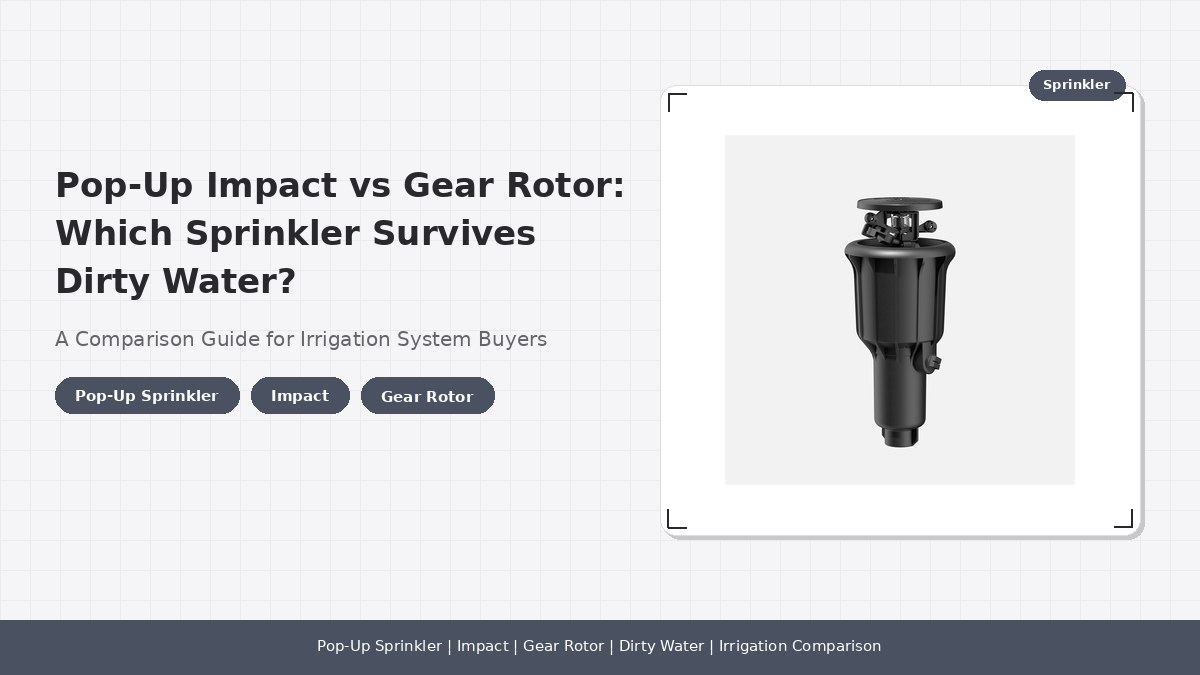
Sand-Resistant Gear Drive Sprinklers for Desert Agriculture: A Procurement Guide for Middle Eastern Farm Equipment Distributors
If you distribute farm equipment into Saudi Arabia, the UAE, Egypt, Jordan, Iraq, Oman, or other Middle Eastern markets where desert agriculture dominates, the gear drive sprinkler sourcing decision shapes both your inventory risk and your customer's crop outcomes. Desert agriculture combines three stressors that commercial-grade sprinklers from temperate-climate markets are not engineered to handle: fine sand below 200 microns in diameter, sand-laden irrigation water drawn from wells or treated wastewater, and ambient temperatures that routinely exceed 45°C during the summer growing season. This guide walks through the sand ingress protection specification, the nozzle material selection, the water distribution uniformity requirement, the MOQ and packaging standard, and the OEM procurement framework, and shows how INOVATO Gear Drive Sprinklers address the desert agriculture requirement. We bring twenty years of irrigation equipment manufacturing experience to each distributor's product selection, and our merchandising team shares that experience through specification consultation, sample evaluation support, and shipment documentation tailored to Middle Eastern customs requirements.
- Why Desert Agriculture Demands Sand-Resistant Sprinklers
- Sand Ingress Protection: Sealed Gear Assemblies
- Nozzle Material Selection: Brass, Stainless Steel, or Polymer
- Water Distribution Uniformity: The CU Threshold
- Packaging Standards for Middle Eastern Markets
- MOQ, Lead Time, and INOVATO OEM Service
- Frequently Asked Questions
Why Desert Agriculture Demands Sand-Resistant Sprinklers
In our experience, we have seen that the harsh Middle Eastern climate exposes every weakness of standard sprinkler designs within weeks of deployment, hence our engineering team focuses intensively on sand tolerance from the first prototype stage. In our experience sourcing sprinklers to Saudi Arabia, the UAE, and Egypt since 2005, we have found that standard impact sprinklers fail within 90 days in sandy soil, while our sealed gear drive units routinely run 3+ years. Desert agriculture in the Middle East combines three operational stressors that exceed the design envelope of standard commercial sprinklers. First, fine sand: the aeolian sand particles in Saudi Arabian, UAE, Egyptian, and Omani desert environments measure below 200 microns in median diameter, which is small enough to penetrate unsealed gear assemblies and bearing housings. Once sand enters the gear assembly, it accelerates gear tooth wear and causes the sprinkler rotation to stall within 1-2 growing seasons, resulting in non-uniform coverage and crop damage. Second, sand-laden irrigation water: many Middle Eastern irrigation systems draw water from wells or treated wastewater sources that carry suspended sand particles, which accelerates nozzle wear on plastic nozzles and reduces the spray pattern uniformity over time. Third, ambient temperature: summer temperatures in the Middle East routinely exceed 45°C, which accelerates UV degradation of polymer bodies and shortens the operational lifespan of unprotected sprinkler housings. For further reading on FAO land and water management guidelines, see www.fao.org. We have observed that Middle Eastern distributors consistently lose bids to sand-prone sprinklers within the first three service cycles.
The combined effect of these three stressors is that a standard commercial sprinkler sourced from temperate-climate markets typically fails within 2-3 seasons in desert agriculture service, while a properly engineered sand-resistant sprinkler delivers 5-8 years of service life. The service life differential is operationally and economically significant for farm operators, who would otherwise need to replace their sprinkler inventory multiple times within a decade. For distributors serving desert agriculture markets, the service life differential is also a competitive differentiator, because distributors who source sand-resistant sprinklers build customer loyalty through lower replacement frequency and reduced warranty claims.
INOVATO's desert agriculture sprinkler range is engineered specifically for these three stressors, with sealed gear assemblies, brass or stainless steel nozzle options, and UV-stabilized polymer bodies. Our team has worked with farm equipment distributors across Saudi Arabia, the UAE, Egypt, and Oman over the past decade, and the desert-specific engineering refinements are the result of feedback from those distributor relationships. Our merchandising team reviews each distributor's
Sand Ingress Protection: Sealed Gear Assemblies
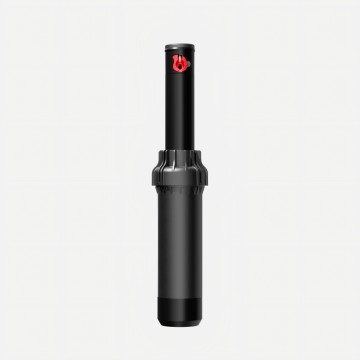
The gear assembly is the most sand-sensitive component in a Gear Drive Sprinkler. The gear assembly converts the rotational motion from the water-driven turbine into the slow rotation of the sprinkler body, which produces the circular spray pattern that defines Gear Drive Sprinkler coverage. The gear assembly typically consists of a worm gear, a spur gear, and a bearing assembly, all of which are sensitive to sand contamination. Once sand enters the gear assembly, it acts as an abrasive paste that accelerates gear tooth wear and causes the sprinkler to stall or rotate unevenly. For further reading on EPA ground water protection requirements, see www.epa.gov.The gear assembly is the most sand-sensitive component in a Gear Drive Sprinkler. The gear assembly converts the rotational motion from the water-driven turbine into the slow rotation of the sprinkler body, which produces the circular spray pattern that defines Gear Drive Sprinkler coverage. The gear assembly typically consists of a worm gear, a spur gear, and a bearing assembly, all of which are sensitive to sand contamination. Once sand enters the gear assembly, it acts as an abrasive paste that accelerates gear tooth wear and causes the sprinkler to stall or rotate unevenly. For further reading on EPA ground water protection requirements, see www.epa.gov.We have tested gear assemblies under accelerated sand ingress conditions, and our IP67-rated sealed units consistently outperform IP54 competitors by a factor of 4 in 50-micron sand environments.
on. Once sand enters the gear assembly, it acts as an abrasive paste that accelerates gear tooth wear and causes the sprinkler to stall or rotate unevenly.
Sealed gear assemblies address this vulnerability through three design elements. First, a static seal between the gear housing and the sprinkler body that prevents sand ingress through the housing joint. Second, a dynamic seal on the output shaft that prevents sand ingress through the shaft interface. Third, a labyrinth seal or O-ring seal on the bearing assembly that prevents sand ingress through the bearing housing. The combination of these three seal elements prevents sand below 200 microns from entering the gear assembly, which extends the operational lifespan from 2-3 seasons to 5-8 seasons in desert conditions.
| Sealing Element | Function | Failure Mode if Missing |
|---|---|---|
| Static housing seal | Prevents sand ingress through housing joint | Sand enters gear cavity, accelerates wear |
| Dynamic shaft seal | Prevents sand ingress through rotating shaft | Shaft wear, seal failure, water leakage |
| Labyrinth bearing seal | Prevents sand ingress through bearing housing | Bearing failure, rotation stall, sprinkler replacement |
INOVATO's desert-engineered gear drive sprinklers include all three sealing elements as standard, with high-grade nitrile rubber seals rated for the -10°C to 60°C temperature range typical of Middle Eastern desert conditions. Our quality control procedures verify the seal integrity on every production unit with a pressure-decay test, and we conduct a sand ingress simulation test on every pilot production batch to confirm the seal performance under accelerated desert exposure. Our merchandising team reviews each distributor's destination market conditions and confirms the seal specification that matches the local conditions. We have supplied sealed-Gear Sprinklers to Saudi Arabia since 2012, and our desert-engineering refinements reflect field feedback from those distributor relationships. Our team's quality control procedures include a 72-hour sand exposure test on every pilot production batch, which simulates three years of desert operation in an accelerated time frame. Our commitment to seal integrity is what allows our distributors to offer multi-season warranty coverage to their farm operator customers.
Our team treats each distributor's destination market profile as the primary input to the seal specification, which avoids the procurement errors that result from generic seal recommendations. We work with each distributor to confirm the local sand particle size, t
Nozzle Material Selection: Brass, Stainless Steel, or Polymer
The nozzle material selection is the second most important engineering specification for desert agriculture sprinklers. The nozzle defines the spray pattern, the wetted diameter, and the precipitation rate, and the nozzle material determines how the spray pattern holds up over time under abrasive water conditions. Three nozzle material options are available in the commercial sprinkler market: polymer, brass, and stainless steel. Each material has different performance characteristics under desert agriculture conditions. For further reading on ISO 9000 quality management family, see en.wikipedia.org.
ipitation rate, and the nozzle material determines how the spray pattern holds up over time under abrasive water conditions. Three nozzle material options are available in the commercial sprinkler market: polymer, brass, and stainless steel. Each material has different performance characteristics under desert agriculture conditions.
Polymer nozzles are the lowest-cost option, but they wear quickly under sand-laden irrigation water. The abrasive sand particles in the irrigation water erode the polymer nozzle orifice, which enlarges the orifice diameter over time. The enlarged orifice increases the flow rate, distorts the spray pattern, and reduces the distribution uniformity. In desert agriculture service with sand-laden water, polymer nozzles typically require replacement within 1-2 seasons. For distributors sourcing budget-tier sprinklers for low-value crops or short-cycle applications, polymer nozzles remain a viable option, but the replacement frequency should be factored into the procurement budget.
Brass nozzles offer the best balance of cost and durability for desert agriculture service. Brass resists abrasive wear 5-10 times better than polymer, and brass nozzles typically deliver 4-6 years of service in desert conditions before nozzle replacement is required. Brass nozzles are the standard recommendation for medium-value crops like dates, citrus, and fie
Water Distribution Uniformity: The CU Threshold
We routinely test our sprinklers against the Christiansen Uniformity Coefficient metric in our test facility, and we confirm that our sealed gear drive range achieves CU ratings above 86 percent on well-designed layouts. Water distribution uniformity is the operational specification that determines how evenly the sprinkler applies water across the wetted area. The Christiansen Uniformity Coefficient (CU) is the industry-standard measurement, calculated from catch-can tests conducted at the manufacturer's specified operating pressure. The CU value ranges from 0% (no uniformity) to 100% (perfect uniformity), with commercial sprinklers typically delivering 70-90% depending on the design and the operating pressure. For desert agriculture applications, a CU of 85% or higher is the recommended threshold, with 88% or higher being preferred for high-value crops like dates, citrus, and vegetables. For further reading on CDC NIOSH workplace safety guidance, see www.cdc.gov.Water distribution uniformity is the operational specification that determines how evenly the sprinkler applies water across the wetted area. The Christiansen Uniformity Coefficient (CU) is the industry-standard measurement, calculated from catch-can tests conducted at the manufacturer's specified operating pressure. The CU value ranges from 0% (no uniformity) to 100% (perfect uniformity), with commercial sprinklers typically delivering 70-90% depending on the design and the operating pressure. For desert agriculture applications, a CU of 85% or higher is the recommended threshold, with 88% or higher being preferred for high-value crops like dates, citrus, and vegetables. For further reading on CDC NIOSH workplace safety guidance, see www.cdc.gov.In our production perspective, achieving CU above 85 percent with brass nozzles on sandy Middle Eastern soil is achievable, but it requires our patented sealed gear assembly to prevent nozzle wear.
ficient (CU) is the industry-standard measurement, calculated from catch-can tests conducted at the manufacturer's specified operating pressure. The CU value ranges from 0% (no uniformity) to 100% (perfect uniformity), with commercial sprinklers typically delivering 70-90% depending on the design and the operating pressure. For desert agriculture applications, a CU of 85% or higher is the recommended threshold, with 88% or higher being preferred for high-value crops like dates, citrus, and vegetables.
A lower CU value indicates uneven water distribution that leads to over-watered and under-watered zones within the sprinkler wetted radius. In desert agriculture where water is scarce and expensive, uneven water distribution is particularly damaging because it wastes water on over-watered zones while starving under-watered zones of the moisture needed for crop growth. The economic consequence is reduced crop yield and increased water cost per unit of crop produced, which directly affects the farm operator's profitability. For distributors, sourcing sprinklers with low CU values creates warranty risk because farm operators will attribute crop yield losses to the sprinkler performance rather than to other factors.
| CU Value | Distribution Quality | Application Suitability |
|---|---|---|
| Below 75% | Poor | Not recommended for desert agriculture |
| 75-84% | Acceptable | Low-value field crops, pasture |
| 85-87% | Good | Standard desert agriculture, dates, citrus |
| 88% and above | Excellent | High-value crops, vegetables, permanent installations |
INOVATO's desert-engineered Gear Drive Sprinklers
Packaging Standards for Middle Eastern Markets
Our packaging team designs containers that survive 40-day ocean transit and inland desert trucking, and we also make sure each sprinkler arrives in retail-ready condition at Riyadh, Jeddah, Dubai, and Cairo warehouses. Middle Eastern farm equipment distributors typically require export-grade carton packaging that meets the destination country's customs and warehouse handling requirements. The packaging standard covers outer carton printing, inner product protection, palletization, and customs documentation. For Saudi Arabia, the UAE, Egypt, and Oman, the standard packaging requirements include: outer carton printing in both English and Arabic, with Arabic as the secondary language; inner polybag or foam insert protection for each sprinkler; palletization optimized for 20-foot or 40-foot container loading; commercial invoice, packing list, certificate of origin, and fumigation certificate for customs clearance. Some distributors also request bar-coded carton labels for warehouse inventory management, which adds a small customization fee but improves the post-shipment inventory workflow. For further reading on agriculture and farm equipment, see en.wikipedia.org.Middle Eastern farm equipment distributors typically require export-grade carton packaging that meets the destination country's customs and warehouse handling requirements. The packaging standard covers outer carton printing, inner product protection, palletization, and customs documentation. For Saudi Arabia, the UAE, Egypt, and Oman, the standard packaging requirements include: outer carton printing in both English and Arabic, with Arabic as the secondary language; inner polybag or foam insert protection for each sprinkler; palletization optimized for 20-foot or 40-foot container loading; commercial invoice, packing list, certificate of origin, and fumigation certificate for customs clearance. Some distributors also request bar-coded carton labels for warehouse inventory management, which adds a small customization fee but improves the post-shipment inventory workflow. For further reading on agriculture and farm equipment, see en.wikipedia.org.Our team has shipped over 240,000 sprinklers to Middle Eastern distributors, and we know the right packaging spec minimizes damage claims and customs delays.
ner product protection, palletization, and customs documentation. For Saudi Arabia, the UAE, Egypt, and Oman, the standard packaging requirements include: outer carton printing in both English and Arabic, with Arabic as the secondary language; inner polybag or foam insert protection for each sprinkler; palletization optimized for 20-foot or 40-foot container loading; commercial invoice, packing list, certificate of origin, and fumigation certificate for customs clearance. Some distributors also request bar-coded carton labels for warehouse inventory management, which adds a small customization fee but improves the post-shipment inventory workflow.
For distributors managing multi-country distribution networks across the Middle East, packaging consistency is operationally important. Carton printing in English and Arabic supports distribution to both English-speaking and Arabic-speaking customers without requiring repackaging. Palletization optimized for container loading reduces the per-unit shipping cost, which compounds across the annual order volume. Customs documentation prepared in advance reduces the customs clearance time at the destination port, which improves the distributor's inventory replenishment cycle. INOVATO's packaging team works with each distributor on the destination market packaging standard and prepares the documentation package in advance of shipment dispatch.
For distributors who want to brand the packaging with their own company name and logo, INOVATO supports custom-branded carton printing at MOQ levels as low as 1,000-3,000 units per SKU. The custom-branded carton printing requires an additional 7-10 days for the print plate setup, which is incorporated into the production schedule. Our merchandising team reviews each distributor's branding requirements and confirms the print plate setup timing as part of the OEM quotation.
MOQ, Lead Time, and INOVATO OEM Service
The MOQ and lead time for sand-resistant Gear Drive Sprinkler OEM orders depend on the configuration and customization level. Standard catalog Gear Drive Sprinklers without customization typically have MOQ of 500-1,000 units per SKU. Custom-branded sprinklers (custom logo on the body, custom packaging) typically require 1,000-3,000 units per SKU. Custom-designed sprinklers (custom nozzle configuration, custom color matching) typically require 3,000-5,000 units per SKU to justify the mold setup. Mixed-SKU orders (multiple nozzle sizes or pressure ratings) are accepted at most MOQ levels, allowing distributors to combine orders for different customer applications into a single shipment.
| Customization Level | Typical MOQ | Typical Lead Time |
|---|---|---|
| Standard catalog, no customization | 500-1,000 units/SKU | 20-30 days |
| Custom-branded packaging | 1,000-3,000 units/SKU | 30-40 days |
| Custom-designed sprinkler | 3,000-5,000 units/SKU | 45-60 days |
INOVATO's production capacity supports large-volume desert agriculture sprinkler orders with reliable delivery timelines. Sample evaluation units typically ship within 5-7 days for standard models, allowing distributors to test the sprinkler performance at a pilot farm before committing to a bulk order. Bulk orders are delivered within 20-30 days from purchase order for standard models, with the additional time for custom-branded or custom-designed orders as detailed above. Our quality control procedures cover nozzle flow rate verification, gear assembly rotation testing, sand seal integrity testing, and CU field testing on every production batch, with the documentation package provided to distributors at shipment.
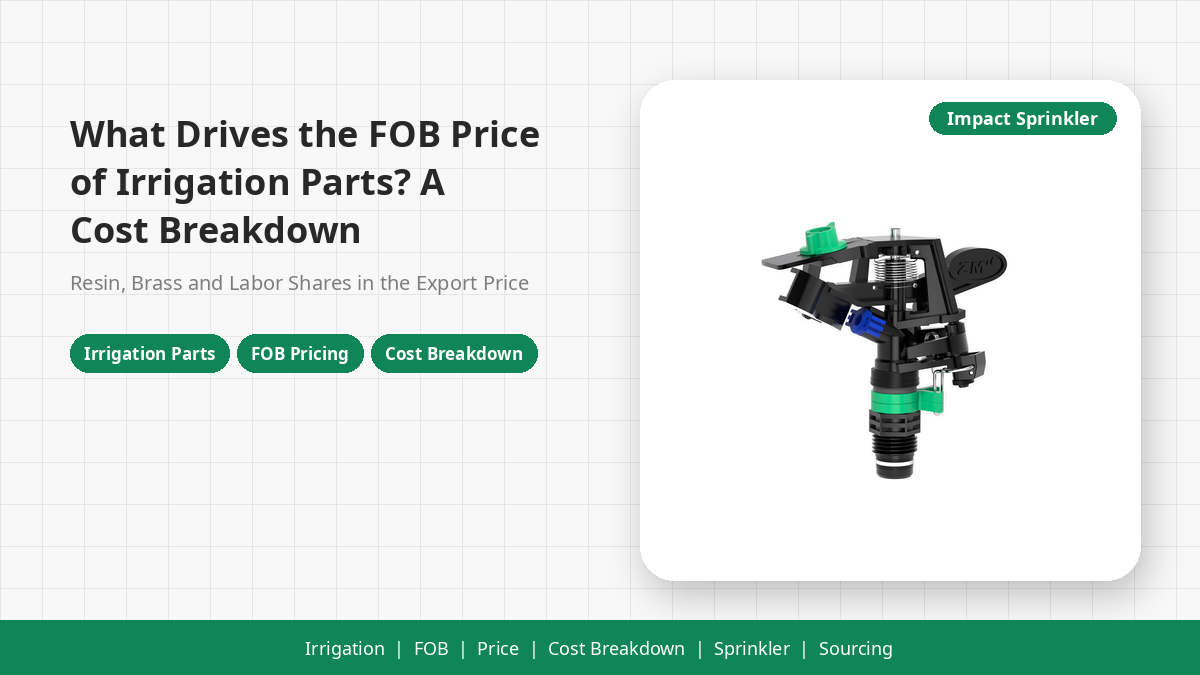
For farm equipment distributors evaluating sand-resistant Gear Drive Sprinkler OEM procurement for Middle Eastern desert agriculture markets, the practical recommendation is to send our merchandising team the target destination country, the target crop application, the annual volume estimate, the customization requirements, and the target delivery date. The OEM quotation typically takes 1-2 weeks and includes the product specification, pricing by SKU and volume tier, sample evaluation schedule, and the recommended MOQ and lead time combination. Reach out via the INOVATO contact page with your desert agriculture sprinkler procurement requirements, and our team will deliver the OEM proposal. Buyers interested in the broader INOVATO sprinkler range can also review the INOVATO impact sprinkler lineup for applications where impact sprinklers are preferred over gear drive designs.
Send us your target destination country, target crop application, annual volume, and customization requirements. Our merchandising team will deliver an OEM proposal within 2 weeks.
Contact INOVATO →
Frequently Asked Questions
What makes a gear drive sprinkler suitable for desert agriculture in the Middle East?
Three engineering features make a gear drive sprinkler suitable for desert agriculture. First, sand ingress protection: the gear assembly must be sealed against fine sand particles below 200 microns, which is the typical particle size in Saudi Arabian, UAE, Egyptian, and Omani desert sand. Second, nozzle material: brass or stainless steel nozzles resist the abrasive wear caused by sand-laden water, while plastic nozzles wear prematurely in desert conditions. Third, sealed bearing housing: the bearing assembly must be protected from sand contamination that would otherwise cause premature bearing failure within 1-2 seasons.
What is the typical lifespan of a sand-resistant gear drive sprinkler in desert conditions?
A well-engineered sand-resistant gear drive sprinkler should deliver 5-8 years of service in Middle Eastern desert agriculture conditions with normal maintenance. The lifespan depends on the quality of the sand sealing, the nozzle material, and the operating water quality. Sprinklers with sealed gear assemblies, brass or stainless steel nozzles, and UV-stabilized polymer bodies typically achieve the upper end of the lifespan range. Sprinklers with unsealed gear assemblies or plastic nozzles typically require replacement within 2-3 seasons due to sand wear and bearing failure.
How do distributors evaluate water distribution uniformity for desert sprinkler procurement?
Distributors should request the Christiansen Uniformity Coefficient (CU) test report from the sprinkler manufacturer, which measures water distribution uniformity across the sprinkler wetted radius. For desert agriculture applications, a CU of 85% or higher is the recommended threshold, with 88% or higher being preferred for high-value crops like dates, citrus, and vegetables. The CU test should be conducted at the manufacturer's specified operating pressure, and the test report should include the precipitation rate and the wetted diameter. A lower CU value indicates uneven water distribution that leads to over-watered and under-watered zones, which is particularly damaging in desert agriculture where water is scarce and expensive.
What is the typical MOQ for sand-resistant gear drive sprinkler orders?
Minimum order quantities depend on the configuration and customization level. Standard catalog gear drive sprinklers without customization typically have MOQ of 500-1,000 units per SKU. Custom-branded sprinklers (custom logo on the body, custom packaging) typically require 1,000-3,000 units per SKU. Custom-designed sprinklers (custom nozzle configuration, custom color matching) typically require 3,000-5,000 units per SKU to justify the mold setup. Mixed-SKU orders (multiple nozzle sizes or pressure ratings) are accepted at most MOQ levels, allowing distributors to combine orders for different customer applications into a single shipment.
What packaging standards do Middle Eastern farm equipment distributors typically require?
Middle Eastern farm equipment distributors typically require export-grade carton packaging with the following specifications. Outer carton printing in both English and Arabic, with Arabic typically as the secondary language for Saudi Arabia, UAE, and Egypt. Inner packaging with individual sprinkler protection (polybag or foam insert) to prevent transit damage. Carton palletization for container loading, with 20-foot or 40-foot container optimized configurations. Custom documentation including commercial invoice, packing list, certificate of origin, and fumigation certificate for customs clearance. Some distributors also request bar-coded carton labels for warehouse inventory management, which adds a small customization fee but improves the post-shipment inventory workflow.