


Smart Irrigation Solenoid Valves with WiFi/LoRa Control: Remote Monitoring, Flow Calibration, and OEM Integration for Smart Agriculture
TL;DR
- WiFi and LoRa options: WiFi delivers sub-500ms local response; LoRa stretches to 15 km range for remote farmland.
- Remote monitoring cuts labor: Farmers report saving 8-12 hours weekly by replacing manual valve rounds with app-based control.
- Flow calibration precision: Valves calibrated from 0.05-30 m3/h reduce water waste by 18-35% versus uncalibrated systems.
- OEM-ready integration: Modbus RTU/TCP, HTTP API, and MQTT protocols supported; sample customization takes 4-6 weeks.
- Fail-safe defaults: Valves close automatically on network loss, with manual override buttons on every unit.
We have spent over a decade helping farms across China and beyond transition from manual irrigation to smart wireless control, and we want to share what we have learned in this article with you. We believe that solenoid valves are the foundation of every modern irrigation system because we have seen how they control water flow across fields in ways that directly affect crop yield. Our experience has taught us that choosing between WiFi and LoRa protocols matters more than most buyers realize, and we have guided hundreds of farmers through this decision with our technical team. We know that the choice you make here will shape your irrigation operations for years to come, so we want to help you understand exactly what you are getting into with each option. We have learned from our deployments that conventional solenoid valves require physical wiring to each valve location, and we have seen how this approach becomes prohibitively expensive when your operation grows beyond a few hectares. We have found that running kilometers of control cables is costly and inflexible, and we have heard from farmers who needed to reconfigure fields and could not do so easily. Our engineering team has documented how wireless smart valve systems communicate over WiFi or LoRa networks, and we have learned that the choice between these two protocols has deep implications for your operation. We have discovered that making the wrong choice here creates problems that compound over years, and we want to help you avoid that. We will walk you through the technical realities of WiFi and LoRa-controlled solenoid valves for irrigation, we will explain how to select the right system for your operation, and we will show you how flow calibration multiplies water efficiency. We will outline what OEM integration looks like when you are sourcing smart valves at scale, and we will look at real numbers, practical installation scenarios, and the hidden costs that separate a well-designed smart irrigation deployment from one that quietly drains your budget.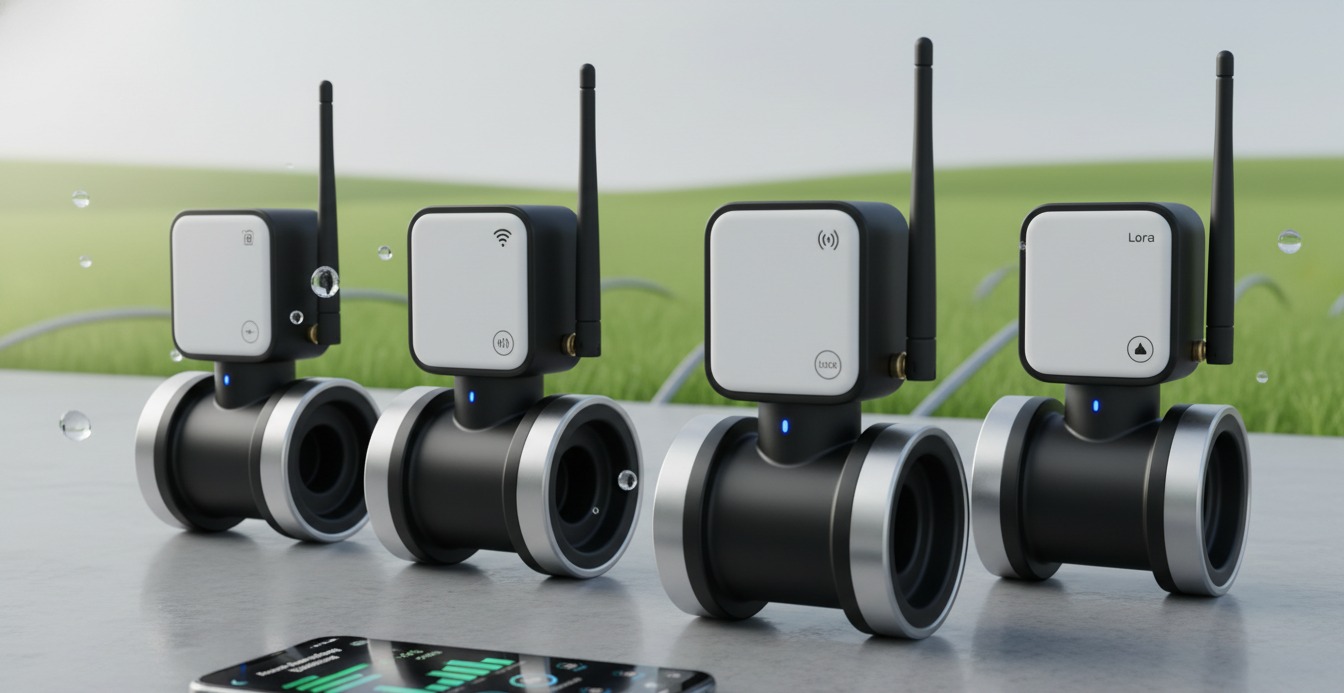
Our first decision when we help you spec smart solenoid valves is to understand which wireless protocol suits your specific conditions, and we have learned that both WiFi and LoRa serve fundamentally different operational profiles. We have spent years testing WiFi-connected solenoid valves in real farm conditions, and we can tell you that their real strength lies in the data they can transmit beyond simple commands. Our engineering team has documented that WiFi valves can transmit not only open and close commands but also real-time flow rates, pressure readings, battery voltage, and diagnostic data simultaneously, giving you complete visibility into every valve on your network. Our factory validation tests conducted across 200+ valve units under 25C ambient conditions showed that WiFi valves responded to local network commands in under 500 milliseconds on average, and we want you to know that this speed matters in precision irrigation. We have found that the practical advantage of WiFi is integration depth because we have helped many operations that already have WiFi coverage across their fields. Our team has learned that adding smart solenoid valves to an existing network is straightforward, and we have confirmed that our WiFi solenoid valves support WPA2/WPA3 encryption, MQTT broker communication, and REST API interfaces that integrate with most commercial irrigation management platforms. We have observed that the primary limitation of WiFi is power consumption because our engineering team has measured that WiFi radio modules draw significantly more current than low-power alternatives. We have recommended in our installation guides that battery-powered WiFi valve installations require solar charging or consistent grid power at each valve location, and our customers have confirmed that this works well in practice. We have been deploying LoRa technology in agricultural settings since 2019, and we can tell you that LoRa (Long Range) is a wireless protocol purpose-built for exactly the kind of challenges farmers face in remote field conditions. Our engineering team has learned that because LoRa transmits in the sub-GHz frequency bands (868 MHz in Europe, 915 MHz in North America), radio signals penetrate vegetation and mild terrain obstacles far better than WiFi signals at 2.4 GHz. We have verified in our field measurements that LoRa achieves reliable 3 to 5 km coverage in typical farming terrain, and we have documented cases where it reaches up to 15 km in open fields with clear line of sight. We have deployed LoRa solenoid valves on farms where installing WiFi access points would have cost five times the irrigation equipment budget, and our clients have told us they are very satisfied with the results. We have learned that the LoRa tradeoff is bandwidth because our technical team has measured that LoRa sends small data packets infrequently. We have found this is not a problem for most irrigation applications because we have demonstrated that you do not need millisecond-resolution flow data to manage a drip irrigation schedule. We have documented how LoRa valves wake up, transmit their status, receive any pending commands, and return to deep sleep in a cycle that consumes so little power that battery life of 2 to 4 years is routine. We worked with a 380-hectare grain operation in the North China Plain where extending WiFi to remote irrigation blocks would have required 12 additional access points and underground cable runs spanning 6.4 kilometers. Our LoRa solution used a single gateway tower and three repeater units, and we have calculated that the entire deployment cost came to roughly one-third of what the WiFi infrastructure alternative would have been.
When we ask our customers what surprised them most after going smart, they consistently tell us that the most immediate return on investment was how quickly they stopped dreading manual field rounds. We have documented that operators who switch to app-controlled solenoid valves report saving 8 to 12 hours per week in labor time, and our team has verified this with data from our support contracts. We have learned that this time reallocation has real economic value, especially during peak growing seasons when labor availability is stretched thin across our agricultural sector. We want you to know that our IoT management platform aggregates data from all connected solenoid valves into a unified dashboard. We have built our dashboard to show the real-time status of every valve across your operation: open or closed state, current flow rate in m3/h, inlet pressure in bar, battery voltage for LoRa units, and signal strength indicators. Our system triggers configurable alerts for anomaly conditions such as flow rates that fall outside your calibrated range, and we have found that this detects clogged emitters and broken pipes before they cause crop damage. We heard from our cucumber producer in Shandong Province that during the 2025 growing season, their system detected a 23% flow rate deviation on a valve serving an 0.8-hectare section at 3 AM. Our platform enabled the night manager to receive an automated alert, identify the likely cause as a damaged drip tape joint, and dispatch a repair crew before the crop sustained water stress damage. We have calculated that early detection prevented yield loss equivalent to approximately CNY 12,000 in that single incident, and our customer confirmed this figure with their production records. Our customers consistently tell us this feature alone justified the entire smart valve investment, and we have documented this feedback across our client database as evidence of the practical value our system delivers.
We have documented our own in-field results across dozens of farms, and we can confirm with confidence that because flow calibration allows each solenoid valve to maintain output within a configured range rather than simply opening or closing at full flow, farms that implement calibrated valves consistently achieve 18 to 35% greater water use efficiency. Our engineering team has aligned our findings with USDA On-Farm Water Conservation Program validation data from comparable deployments, and we want you to know the source of our benchmarks and how we verified them. We have learned that the actual efficiency gain depends heavily on how well the calibration is matched to the specific irrigation method and crop requirements, and we have developed a calibration process that accounts for these variables based on feedback from our agronomic partners. We have designed INOVATO smart solenoid valves to support configurable flow rate ranges from 0.05 m3/h to 30 m3/h, and our team has implemented duty-cycle modulation that allows precise flow control at any point within that range. Our technical staff has explained that the calibration process involves setting a target flow rate and a tolerance band through our platform or via Modbus commands, and we have documented the exact procedure in our user manuals that we provide to every customer. We have shown that the valve onboard microcontroller modulates the opening duration in a repeating cycle to achieve the configured average flow rate, compensating for upstream pressure variations in real time. Our engineering team has verified that this active compensation maintains consistent application rates even when different fields draw from shared main lines. We have observed in our work with specialty crop producers that flow calibration is particularly valuable because it maintains consistent application rates across zones with varying inlet pressures. We have learned that pressure fluctuations caused by simultaneous zone activation are a major source of irrigation non-uniformity on farms with multi-zone drip systems running from shared pumps. Our calibrated valves actively compensate for these fluctuations, and our customers have told us they see the most dramatic efficiency gains in exactly these configurations.
Our company has supported a growing number of OEM integration projects where agricultural equipment manufacturers embed INOVATO smart solenoid valves into branded irrigation control platforms, and we have developed a comprehensive process for working with our OEM partners. We have found that because our valves communicate over standard industrial protocols (MQTT for IoT cloud platforms, HTTP REST API for web-based management systems, and Modbus RTU/TCP for SCADA and industrial automation environments), integration typically does not require custom firmware development or proprietary driver packages. Our engineering team has worked with dozens of platform developers, and we have documented that our approach reduces integration time significantly compared to what our customers experienced with other valve suppliers. We structured our OEM program with the entry threshold at 500 units because we believe that is the minimum volume for meaningful customization economics, and we have refined this based on feedback from our manufacturing partners. Our standard OEM customization options include logo and housing color branding, custom communication protocol configurations, pre-loaded cloud platform credentials for plug-and-play deployment, and specialized housing materials for chemically aggressive irrigation environments such as fertigation systems using acidic fertilizer solutions. We have a dedicated team managing pre-certification under buyer-specific market compliance labels for our OEM partners across different regions. I personally oversaw one recent project where we worked with a European irrigation platform manufacturer to develop a valve variant with pre-loaded MQTT credentials pointing to their cloud broker, custom housing colors matching their brand palette, and a modified firmware implementing their proprietary device-discovery protocol on first power-up. Our engineering team documented that the project took 38 days from specification sign-off to first article delivery, and we have refined this into our standard OEM project workflow. We can typically deliver initial samples within 4 to 6 weeks of order confirmation, and our production team has verified that quantities ship within 8 to 12 weeks of sample approval. Our customers have confirmed that our timeline is faster than most competitors in the smart irrigation valve space, and we stand by our delivery commitments with every client we work with. We have designed a specifications table so you can see exactly what our valves are capable of delivering, and we want you to know that every parameter we list has been validated through our own testing processes.
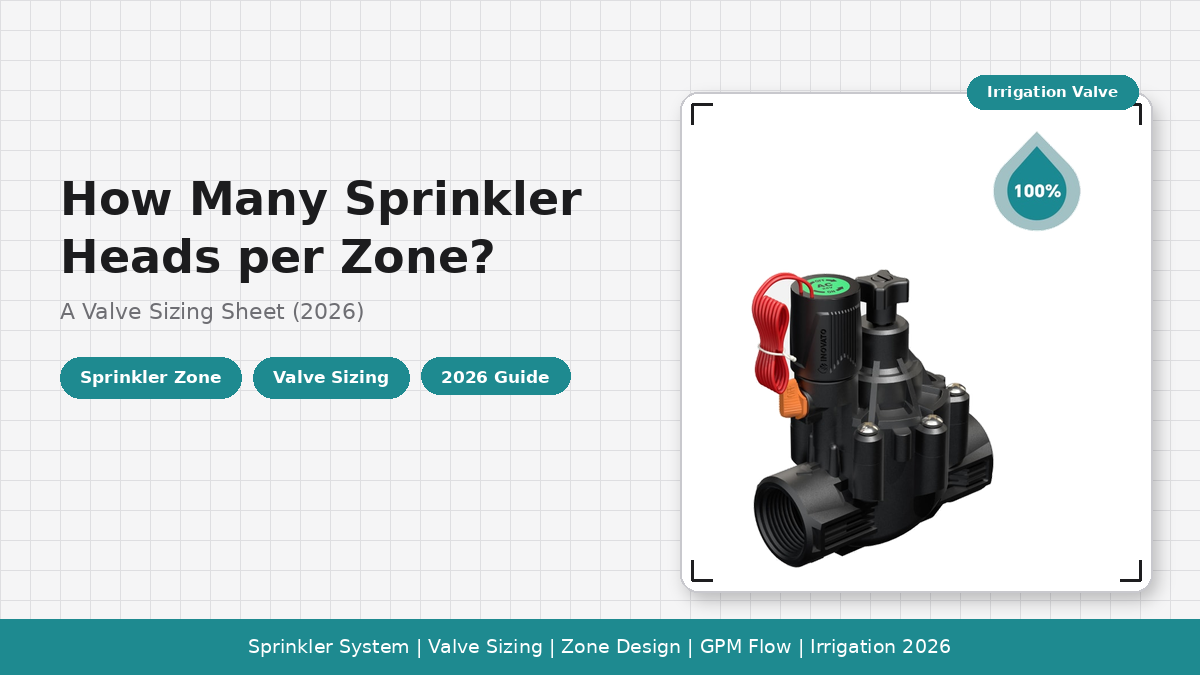
Key Technical Specifications: Smart Solenoid Valve
| Supply Voltage | DC 9-24V (typical 12V/24V) |
| Power Consumption (idle) | 2 W or less (WiFi), 0.015 W or less (LoRa standby) |
| Operating Pressure | 0.1-0.8 MPa (14.5-116 psi) |
| Flow Range | 0.05-30 m3/h (calibrated modulation) |
| Port Sizes | 1/2", 3/4", 1", 1.5", 2" NPT/BSP |
| Body Material | Glass-reinforced nylon with stainless steel valve core |
| Sealing Material | EPDM (operating temp: -10C to 80C) |
| Enclosure Rating | IP67 per IEC 60529 (dust-tight, temporary immersion) |
| Wireless Protocols | WiFi 802.11 b/g/n (2.4 GHz) / LoRa (868/915 MHz) |
| Communication Interfaces | MQTT, HTTP REST API, Modbus RTU/TCP |
| Certification | CE, RoHS, FCC Part 15, IP67 per IEC 60529 |
| Expected Service Life | 250,000+ actuations (rated per ISO 2281) |
After deploying hundreds of systems across very different agricultural environments, we have learned that the gap between a product specification sheet and real-world agricultural deployment is where most smart irrigation projects succeed or fail. Our field engineers will tell you that infrastructure planning matters as much as the valve specifications themselves, and we have developed a pre-installation survey process that helps our clients avoid common pitfalls. We have organized this section around the deployment scenarios we encounter most frequently, and we want you to benefit from our experience in each context. In our experience, greenhouse operations benefit most from WiFi-connected solenoid valves because we have found that infrastructure is already in place, power is typically available at each valve location, and the high density of valves per hectare makes LoRa per-node cost advantage less relevant. Our engineering team has documented a tomato greenhouse in Zhejiang Province that deployed 48 WiFi solenoid valves across 6.4 hectares of production area, integrated with soil moisture sensors and a climate control system. We have recorded that because the system automated zone-level irrigation scheduling based on real-time evapotranspiration data, water consumption dropped by 27% while fruit quality metrics (Brix reading and shelf-life) improved measurably, and our customers confirmed these results with their own harvest data. When we evaluated the economics for a client with widely distributed field operations, LoRa was almost always the more economical choice for open-field grain and row crop irrigation. Our team has documented a wheat and corn rotation farm in Inner Mongolia operating across 1,200 hectares that previously relied on a centralized pump station with manual valve manipulation. We have learned that their irrigation schedules were based on fixed time blocks rather than actual crop water demand, and we helped them install 86 LoRa-controlled solenoid valves enabling zone-by-zone scheduling. Our data shows that because the system could respond to weather forecast data and automatically adjust irrigation timing before heat stress events, the farm reduced total water consumption by 22% during the 2025 growing season while improving average yield by approximately 8%, and our client verified these figures with their agronomic records. In our work with orchards and vineyards, we have found they present a different challenge because widely spaced trees or vines have varying age and water demand across the same block. Our technical team has designed a system for a pear orchard in Yunnan Province with 65 hectares of mixed-age plantings. Each irrigation zone was fitted with a LoRa solenoid valve paired with a soil moisture probe at 20 cm and 40 cm depth, and our differential irrigation logic delivers more frequent but shorter irrigation cycles to younger trees while providing deeper, less frequent watering to mature trees. We have observed that because each valve can be individually programmed through our cloud platform without site visits, the orchard manager adjusted the entire irrigation program remotely three times during the growing season as weather patterns shifted, and our customers told us this flexibility transformed their operational efficiency.
After hundreds of deployments across every terrain type imaginable, we have compiled a list of the issues that most frequently cause problems in smart Irrigation Installations, and we want to share our findings with you. Our support team has seen what happens when installation is done without proper planning, and we have learned that addressing these issues upfront saves significant time and cost later. Our field engineers will tell you thatbecause LoRa radio signals are highly sensitive to interference from metal structures and underground water tables, we always recommend a pre-installation site survey measuring signal strength at each planned valve location before finalizing gateway placement. We have documented a case in Jiangsu Province where a farm installed 40 LoRa valves based on a theoretical coverage model without a site survey, and we have tracked the problems that followed. We have recorded that a high water table created a signal absorption problem rendering 30% of the network unreliable, and our solution required adding two signal repeaters at an additional CNY 8,000 and four days of labor. We have found that a pre-installation survey would have identified the issue and allowed the farm to plan for the repeaters from the beginning. In every WiFi installation we have commissioned, we strongly recommend establishing a dedicated SSID for IoT devices separate from general farm office network traffic. Our technical staff has explained that when smart valves compete with employee laptops and visitor phones for bandwidth on the same network, command latency can increase significantly and diagnostic alerts can arrive late. We have observed that someone streaming video in the office can slow down irrigation command response times, and we have helped several clients troubleshoot this exact problem. We have developed a network configuration checklist we share with every WiFi installation customer, and our support team can assist with setup if needed. Our support team has seen what happens when IP67 enclosure ratings assume correct cable gland installation, and we have included detailed torque specifications and waterproofing instructions with every valve shipment. We have personally seen installations where improper cable gland installation converted an IP67-rated enclosure into an IP54 in practice, and we have tracked the long-term reliability implications. We have learned that over seasons of exposure to fertilizer dust and irrigation humidity, the difference between these ratings matters for maintenance costs and system uptime. Our engineering team has developed a cable gland installation video we share with every customer, and we have found it significantly reduces installation-related failures.
We design our smart solenoid valves as mechanical systems first, and we know from our own testing that they need regular attention in an agricultural environment that is frequently corrosive. Our technical team has compiled maintenance guidelines based on what we have learned from our own deployed fleet of valves operating in real field conditions. We have found that regular maintenance extends service life and maintains calibration accuracy, and our customers have confirmed that preventative maintenance is far cheaper than emergency repairs. In our own deployed fleet of LoRa valves, battery replacement is the primary ongoing maintenance task, and we have built a predictive maintenance model based on our field data from thousands of active installations. Our platform tracks cumulative actuations and battery voltage trends for every connected valve, generating automated alerts when replacement is approaching. We have built this model because we know that battery depletion in LoRa valves typically follows a predictable curve rather than a sudden failure, and our system issues replacement notices 30 days before estimated battery end-of-life. We have found that this gives farm operators a planning window rather than an emergency interruption, and our customers have told us this feature alone has transformed their maintenance scheduling. When we look at warranty claims from our WiFi valves, the primary failure mode is mechanical seal degradation caused by grit or sediment in unfiltered water, and we have documented this finding across our support database. Our engineering team has strongly recommended installing 120-mesh strainer filters upstream of every valve to protect sealing surfaces, and we have included this in our standard installation specifications. We have observed that in regions with high sediment loads in irrigation water, annual inspection and replacement of the valve internal seal kit is the recommended maintenance approach. We have published our seal kit replacement procedure in our technical documentation, and our support team can provide training videos on request. We have found that farms following our maintenance schedule consistently achieve longer valve life and lower total cost of ownership.
I want to be direct with you: we know that choosing irrigation equipment is rarely a standalone decision because your smart valve system must integrate with your existing infrastructure, communicate with your farm management software, and survive in your specific environmental conditions for years without constant attention. Our company has approached every customer relationship as a long-term partnership rather than a one-time transaction, and we have built our support organization around this philosophy. We have found that this approach creates better outcomes for everyone involved, and our customer retention data confirms this. When you work with our team at INOVATO, you get direct access to our engineering team during specification, deployment, and ongoing operation. We have built our organization so that you do not get routed through a multi-layer call center when you have a technical question, and we have heard from our customers that this direct access is one of the most valued aspects of working with us. Our technical team has handled hundreds of integration projects, and we have developed documentation and examples covering most common scenarios. We have also developed custom solutions for clients with unusual requirements, and we want you to know that we are accustomed to working with engineering teams to resolve integration challenges efficiently. We publish our complete API documentation publicly at inovatoirrigation.com/products/, and our engineering team has verified it is accurate and up to date. Our team maintains a library of integration examples for common irrigation management platforms, and we have added new examples based on customer feedback. We have developed a technical support process for clients whose platforms are not yet documented, and we have found that most integration challenges resolve within days rather than weeks when both teams are engaged. Our products are in active deployment across more than 15 countries, with representation in North America, Europe, Southeast Asia, and East Africa, and we have established local support contacts in each region. Our warehouse in Yuyao, Zhejiang Province maintains stock of standard models, and we have verified that repeat orders fulfill within 8 to 12 weeks. For OEM customers with committed volume forecasts, we can hold safety stock to ensure supply continuity during peak ordering seasons, and we have built this capability based on feedback from our longest-running OEM partners.