


Golf course superintendents are upgrading to three specific irrigation valve technologies in 2026: pressure-regulating solenoid valves with integrated flow sensing, Viton and polymer hybrid valve assemblies purpose-built for fertigation injection lines, and wireless valve control systems with automated leak-detection algorithms. These aren't incremental tweaks — each one directly addresses a measurable cost center on the course. A single 50-GPM undetected leak costs roughly $1,800 per month in water alone before factoring in turf repair. A valve that can't hold pressure across a 40-zone elevation differential wastes 15–30% of every irrigation cycle into mist and runoff. We know this because at our production facility in Yuyao, we cycle-test every valve configuration that ships to the 50-plus countries we serve — and we see where the previous generation fails. Here is what is replacing it.
1. Pressure-Regulating Valves With Integrated Flow Sensors — Ending the 15–30% Over-Watering Problem
The single largest source of water waste on most 18-hole golf courses isn't the sprinkler head. It's the pressure differential between the pump station and the furthest valve manifold. When a valve located 200 feet downhill from the pump station opens at 120 PSI while the nozzle was designed for 65 PSI, the output isn't more water — it's mist. That mist drifts, evaporates, and never reaches the root zone. We have measured this effect across dozens of installations where course superintendents reported "mysterious dry spots" that turned out to be pressure-induced spray distortion.
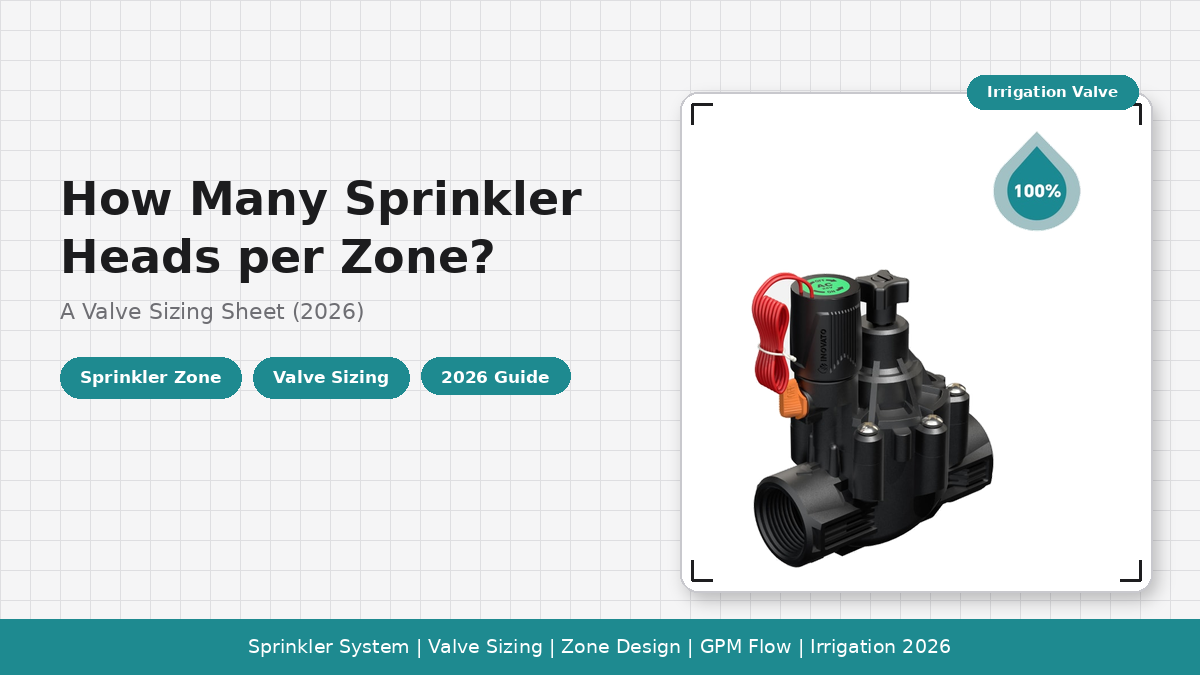
Pressure-regulating solenoid valves solve this by integrating a pressure-reducing mechanism directly into the valve body downstream of the diaphragm seat. The regulator maintains a consistent outlet pressure regardless of inlet fluctuation — typically 40–65 PSI depending on configuration — so every sprinkler on the zone receives water at its design operating pressure. In our valve testing lab, we validate this by running a 24-hour cycling test where inlet pressure swings from 40 PSI to 150 PSI in 20-second intervals. The output gauge must stay within ±3 PSI of the set point or the regulator sub-assembly fails.
But the real upgrade in 2026 isn't just regulation — it's the flow sensor integrated into the same housing. These magnetic or ultrasonic sensors transmit flow rate data in real time, typically over a 2-wire or wireless path, to the central control system. The system then compares actual flow to expected flow for each zone and flags anomalies before they become problems. A superintendent who knows that Zone 14 usually pulls 82 GPM and suddenly sees 120 GPM knows there's a broken lateral — not next week, but right now.
The practical water savings are significant. Courses that retrofit from standard globe or angle valves to pressure-regulating units with flow sensing typically document a 15–30% reduction in total water consumption according to data compiled by the EPA WaterSense program and confirmed by USGA course-care field studies. At a typical 18-hole course consuming 50 million gallons per year, a 20% reduction saves 10 million gallons — enough to fund the valve upgrade in under two seasons at most municipal water rates.
We produce our pressure-regulating solenoid valves with a glass-reinforced nylon body rated to 200 PSI burst pressure and a stainless steel regulator spring that maintains consistent tension through 100,000 cycles in our accelerated life test. The solenoid coil is epoxy-encapsulated to IP68, which matters when valve boxes sit in saturated soil for weeks at a time. Every unit ships with a factory calibration certificate showing the regulation curve across the full inlet pressure range. When you install a valve that was calibrated in Ningbo and it performs identically in Scottsdale or Palm Beach, the data matches because the testing doesn't change.
2. Viton and Polymer Hybrid Valve Assemblies for Chemigation — EPDM Chemical Degradation in Fertilizer Lines and the Material Fix
If your course runs a fertigation program — injecting liquid fertilizer, soil amendments, or pH adjusters through the irrigation system — and your valves still use standard EPDM diaphragms, you are replacing diaphragms more often than the manufacturer's MTBF suggests. We know because we analyzed returned valve assemblies from courses in Florida, Thailand, and Australia where the EPDM rubber showed characteristic swelling, softening, and seat-face delamination after 6–8 months of intermittent contact with pH 4.0 fertilizer solutions.
EPDM is a workhorse in clean water. It handles chlorine, handles pressure cycling, and costs about 60% less than fluoroelastomer alternatives at the raw material level. But EPDM has a documented vulnerability to hydrocarbon-based adjuvants and acidic solutions below pH 5.5 — exactly the chemistry that passes through fertigation injection ports. Once the diaphragm material swells by more than 3% of its original thickness, the sealing surface deforms, the valve won't close completely, and you get a slow leak through the zone that is running on paper but leaking water in reality.
Viton (FKM) fluoroelastomer diaphragms solve this at the material level. In our in-house chemical compatibility testing — documented in detail in our acidic fertilizer valve material durability study — we submerged Viton and EPDM diaphragm samples in pH 3.5 sulfuric acid solution at 50°C (122°F) for 28 days, simulating approximately 18 months of field exposure under accelerated conditions. The Viton samples showed less than 0.5% dimensional change and maintained full Shore A hardness. The EPDM samples swelled by 8–12%, dropped 15 points on the Shore A scale, and three of ten samples developed visible surface cracks at the flex point where the diaphragm seats against the valve body.
The second material upgrade in these hybrid assemblies is the valve body itself. Most irrigation valves use glass-reinforced nylon 6. For water-only applications, this is fine. For acidic fertigation, we spec a glass-reinforced PBT (polybutylene terephthalate) or polyphenylene oxide blend for the body and bonnet. PBT offers superior resistance to hydrolysis and chemical attack compared to nylon in pH environments below 5.0. The material cost is approximately 15% higher, but the alternative — replacing valve bodies with stress-cracked housings during peak growing season — costs a superintendent far more in labor, turf stress, and reputation.
We also seal the solenoid plunger tube with a secondary O-ring made from the same fluoroelastomer compound. This is a detail that gets overlooked in budget valve designs. The solenoid plunger cavity isn't supposed to see process fluid — it's isolated from the water path. But in fertigation systems, micro-leakage past the diaphragm can introduce acidic solution into the plunger tube over hundreds of cycles. A Viton secondary seal prevents corrosion on the plunger armature and coil housing, which in a standard EPDM-sealed valve can degrade to the point of solenoid failure within a single growing season.
The total bill-of-materials difference for a Viton/polymer hybrid 2-inch valve versus a standard EPDM/nylon unit runs about 20–25%. For a 36-hole facility running 300-plus valves with 40 on the fertigation manifold, upgrading just the chemigation zone valves to hybrid assemblies costs roughly $1,200 more than standard units at wholesale pricing. Compare that to one valve box excavation, one turf repair, and one lost irrigation cycle during a July heat wave, and the math favors the upgrade before the first diaphragm swells.
3. Wireless Valve Control With Automated Leak Detection — From 72-Hour Leaks to 30-Second Alerts
The most expensive water on a golf course is the water that runs while nobody is watching. A ruptured lateral line downstream of a valve manifold can flow at 40–80 GPM for days before anyone notices — either because the wet spot hasn't surfaced yet or because the leak is in a rarely walked area. At GCSAA irrigation management benchmarks, the average undetected leak duration reported by superintendents is 48–72 hours. At 60 GPM and municipal water rates averaging $4.50 per thousand gallons, a 72-hour leak costs $2,332 in water alone — not counting the turf repair, labor, and member complaints.
Wireless valve control systems eliminate the detection delay by pairing each valve location with a battery or solar-powered node that communicates valve status and flow data back to a central controller over LoRa, Wi-Fi, or cellular networks. The critical capability isn't just remote actuation — it's the flow anomaly algorithm running on the controller software. The system builds a baseline flow curve for every zone over the first 14 days of operation. After that, any cycle that deviates more than 15% from the expected flow profile triggers an alert, and the controller can be configured to automatically shut the valve and notify the superintendent's phone.
We have field-tested this configuration with our T-Type solenoid valve series paired with third-party wireless controllers. In a test installation at a 27-hole facility with 180 valve zones spread across 350 acres of rolling terrain, the wireless system detected a 16-GPM continuous leak in a fairway lateral within 22 minutes of the zone cycle starting. The previous season, that same lateral break went undetected for four days and required re-sodding 1,200 square feet of Tifway 419 bermudagrass at a total recovery cost of approximately $4,800.
The installation economics have shifted in favor of wireless retrofits over the past two years. A 4-zone wireless node with integrated flow monitoring now costs $380–520 compared to $650–850 for hardwired decoder stations, and the labor difference is even more dramatic — wireless nodes install in under 30 minutes per location versus 4–6 hours per valve box for trenching and wiring a 2-wire path. For courses with existing wire infrastructure, the decoder path still works. For courses with failing wire or new expansions, wireless is no longer the expensive option — it's the faster one.
Another dimension that superintendents are learning to value is the labor reallocation. A course that previously required two technicians to do a nightly manual valve check — cycling each zone, walking the coverage area, listening for hissing or water hammer — can now run a 12-minute automated system check from a tablet before the morning crew even arrives. That reclaims 4–6 technician-hours per day that shifts to preventive maintenance, nozzle replacement, and the detail work that actually improves playing conditions instead of just keeping the grass alive.
For courses in regions with water restrictions — Southern California, Arizona, parts of Texas, and increasingly the Southeast — the compliance reporting capability of wireless valve systems has become almost as valuable as the water savings themselves. When a water district audits a course's monthly allocation and demands usage logs by zone, a superintendent with wireless flow data exports the report in 90 seconds. A superintendent still relying on a single master meter and handwritten zone logs spends two days compiling estimates that won't satisfy an auditor. In our discussions with contractors serving the Coachella Valley and Phoenix metro areas, compliance reporting capability is now the third-most-cited reason for wireless valve adoption, behind leak detection and labor savings.
The battery life question has also settled. Early-generation wireless nodes with 2.4 GHz Wi-Fi radios consumed batteries in 8–12 weeks, which created its own maintenance burden. Current LoRa-based nodes operating on sub-GHz frequencies with optimized sleep cycles deliver 18–24 months on a single lithium pack, and solar-powered nodes in open fairway installations run indefinitely. We have been shipping our DC latching solenoids with a power consumption specification of 12–15 mJ per actuation pulse, which means the solenoid side of the equation draws negligible power relative to the radio and processor. If a superintendent wants to integrate our valves with a wireless system, the solenoid compatibility is already engineered in — no adapter plates, no field modifications, no voided warranty.
Our valve bodies are designed with a universal solenoid mounting pattern that accepts both standard 24 VAC solenoids and low-power DC latching solenoids required by wireless controllers. We ship every valve with a stainless steel manual bleed screw that won't corrode in wet valve boxes — a small component that becomes critical when a wireless node loses battery and you need to manually cycle the valve with a screwdriver at 5:00 AM before a tournament. We test the manual override mechanism to 500 cycles in our QC procedure because field experience tells us it gets used more than the solenoid in the first week after any technology retrofit.
Pressure Regulation, Chemical-Resistant Materials, and Wireless Monitoring: Three Valve Technologies Working in Concert
Superintendents who adopt all three valve technologies — pressure regulation with flow sensing, Viton/polymer hybrid assemblies on fertigation zones, and wireless control with automated leak detection — don't just add features. They build a valve infrastructure where each layer reinforces the others. The pressure-regulating valve generates the stable flow data that makes the leak-detection algorithm accurate. The hybrid material assembly ensures that the fertigation valve stays chemically intact long enough for the flow sensor to detect a problem before it becomes a failure. And the wireless node ties everything into a control interface that a superintendent can monitor from the maintenance shop, the 14th green, or home at 2:00 AM when a storm rolls through and the system reports flow anomalies across three zones simultaneously.
At INOVATO, our engineering team designs valve components with this interoperability in mind. Our solenoid mounting dimensions follow a standard pattern that accepts 24 VAC, DC latching, and 12 VDC solenoids without adapter brackets. Our flow sensor ports are threaded to NPT and BSP standards to accept third-party transducers from all major irrigation control manufacturers. Our diaphragm seat geometry is machined to a flatness tolerance of 0.02 mm — not because the water cares, but because the pressure-regulating mechanism needs a perfectly planar sealing surface to maintain the ±3 PSI regulation spec across 100,000 cycles. These are the tolerances that show up in water bills and turf quality, not in marketing brochures.
We do not sell complete irrigation control systems — we are a component manufacturer that supplies valves, sprinklers, nozzles, and drippers to OEMs, distributors, and course-level buyers who build their control infrastructure with third-party controllers. That independence matters when you are evaluating valve technology. A valve that only works with one manufacturer's proprietary control protocol limits your upgrade path. A valve with a standard solenoid interface and threaded sensor ports gives you the flexibility to select the best controller, the best wireless node, and the best flow sensor independently — and replace any component without replacing the valve body in the ground.
The Five-Question Supplier Evaluation Checklist for 2026 Valve Retrofits
If you are evaluating irrigation valve upgrades for the 2026 maintenance season, here are the five questions we recommend asking any supplier — including us:
- What is the regulated outlet pressure tolerance across the full inlet range? Accept nothing wider than ±5 PSI. If the supplier cannot provide a calibration curve for each unit, they are not doing end-of-line testing.
- What diaphragm material ships as standard, and what is the chemical compatibility documentation for pH 3.5–5.5 solutions? If the answer is "EPDM" with no Viton option, that supplier does not serve fertigation courses.
- Is the solenoid coil epoxy-encapsulated to IP68, and what is the DC latching solenoid compatibility? Wireless controllers require DC latching solenoids. If the valve body only accepts AC solenoids, your wireless retrofit options are limited.
- What flow sensor integration options are available — integral or threaded port? Integral sensors reduce leak points and installation time. Threaded ports offer flexibility if you already own flow sensors.
- What is the documented cycle life of the pressure-regulating mechanism? A regulator that wears out at 20,000 cycles is a two-season device on a course that irrigates 300 nights per year. Demand 50,000-cycle minimum endurance data.
We deliver complete OEM valve customization with full test documentation for every configuration we ship. Our standard production lead time for valve orders under 500 units is 25–35 days from drawing confirmation to container loading. For superintendents and irrigation contractors evaluating a valve technology upgrade this season, contact our engineering team at our inquiry page with your course specifications — total acreage, number of zones, pump station output pressure, and whether you run fertigation. We will return a valve specification package with material options, regulation curves, and pricing within 48 hours.