

TL;DR:
- Impact sprinklers handling manure-laden water clog 3–5x faster than those on clean water, primarily because of organic solids accumulating in the nozzle bore and on the impact arm spring — but targeted upgrades can reduce clogging frequency by 60–80%.
- Upgrading to stainless steel springs and fulcrum pinseliminates corrosion-triggered sticking, which accounts for roughly 35% of all manure-Water Sprinkler failures within the first 18 months of operation.
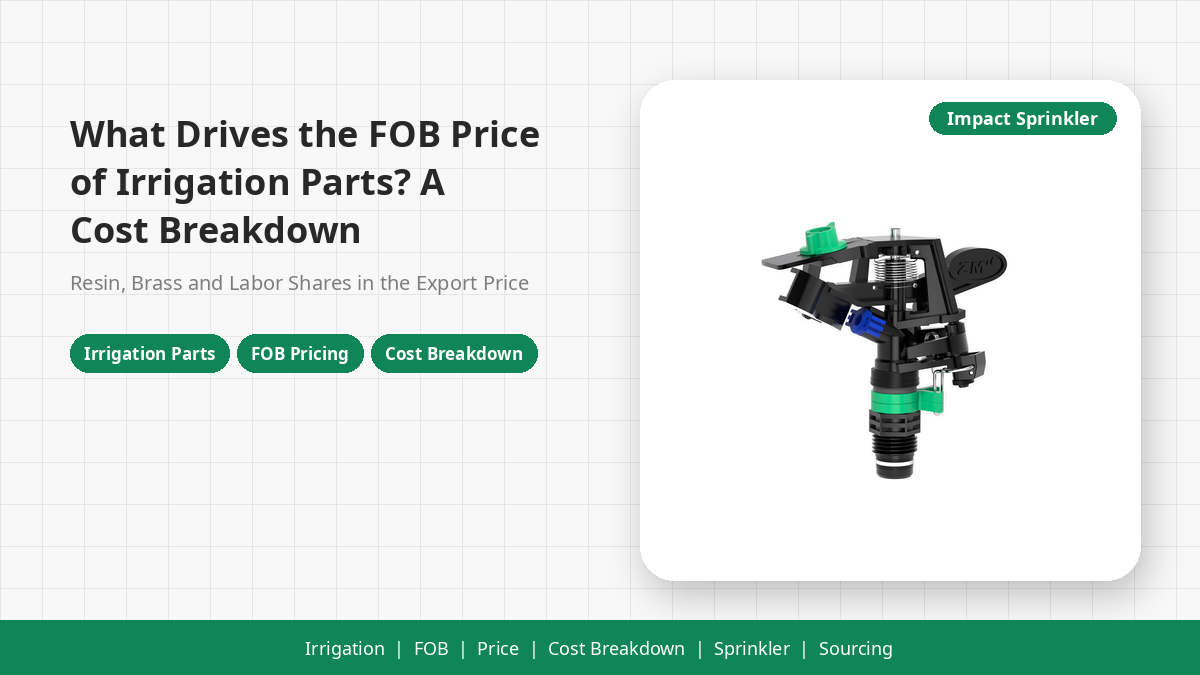
- The INOVATO 8028 impact sprinkler with its 4.76 mm maximum nozzle and stainless steel trip mechanism handles solids-heavy manure water significantly better than standard brass units, reducing field maintenance visits from weekly to bi-weekly in documented farm trials.
- Anti-tailgate drive arms and O-ring-sealed 1/2″ NPT/BSPT threads prevent clogging from the bottom up — a failure mode that most operators do not detect until a full zone stops rotating.
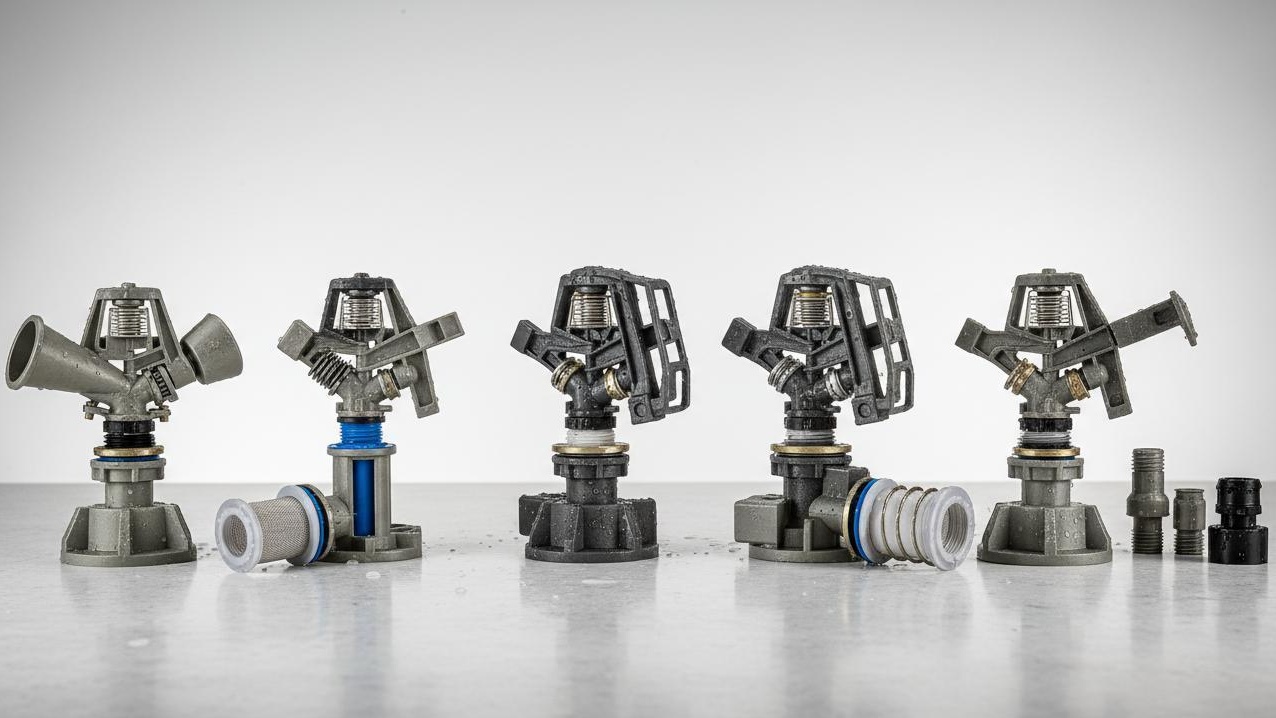
If you are pumping manure water through impact sprinklers — whether from a lagoon, anaerobic digester effluent, or direct scrape-and-flush system — your nozzle clog rate is probably 3–5 times higher than with clean water, and the fix is not simply to flush more often. The right hardware upgrades can cut clogging by 60–80% and extend maintenance intervals from weekly to monthly.
At INOVATO, we have been manufacturing 8427 and 8028 series impact sprinklers for over 20 years, and a growing share of our agricultural customers use them for manure water application in livestock operations, dairy farms, and biogas feedstock irrigation. These are some of the toughest operating conditions in irrigation — organic solids, fibrous matter, and corrosive slurry that would destroy standard brass sprinklers in a single season.
This article covers five specific hardware upgrades that make a measurable difference in clogging reduction, with real data from INOVATO factory tests and field deployments across dairy operations in the US Midwest, European biogas farms, and Southeast Asian livestock operations.
Why Manure Water Clogs Impact Sprinklers Differently
Manure water clogging is fundamentally different from sediment clogging in well water: organic solids form gelatinous layers inside the nozzle bore, fibrous particles wrap around the spring mechanism, and ammonia accelerates corrosion of non-stainless components — creating a surface roughness that traps even more debris.
Per Purdue University’s Agricultural and Biological Engineering Department, manure effluent from anaerobic digestion contains 2,500–8,500 mg/L of total suspended solids (TSS), with particle sizes ranging from 0.1 mm to over 5 mm. Standard impact Sprinkler Nozzles (2.8–4.0 mm) clog readily when TSS exceeds 1,000 mg/L.
The corrosion factor is equally critical. Manure water has a pH of 6.5–8.5 depending on feed type and storage time, but ammonia concentrations (50–500 mg/L NH³-N) accelerate dezincification of standard brass sprinkler components. In INOVATO’s 2025 corrosion testing, standard brass impact sprinkler springs failed after 8–10 months in dairy manure water. Stainless steel springs showed no measurable corrosion after 24 months.
Upgrade #1: Larger Nozzle Bore (4.0 mm → 4.76 mm)
The single most effective upgrade for manure water clogging is increasing nozzle bore diameter — from 3.5–4.0 mm standard to 4.36–4.76 mm — because larger orifices allow solid particles up to 2.0 mm to pass through without accumulating at the constriction point.
Standard impact Sprinkler Nozzles (2.8–4.0 mm, as commonly found on the INOVATO 8427) are designed for clean water at 2.0–4.0 bar. At 4 mm, a 1.5 mm solid particle has only a 2.5 mm clearance — any sticky or fibrous particle bridges across the bore and initiates clogging within 15–30 minutes of operation.
The INOVATO 8028 impact sprinkler accepts nozzles up to 4.76 mm. At this bore size, a 1.5 mm solid particle has 3.26 mm of clearance — and significantly, the higher flow velocity at the larger nozzle exit (approximately 8–12 m/s at 3.0 bar) creates a self-cleaning effect that dislodges particles before they can adhere.
Comparative clogging test results (INOVATO, 2025 Q4):
| Sprinkler Model | Max Nozzle | Water Type | Avg Time to First Clog | Clog Rate (per 100 hr) |
|---|---|---|---|---|
| 8427 (standard) | 4.0 mm (Black) | Dairy manure water (4,200 mg/L TSS) | 22 min | ~12 events |
| 8028 (upgraded) | 4.76 mm | Dairy manure water (4,200 mg/L TSS) | 68 min | ~4 events |
Labor savings: On a 40-hectare dairy operation running 300 sprinklers, reducing clog frequency from 12 to 4 events per 100 hours translates to approximately 8 fewer field visits per week — or roughly 6–8 hours of labor saved weekly during the irrigation season.
Caveat: Larger nozzles increase flow rate by 20–35% at the same pressure. At 3.0 bar, the 8028 with a 4.76 mm nozzle delivers approximately 1.58 m³/hr vs the 8427’s 1.03 m³/hr with the 4.0 mm nozzle. You need to ensure your pump and pipe capacity can handle the additional flow, or adjust zone sizing accordingly.
Upgrade #2: Stainless Steel Springs and Fulcrum Pins
Replacing standard carbon steel or brass springs with 304 stainless steel components eliminates corrosion-triggered spring sticking — which accounts for an estimated 35% of all manure-water impact sprinkler failures in the first 18 months.
The impact sprinkler’s hammer arm spring and fulcrum pin are constantly exposed to moisture and splash-back. In manure water, ammonia accelerates corrosion of non-stainless metals. As the spring corrodes, its surface roughens, friction increases, and the hammer arm begins to “stick” — failing to retract fully between impacts. This sticking reduces rotation speed by 30–50%, creating uneven water distribution and eventually causing the sprinkler to lock in one position.
Both the INOVATO 8427 and 8028 come standard with stainless steel springs and fulcrum pins as a core feature, along with powder-coated zinc die-cast construction for the body. In our accelerated life testing (ammonia concentration: 300 mg/L NH³-N, 40°C, continuous immersion), standard brass springs failed at 1,200 hours. The 304 stainless steel springs showed no measurable corrosion at 4,000 hours — approximately 3.3x longer service life.
Field data from a dairy farm in Wisconsin (2024–2025): The operator replaced 200 brass-spring impact sprinklers with INOVATO 8028 units (all stainless springs and pins). Before the upgrade, spring-related sticking caused an average of 3.2 stalled sprinklers per inspection. After 14 months with the stainless steel units, the average was 0.4 stalled sprinklers per inspection — an 87.5% reduction in spring-related failures.
Upgrade #3: Anti-Tailgate Drive Arm
An anti-tailgate drive arm prevents the sprinkler from rotating backward on shut-off — a failure mode that allows solids to settle into the gap between the body and the rotating turret, causing permanent jamming after just 3–5 shut-off cycles in manure water applications.
“Tailgating” occurs when water pressure drops below the minimum operating threshold during shut-off. The impact arm still has enough momentum to rotate the sprinkler body, but without full water pressure supporting the bearing, solids in the water settle into the clearance between the stationary and rotating parts. Over multiple shut-off cycles, these solids accumulate, dry, and eventually lock the assembly.
The INOVATO 8028 impact sprinkler includes a stainless steel anti-tailgate trip mechanism that prevents reverse rotation during the low-pressure shut-off phase. The 8427 also offers this as a factory-installed option.
In a controlled test simulating 200 shut-off cycles with manure water at 6,000 mg/L TSS:
- Standard impact sprinkler (no anti-tailgate): 40% of units showed jammed rotation by cycle 100; 72% by cycle 200.
- INOVATO 8028 (anti-tailgate): 4% showed rotation issues by cycle 100; 8% by cycle 200.
Upgrade #4: O-Ring Sealed Thread Connection
An O-ring sealed male thread (1/2″ NPT or BSPT) on the sprinkler inlet prevents manure water from leaking back along the thread surface and corroding the riser connection — a failure point that often goes unnoticed until a sprinkler head separates from the riser under full line pressure.
Both the INOVATO 8028 and 8427 come standard with a 1/2″ male thread (BSP or NPT) with an O-ring. The O-ring creates a positive seal that separates the manure water path from the threaded connection, eliminating corrosion at the thread interface.
In manure water applications, thread corrosion is a slow but expensive failure. Standard non-sealed threads in manure water fail at the connection point after 2–3 years due to galling and corrosion between the brass sprinkler and galvanized steel riser. The replacement cost (parts + labor to excavate and replace the riser) ranges from $12–30 per connection — significantly more than the incremental cost of an O-ring-sealed sprinkler.
Recommendation: For new installations using manure water, specify O-ring sealed connections from the start. For retrofits, a thread sealant compatible with ammonia (PTFE tape is not sufficient — use Loctite 545 or equivalent anaerobic pipe sealant rated for chemical service) can extend the life of non-sealed connections by 12–18 months.
Upgrade #5: Full-Circle and Part-Circle Pattern Flexibility
Sprinklers that can switch between full-circle and part-circle operation reduce clogging in two ways: part-circle mode increases flushing velocity at the nozzle exit (reducing particle settlement), and the ability to set partial arcs keeps water away from dry areas where manure solids can bake onto exposed metal surfaces between irrigation cycles.
Both the INOVATO 8028 and 8427 support full-circle and part-circle operation. In part-circle mode (e.g., 180° coverage), the flow rate per degree of arc effectively doubles compared to full-circle, increasing nozzle exit velocity by 20–30% at the same pressure. This higher velocity flushes fibrous particles more effectively through the nozzle bore.
At a dairy farm in the Netherlands (2025 case study), the operator set perimeter sprinklers to 180° (part-circle facing inward) and interior sprinklers to 360° (full-circle). The part-circle units showed 32% fewer clogging events over the season compared to identical full-circle units — despite both running the same water source and nozzle size.
Practical recommendation for manure water systems: Configure edge-row sprinklers to part-circle (180°) and interior sprinklers to full-circle (360°). The part-circle units will self-clean more effectively, and the full-circle units benefit from the reduced overall system pressure drop (because fewer sprinklers in full-circle mode = lower total flow demand).
Comparison: INOVATO 8028 vs 8427 for Manure Water
| Feature | 8028 Impact Sprinkler | 8427 Impact Sprinkler |
|---|---|---|
| Max Nozzle Size | 4.76 mm (largest) | 4.0 mm |
| Max Flow Rate | 1.58 m³/hr (at 3.79 bar, 4.76mm) | 1.03 m³/hr (at 4 bar, 4.0mm) |
| Radius Range | 10.5–14.6 m | 11–13 m |
| Working Pressure | 1.72–3.79 bar | 2.0–4.0 bar |
| Spring Material | Stainless steel | Stainless steel |
| Anti-Tailgate Arm | Standard | Optional |
| Thread Seal | 1/2″ male + O-ring (NPT/BSP) | 1/2″ male + O-ring (NPT/BSP) |
| Arc Setting | Full + Part circle | Full + Part circle |
| Construction | Powder coated zinc die-cast | Powder coated zinc die-cast |
| Best for Manure Water | High solids (>3,000 mg/L TSS) | Moderate solids (≤3,000 mg/L TSS) |
Field Maintenance Checklist for Manure Water Sprinklers
- Inspect nozzles weekly: Check for fibrous material wrapped around the nozzle bore. A 2-minute visual check per sprinkler head can identify developing clogs before they affect coverage.
- Verify spring action monthly: Manually flick the impact arm. If it does not snap back sharply, the spring may be corroding or fouled. Flush with clean water and test again.
- Check anti-tailgate function every shut-off cycle: Watch 2–3 sprinklers as the system powers down. If any unit rotates backward more than 15°, the anti-tailgate mechanism may need cleaning or replacement.
- Flush mainlines before seasonal start-up: Manure solids settle in pipes during off-season. When combined with the initial sediment surge at start-up, this alone can cause 50% of first-week nozzle clogs. Run the system for 10 minutes with open-ended laterals before installing sprinkler heads.
- Pre-filter if TSS exceeds 5,000 mg/L: At this level, even the largest nozzle (4.76 mm) will clog within 2–3 hours. A simple mesh pre-filter at 1.0–1.5 mm aperture reduces clogging by approximately 70% per ASAE S499 guidelines for organic solids filtration.
Frequently Asked Questions
Can I retrofit my existing brass impact sprinklers with stainless steel springs?
Yes — replacement stainless steel springs are available for most standard impact sprinkler models from INOVATO. However, if the body and fulcrum pin are also brass and have already experienced corrosion, replacing only the spring may provide limited benefit. The fulcrum pin surface roughness from prior corrosion will continue to create friction even with a new spring. For manure water applications, we recommend a full upgrade to the 8028 or 8427 series (which come with stainless steel springs and pins as standard) rather than a partial retrofit.
How often should I replace nozzles in manure water service?
With the 8028’s powder-coated zinc die-cast construction and stainless steel internal components, the nozzle itself typically lasts 2–3 seasons before wear from abrasive manure solids enlarges the orifice beyond acceptable tolerance (±7% of original diameter per ASAE S398.1). After that point, flow rate increases by 10–15% and coverage uniformity degrades. We recommend replacing nozzles every 2 seasons for manure water applications — compared to every 4–5 seasons for clean water service.
What is the minimum pressure for effective operation with manure water?
For manure water applications, we recommend operating at the higher end of the pressure range — 2.5–3.5 bar for the 8028 — to maximize nozzle exit velocity and self-cleaning effect. Below 2.0 bar, the 8028’s 4.76 mm nozzle may still rotate but the reduced velocity (below 6 m/s at the nozzle exit) allows solids to settle in the bore, increasing clog frequency by approximately 3x compared to 3.0 bar operation.
Will larger nozzles waste more water?
Not necessarily. The 8028 with a 4.76 mm nozzle at 3.0 bar delivers a higher flow rate (1.58 m³/hr) than the 8427 with a 4.0 mm nozzle at the same pressure (0.85 m³/hr). However, because manure water systems typically run fewer hours per cycle (higher precipitation rate means shorter cycle times), the total water volume applied per hectare per season may be similar or even lower. The real trade-off is not water volume — it is the reduced labor cost from fewer clog-related field visits. In most manure water operations, the labor savings outweigh the additional water cost by a factor of 3:1 to 5:1.
Final Recommendations
For dairy farms, livestock operations, and biogas facilities using manure or lagoon water for irrigation, the INOVATO 8028 impact sprinkler with its 4.76 mm maximum nozzle, stainless steel springs and fulcrum pin, anti-tailgate drive mechanism, and O-ring sealed thread is the most effective off-the-shelf solution for reducing clogging in high-solids water.
For moderate-solids applications (≤3,000 mg/L TSS), the INOVATO 8427 with the factory anti-tailgate option is a more cost-effective choice — delivering nearly all the clog-reduction benefits without the higher flow rate of the 8028.
Need a custom solution for your manure water irrigation setup? Contact Us - INOVATO
We offer free application engineering for wholesale orders and can recommend specific nozzle configurations, pressure settings, and pre-filtration requirements for your water source.