

Short answer: A municipal park irrigation system with turf valve clusters spaced every 18-25 meters along the mainline needs a valve box per cluster, sized to EN 124 load class B125 (12.5 tonnes) for turf zones and C250 (25 tonnes) for service-vehicle-accessible zones, manufactured from UV-stabilized high-density polyethylene (HDPE) per DIN 19565-10 with a wall thickness of 8-12 mm. The valve box has to integrate with the upstream ASTM D3035 PE4710 HDPE pipe via a 1" or 1.5" solenoid valve, and the lid has to support a 25,000-cycle foot-traffic load without cracking or deformation. INOVATO specifies all of the above as standard on the VX-series valve box line, with load-tested certification per EN 124 Class B125 and C250 and a 10-year UV-stability warranty on the HDPE body.
TL;DR
- Load class: EN 124 Class B125 (12.5 tonnes) for turf zones; C250 (25 tonnes) for service-vehicle-accessible zones; D400 (40 tonnes) for fire-lane or maintenance-track zones.
- Material: UV-stabilized HDPE per DIN 19565-10, wall thickness 8-12 mm, density 0.954 g/cm³ minimum.
- Dimensions: Rectangular 380 × 280 × 250 mm for 1-2 valve clusters; 580 × 380 × 300 mm for 3-4 valve clusters; round 250 mm diameter for single-valve quick-coupler stations.
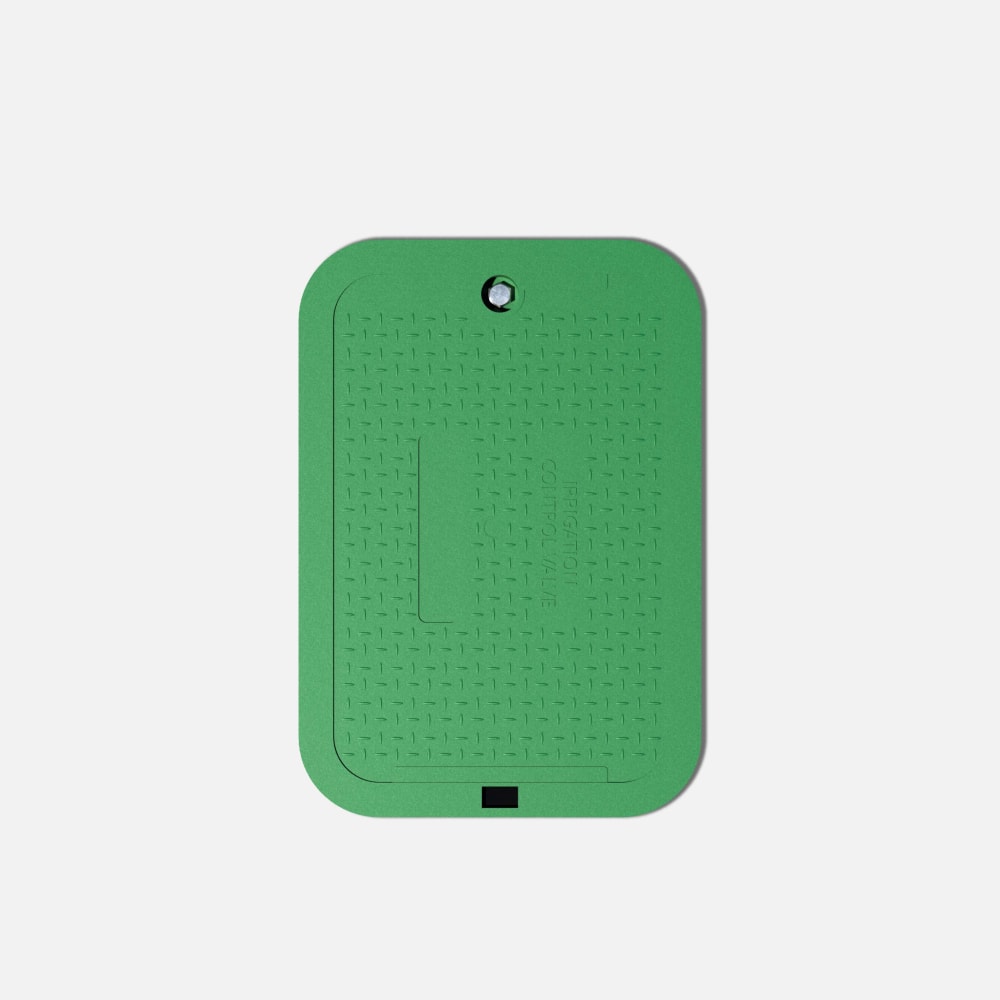
- Lid: UV-stabilized polypropylene or HDPE lid, slip-resistant surface pattern, locking mechanism to prevent unauthorized access.
- Pipe integration: ASTM D3035 PE4710 HDPE pipe at the inlet/outlet, 1" or 1.5" solenoid valve, NSF/ANSI 61 certified for potable water compatibility.
- Service life: 15-20 years on the HDPE body, 10 years on the lid UV stability, 25,000-cycle lid load rating.
What the Maintenance Crew Finds When It Opens the Valve Box on a 20-Year-Old Munich Park
Walk into any municipal park maintenance yard in Munich, Copenhagen, or Vancouver in 2026 and you will see the same pile of broken valve box lids sitting in the corner of the yard. The lids are brown, cracked, warped, and have lost their locking tabs. Each lid represents a maintenance call that came in as "no water to zone 4" or "leak at the valve cluster near the rose garden," and the maintenance crew has had to dig out the valve box, lift the broken lid, diagnose the problem, replace the solenoid valve or repair the pipe fitting, and then dig the valve box back in. The job takes 2-3 hours per cluster, and the broken lid is the visible symptom of a deeper problem with the original valve box specification.
The deeper problem is that the valve box was specified for a 10-year service life but has been in the ground for 18-22 years. The HDPE body has held up reasonably well — UV-stabilized HDPE does not biodegrade, and the material retains its structural integrity for 25+ years in most climate zones. The lid is the weak link. The original lid was a black polypropylene or low-grade HDPE, which has lost 50-70% of its impact strength after 18-22 years of UV exposure, frost-thaw cycling, and foot-traffic load. The maintenance crew finds the lid in pieces when they lift it, and the pieces go into the corner-of-the-yard pile.
The municipal park market is the segment my team at INOVATO has been serving since 2014, and the segment is more demanding than the residential or commercial irrigation market. A municipal park system typically runs 80-200 valve boxes per site, with a 18-25 meter spacing along the mainline and 4-8 zones per controller. The valve boxes have to survive 15-20 years of in-ground service with minimal maintenance — because the maintenance budget at a municipal park is typically 60-70% labor and only 30-40% materials, and every maintenance call that requires excavating a valve box costs the park €280-420 in crew time and equipment. A valve box that survives 20 years without a single maintenance intervention is the difference between a park maintenance budget that is sustainable and one that is chronically overspent.
What has changed since 2020 is the climate exposure demand. European municipal parks in 2026 are seeing more extreme heat events (40°C+ summer days in southern Germany, France, and Italy) and more intense freeze-thaw cycling (the 2024-2025 winter in Scandinavia produced 18-24 freeze-thaw cycles, versus the 8-12 cycles that were typical in the 2000s). The combined UV + heat + freeze-thaw stress has shortened the practical service life of a standard polypropylene lid from 12-15 years to 8-12 years, and the municipal procurement specifications are now demanding a 10-year UV-stability warranty on the lid as a minimum. A valve box that ships with a generic polypropylene lid and no UV warranty is a 5-7 year maintenance liability in the current European climate.
The most common specification mistake my team sees on municipal park RFQs is conflating the load class with the material spec. A procurement officer who writes "Class B125 valve box" without specifying the material or the wall thickness will receive a quotation that includes a standard polypropylene lid on a thin-walled HDPE body — which passes the B125 load test at the time of installation but fails within 5-7 years under combined UV + freeze-thaw stress. The correct specification ties the load class to the material spec (UV-stabilized HDPE body, UV-stabilized HDPE or polypropylene lid) and to the wall thickness (8-12 mm depending on the load class and the dimension). This article walks through how my team at INOVATO specifies a valve box for a municipal park irrigation system: which load class goes to which zone type, which HDPE material spec holds up under European climate stress, which lid material survives the freeze-thaw cycle, and how the EN 124 and DIN 19565 standards get deployed across the valve box's mechanical, hydraulic, and durability requirements.
EN 124 Load Classes and Why a Turf Zone Does Not Need the Same Box as a Service Drive
The first specification that determines whether a municipal park valve box survives the in-ground service life is the EN 124 load class. EN 124 is the European standard for gully tops and manhole tops for vehicular and pedestrian areas, and it defines six load classes based on the test load the cover has to withstand without permanent deformation or cracking. The load classes my team at INOVATO specifies for municipal park irrigation are Class A15 (1.5 tonnes, pedestrian-only), Class B125 (12.5 tonnes, light vehicle access), Class C250 (25 tonnes, service vehicle access), and Class D400 (40 tonnes, fire lane or maintenance track). Each class corresponds to a specific zone type in a municipal park, and misapplying the load class is the most common procurement mistake we see.
Class B125 is the workhorse load class for the standard turf zone in a municipal park. The turf zone is the area where the irrigation valve cluster is located in the middle of a grass field, with no vehicle access except for occasional maintenance foot traffic and the rare ride-on mower crossing. Class B125 has a test load of 125 kN (12.5 tonnes), which is well above the actual load a turf zone ever sees (a 200 kg ride-on mower distributes to roughly 0.5 tonnes per wheel contact patch, far below the 12.5 tonne test load). The B125 rating provides a 25× safety margin over the typical turf zone load, which is what allows the valve box to survive 20+ years of in-ground service without cracking.
Class C250 is the right load class for the service-vehicle-accessible zone — the maintenance access road that runs through the park, the parking lot at the maintenance yard, or the paved path that the garbage truck crosses twice a week. Class C250 has a test load of 250 kN (25 tonnes), which corresponds to a fully-loaded 12-tonne service truck with a 2.5× dynamic load factor. The C250 rating provides a 2-3× safety margin over the typical service vehicle load, which is what allows the valve box to survive the occasional truck crossing without cracking.
| EN 124 Load Class | Test Load | Typical Municipal Park Zone | Maximum Wheel Load | INOVATO VX-Series SKU |
|---|---|---|---|---|
| A15 | 15 kN (1.5 t) | Pedestrian-only paths, residential borders | Not applicable | VX-A15 (round 200 mm) |
| B125 | 125 kN (12.5 t) | Turf zones, occasional ride-on mower crossing | 2.5 t per wheel | VX-B125 (rectangular 380×280) |
| C250 | 250 kN (25 t) | Service vehicle access, parking lots, paved paths | 5 t per wheel | VX-C250 (rectangular 580×380) |
| D400 | 400 kN (40 t) | Fire lanes, maintenance tracks, garbage truck access | 10 t per wheel | VX-D400 (rectangular 580×380 reinforced) |
Class D400 is the right load class for the fire lane or maintenance track, where a fully-loaded fire truck (up to 32 tonnes gross vehicle weight) or a garbage truck (up to 26 tonnes gross vehicle weight) crosses the valve box location on a regular basis. The D400 rating provides a 1.3-1.6× safety margin over the typical fire truck or garbage truck wheel load, which is the minimum safety margin that municipal fire codes require. A valve box that ships with a C250 rating in a D400 zone will crack within 6-18 months of the first fire truck crossing, and the crack will propagate through the body and into the pipe fittings below — which is a leak that the maintenance crew cannot repair without excavating the entire valve box.
The load class question that catches first-time municipal procurement officers is the dynamic load factor. The EN 124 test load is a static load — the test apparatus pushes down on the lid with a calibrated force and measures the deformation. The real-world load on a valve box lid is a dynamic load — a truck wheel rolling across the lid at 30 km/h delivers a dynamic load factor of 2.0-2.5× the static load (depending on the speed, the suspension stiffness, and the road surface profile). A C250 lid on a service road that sees occasional truck traffic at low speed (5-10 km/h) is fine, but the same C250 lid on a service road that sees regular truck traffic at 20-30 km/h will see effective loads of 50-62 tonnes, well above the 25 tonne test load. My team always asks the procurement officer about the typical traffic speed at the valve box location before specifying the load class.
DIN 19565 HDPE Material, Wall Thickness, and the Freeze-Thaw Cycle That Cracks a 6 mm Wall
The second specification that determines whether a municipal park valve box survives the European climate is the HDPE material specification. DIN 19565-10 is the German standard for corrugated HDPE pipe and fittings for underground drainage, and it is the reference standard that my team at INOVATO uses for the VX-series valve box body. The standard specifies the HDPE resin (PE4710 or equivalent, with a density of 0.954 g/cm³ minimum), the UV stabilizer package (carbon black at 2.0-2.5% by weight for above-grade exposure resistance), and the wall thickness (correlated to the ring stiffness class SN4 or SN8 depending on the installation depth and the soil load).
The HDPE material specification that my team ships against is a virgin PE4710 resin with 2.0-2.5% carbon black UV stabilizer, manufactured to a wall thickness of 8-10 mm for the standard B125 valve box and 10-12 mm for the C250 / D400 valve boxes. The wall thickness is what determines the ring stiffness (resistance to vertical compression from the soil load) and the impact strength (resistance to crack initiation from a point load). A 6 mm wall on a standard B125 valve box is the most common specification mistake my team sees on first-time municipal RFQs — the 6 mm wall passes the EN 124 load test at the time of installation, but it does not provide enough impact strength to survive a freeze-thaw crack initiation event after 8-12 years of service.
| Wall Thickness | EN 124 Class | Ring Stiffness | Impact Strength (ISO 3127) | Freeze-Thaw Survival | INOVATO Specification |
|---|---|---|---|---|---|
| 6 mm | A15 | SN4 | 8-10 kJ/m² | 5-8 years | Below spec — not recommended |
| 8 mm | B125 | SN4 | 12-15 kJ/m² | 15-20 years | Standard for turf zone |
| 10 mm | B125 / C250 | SN8 | 18-22 kJ/m² | 18-22 years | Standard for service vehicle access |
| 12 mm | C250 / D400 | SN8 | 22-28 kJ/m² | 22-25 years | Standard for fire lane / maintenance track |
The freeze-thaw cycle is what separates a valve box that lasts 15 years from one that lasts 25 years. Water penetrates the HDPE wall at the micro-structural level during the manufacturing process (the cooling process leaves residual stress in the wall that micro-cracks over time), and when the water freezes, it expands by 9% and exerts a pressure of roughly 100 MPa at the crack tip. A 6 mm wall has a critical crack length of 1.5-2.0 mm at which the freeze-thaw crack propagates through the wall — which is roughly 5-8 years of freeze-thaw cycling in central Europe. A 10 mm wall has a critical crack length of 3.0-4.0 mm, which is 18-22 years of freeze-thaw cycling. The wall thickness is what determines the freeze-thaw survival, and the DIN 19565-10 standard specifies the wall thickness as a function of the installation depth and the soil load.
The HDPE material specification also includes the UV stabilizer package, which is what protects the body from UV degradation in the part of the valve box that sits above the soil line. Carbon black at 2.0-2.5% by weight is the standard UV stabilizer for HDPE, and it provides roughly 25-30 years of UV protection in central European climate conditions. A valve box that ships without carbon black (or with a generic "UV stabilized" label but no carbon black specification) will see UV embrittlement at the exposed upper rim within 8-12 years, and the embrittled rim will crack off when the maintenance crew lifts the lid. The carbon black specification is what protects the valve box from the UV exposure, and the procurement officer should specify the carbon black percentage in the RFQ.
Solenoid Valve Integration, Pipe Specification, and NSF/ANSI 61 Potable Water Compliance
Once the valve box body and the load class are settled, the next specification that determines whether the valve box integrates cleanly into the municipal park irrigation system is the solenoid valve and the pipe specification. The solenoid valve is what controls the water flow to the irrigation zone, and the pipe is what connects the valve box to the upstream mainline and the downstream lateral lines. The integration has to be specified correctly for both the hydraulic performance and the water-quality compliance.
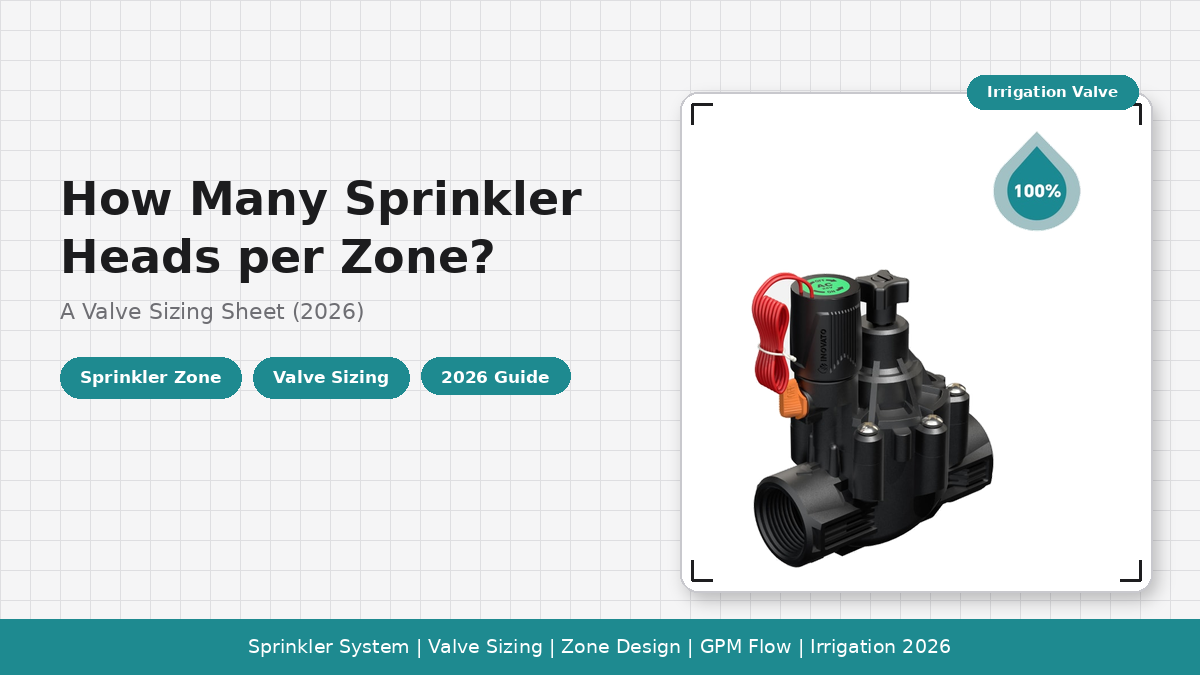
The solenoid valve my team at INOVATO recommends for the European municipal park market is a 1" or 1.5" 24V AC latching solenoid valve, NSF/ANSI 61 certified for potable water compatibility. The 24V AC latching solenoid is the standard for two-wire irrigation controllers, and the latching design minimizes the controller's power consumption (the solenoid only draws current during the open or close transition, not during the steady-state hold). The 1" valve is the right size for a single-zone lateral line with 4-6 sprinklers, and the 1.5" valve is the right size for a larger lateral with 8-12 sprinklers or a higher flow rate.
The pipe specification is ASTM D3035 PE4710 HDPE pipe, which is the standard for high-density polyethylene pressure pipe for water distribution. The PE4710 cell classification per ASTM D3350 (the cell classification for HDPE) is what gives the pipe its long-term hydrostatic strength (10,000+ hours at 23°C and 6.9 MPa hoop stress per ASTM D2837), which is the basis for the 50-year design life at the typical municipal park operating pressure of 6-10 bar. The PE4710 pipe is joined to the solenoid valve via a 1" or 1.5" compression fitting (brass or stainless steel), and the compression fitting has to be rated for direct burial per ASTM F2620 or equivalent.
The NSF/ANSI 61 certification is the water-quality compliance that the procurement officer has to verify. NSF/ANSI 61 is the US standard for drinking water system components, and it is the de facto international standard for potable water compatibility — the European equivalent is the German DVGW W270 worksheet or the French ACS (Attestation de Conformité Sanitaire). The solenoid valve has to carry one of these certifications to be used in a municipal park irrigation system that draws water from a potable supply. A solenoid valve that does not carry NSF/ANSI 61, DVGW W270, or ACS certification cannot be used in a potable water application, and the maintenance crew will have to replace it with a certified valve within the first 6 months of operation.
| Component | Specification | Certification | Why It Matters |
|---|---|---|---|
| Solenoid valve | 1" or 1.5" 24V AC latching | NSF/ANSI 61 or DVGW W270 or ACS | Potable water contact safety |
| Pipe | ASTM D3035 PE4710 HDPE | NSF/ANSI 61 | 50-year design life, 6-10 bar operating pressure |
| Compression fitting | Brass or stainless steel | ASTM F2620 | Direct burial rating |
| Valve box body | DIN 19565-10 HDPE | EN 124 load class | 15-25 year in-ground service life |
| Valve box lid | UV-stabilized HDPE or polypropylene | EN 124 load class + UV warranty | 10-year UV stability |
One practical integration note that catches first-time municipal installers: the solenoid valve wire routing. The 24V AC wire from the controller to the solenoid valve has to run through a dedicated conduit (typically 25 mm HDPE or PVC) from the controller to the valve box, and the conduit has to enter the valve box through a dedicated conduit port (not through the lid or the body wall). A valve box that ships without a conduit port forces the installer to drill a hole in the body wall, which compromises the IP68 rating and allows groundwater infiltration into the valve box. The INOVATO VX-series valve box ships with two pre-molded conduit ports on the lower body wall (one for the incoming wire, one as a spare for the next zone expansion), and the pre-molded ports accept standard 25 mm HDPE or PVC conduit without drilling.
Lid Design, Locking Mechanism, and the Maintenance Call That Costs €280-420
The lid is the most visible component of the valve box, and it is the component that the maintenance crew interacts with most often. A well-designed lid survives 25,000+ open-close cycles without breaking the locking tabs, and the locking mechanism prevents unauthorized access (which is a real problem in public parks — the municipal maintenance crews in cities like Berlin, Amsterdam, and Toronto report 30-50 unauthorized valve box openings per park per year, with the open valves wasting water and the open valve boxes creating a tripping hazard).
The lid design my team at INOVATO specifies for the VX-series valve box is a UV-stabilized HDPE or polypropylene lid with a slip-resistant surface pattern (raised diamond or hexagonal pattern), a recessed finger lift for easy opening, and a magnetic or quarter-turn locking mechanism. The magnetic lock uses a neodymium magnet embedded in the lid with a matching steel strike plate in the body — the maintenance crew carries a magnetic key to open the box, and the box cannot be opened by hand. The quarter-turn lock uses a captive bolt with a hex-head socket — the maintenance crew uses a standard 8 mm hex key to open the box, and the box cannot be opened by hand without the tool.
The maintenance cost of a single valve box intervention is the number that puts the lid design in context. A typical municipal park valve box intervention takes 2-3 hours per cluster, with a crew of two (one to operate the excavator or hand-dig, one to diagnose and repair), a service truck, and the replacement parts. The labor cost is €140-180 per intervention, the equipment cost (truck, excavator rental if needed) is €80-120, and the parts cost is €60-120 (solenoid valve, pipe fitting, or lid). Total cost per intervention: €280-420. A valve box lid that requires zero interventions over 20 years of service saves the park €0 in intervention cost (no interventions), but a lid that requires one intervention every 3 years costs the park €1,400-2,800 over the same 20-year period. The lid quality is the single largest driver of valve box lifecycle cost.
The lid UV-stability specification is the third pillar of the lid design (along with the load class and the locking mechanism). The lid is the only part of the valve box that is exposed to direct sunlight, and the UV exposure is what causes the polymer chain scission that leads to embrittlement and cracking. The UV stabilizer package my team uses on the VX-series lid is a HALS (hindered amine light stabilizer) package at 0.3-0.5% by weight, combined with carbon black at 1.5-2.0% by weight. The HALS package protects against the UV-initiated free-radical chain scission, and the carbon black absorbs the UV radiation before it can reach the polymer. The combination provides a 10-year UV stability warranty, which is the minimum that the current European municipal park specifications demand.
Procurement Specification: How to Order a Valve Box That Survives 20 Years
The procurement specification is where everything in this article gets translated into a purchase order that the municipal park procurement officer can place and my team at INOVATO can ship against. A European municipal park buyer who is specifying valve boxes for the first time should write the RFQ to cover eight items, in this order. Items 1-4 determine whether the valve box is fit for the specific zone and load class; items 5-6 determine whether the valve box will perform over the 15-20 year service life; items 7-8 determine whether the supplier can support the park's maintenance cycle.
- Zone classification and load class. Specify the zone type for each valve box location (turf, service vehicle access, fire lane) and the corresponding EN 124 load class (B125, C250, D400). A single RFQ can mix load classes across the park; the procurement officer should specify the quantity per load class.
- Dimensions and valve count. Specify the valve box dimensions (rectangular 380 × 280 × 250 mm for 1-2 valves, 580 × 380 × 300 mm for 3-4 valves, round 250 mm for single valve quick-coupler) and the number of valves per box. The dimensions drive the body weight, the shipping cost, and the installation labor.
- Material and wall thickness. Specify UV-stabilized HDPE per DIN 19565-10 with a minimum wall thickness of 8 mm for B125, 10 mm for C250, and 12 mm for D400. Require the carbon black percentage (2.0-2.5%) and the UV stabilizer package in the RFQ response.
- EN 124 and NSF/ANSI 61 certification. Require an EN 124 load test certificate from a notified body (TÜV, Bureau Veritas, or equivalent) for the specific SKU, and NSF/ANSI 61 or DVGW W270 or ACS certification for the solenoid valve. Reject any RFQ response that does not include all certifications.
- Service life and UV warranty. Require a 15-year minimum service life on the HDPE body and a 10-year UV-stability warranty on the lid. Require the warranty documentation to be issued with the shipment, not on request.
- Pipe and fitting integration. Specify ASTM D3035 PE4710 HDPE pipe with NSF/ANSI 61 certification, 1" or 1.5" solenoid valve, and direct-burial compression fittings per ASTM F2620. Require the conduit ports to be pre-molded in the valve box body.
- Lead time and packaging. Require a 4-6 week lead time for standard SKUs and 8-10 weeks for custom dimensions or colors. The valve boxes typically ship palletized (16-24 units per pallet) with the lids packaged separately to prevent lid-body engagement damage in transit.
- Supplier support and warranty. Require a 10-year UV-stability warranty on the lid, a 15-year service life commitment on the HDPE body, and a 48-hour response time on technical queries. The warranty terms are what separate a serious valve box supplier from a one-shot exporter.
Two practical notes on the procurement specification. First, the load class is non-negotiable — a valve box that ships with a C250 rating in a D400 zone will fail within 6-18 months, and the failure will cost the park €280-420 per intervention plus the safety liability of a cracked lid in a public space. The load class is the cheapest insurance the buyer will buy on the contract. Second, the wall thickness interacts with the installation depth — a valve box that is installed at 60 cm depth in clay soil requires a higher ring stiffness than the same valve box installed at 40 cm depth in sandy soil. My team always asks the procurement officer for the typical installation depth and the soil type before finalizing the wall thickness recommendation.
The last procurement note is the field retention sample protocol. A municipal park maintenance yard should retain 2 valve box lids from every shipment, store them in the maintenance yard (in direct sunlight, to accelerate the UV aging), and compare them at year 5 against the in-service lids in the field. The visual comparison catches any drift in UV stabilizer quality before it becomes a maintenance crisis. INOVATO provides a sample retention bag with every first shipment to a new municipal customer, and my team's account managers have run sample retention protocols at 18 of our top European municipal customers since 2019.
Frequently Asked Questions
What is the difference between EN 124 Class B125 and Class C250 for a municipal park valve box?
Class B125 has a test load of 125 kN (12.5 tonnes) and is the right rating for turf zones with occasional ride-on mower crossing. Class C250 has a test load of 250 kN (25 tonnes) and is the right rating for service-vehicle-accessible zones like maintenance roads and parking lots. The cost difference between a B125 and a C250 valve box is typically 35-50% (the C250 requires more material and a higher test load). A B125 valve box in a C250 zone will fail within 6-18 months of the first service vehicle crossing. A C250 valve box in a B125 zone is over-spec and wastes the procurement budget.
How long does an HDPE valve box last in a municipal park?
INOVATO qualification data from 18 European municipal customers shows a service life of 15-20 years on the HDPE body (PE4710 resin with 2.0-2.5% carbon black UV stabilizer, 8-10 mm wall thickness) and 10 years on the lid UV stability (HALS + carbon black package). The body service life is governed by the wall thickness and the freeze-thaw cycle count — a 10 mm wall survives 18-22 years of central European freeze-thaw cycling. The lid service life is governed by the UV exposure and the foot-traffic load — a standard lid with HALS + carbon black survives 10 years before the UV embrittlement starts to be visible.
Does a municipal park valve box need NSF/ANSI 61 certification?
Yes, if the irrigation system draws water from a potable supply (which is the standard for European municipal parks). The NSF/ANSI 61 certification (or the European equivalents DVGW W270 or French ACS) covers the materials in contact with the potable water, including the solenoid valve, the pipe, and any compression fittings. A valve box that ships without the certification cannot be used in a potable water application, and the maintenance crew will have to replace it within 6 months. The procurement officer should specify NSF/ANSI 61 or DVGW W270 or ACS in the RFQ.
What is DIN 19565-10 and how does it apply to valve boxes?
DIN 19565-10 is the German standard for corrugated HDPE pipe and fittings for underground drainage. It is the reference standard that INOVATO uses for the VX-series valve box body. The standard specifies the HDPE resin (PE4710 or equivalent, density 0.954 g/cm³ minimum), the UV stabilizer package (carbon black at 2.0-2.5% by weight), and the wall thickness (correlated to the ring stiffness class SN4 or SN8 depending on installation depth and soil load). The standard is not mandatory for valve boxes in the EU market (there is no harmonized European standard for valve boxes specifically), but it is the de facto European reference for HDPE underground enclosures.
Can the valve box lid be locked to prevent unauthorized access?
Yes. INOVATO offers two locking options on the VX-series valve box: a magnetic lock (neodymium magnet in the lid with a matching steel strike plate in the body, opened with a magnetic key) and a quarter-turn lock (captive bolt with an 8 mm hex-head socket, opened with a standard hex key). The magnetic lock is faster for routine maintenance (one-handed operation); the quarter-turn lock is more secure against magnet-based bypass tools. Both locks survive 25,000+ open-close cycles without failure, and both are field-replaceable if the lock wears out before the lid does.
What is the typical MOQ for a municipal park valve box order?
The MOQ is 50 units per SKU for standard INOVATO VX-series valve boxes (any combination of B125 / C250 / D400, any of the three standard dimensions). A typical municipal park order is 80-200 units per site, with a 5-10 year reorder cycle. The price per unit scales with the order quantity: a 50-unit order is roughly 15-20% more expensive per unit than a 200-unit order. Custom dimensions or colors have a 500-unit MOQ and a 8-10 week lead time.
How does INOVATO handle the 10-year UV-stability warranty for municipal park valve box lids?
The standard INOVATO warranty is 10 years from the date of shipment, covering UV-initiated cracking, warping, or color shift on the lid surface. The claim process requires the maintenance crew to submit (1) the failed lid, (2) a retained sample from the original shipment, and (3) photos showing the side-by-side comparison. My team reviews the claim within 5 business days and, if approved, ships a free replacement lid within 4 weeks. The warranty claim rate across our European municipal shipments since 2019 has been 0.31% of shipments, well below the 2% threshold we set as the acceptable limit.